A weekend in Lahore
20 h route3 stopsBest: The Wagah ceremony is at sunset, every dayUpdated July 2026
Two days fit the Mughal first day and something that resembles nothing else: the daily flag-lowering ceremony at the Wagah border, half an hour from the city, where Pakistani and Indian guards have been performing an exaggerated military choreography face to face since 1959, in front of packed stands.
The second day is best organised around that hour, because the ceremony is at sunset and you need to be there beforehand. In the morning, the gardens and the museum.
The route, stop by stop
3 STOPS- 01
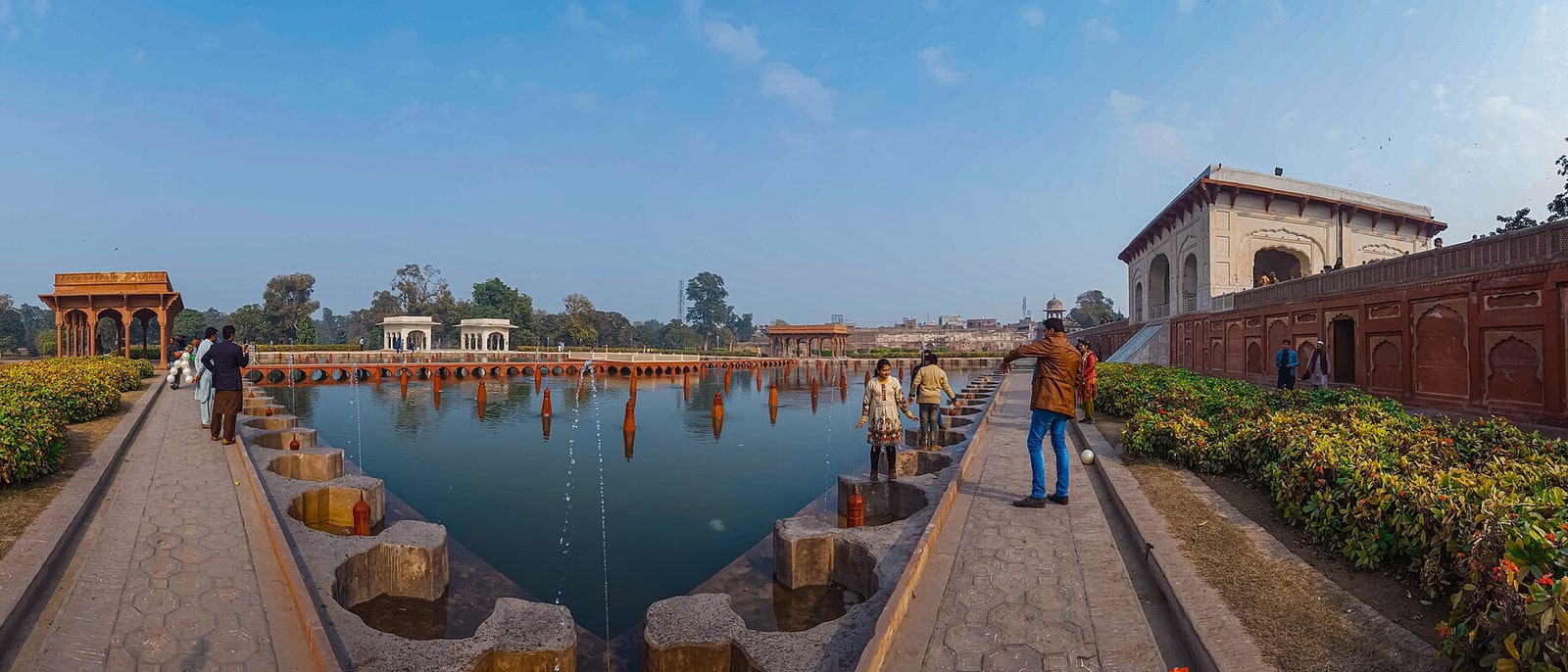
The Shalimar Gardens
Shah Jahan had them made in 1642, the same emperor as the Taj Mahal, and they are a World Heritage Site along with the fort. They’re laid out on three descending terraces following the Persian charbagh model, the garden quartered by water channels, representing paradise.
What makes them remarkable is the hydraulic engineering: over four hundred fountains fed by a canal bringing water from far away, with pressure achieved purely by gravity and the drop between terraces.
They worked without a single pump, almost four centuries ago.
- 02
Lahore Museum and Kim’s Gun
The country’s most important museum had as its first curator John Lockwood Kipling, Rudyard’s father. The novel Kim literally opens with the boy sitting astride the Zamzama cannon, which is still there, in front of the museum, in the middle of the avenue.
Inside, the piece to see is the Fasting Buddha of Gandhara, a second-century grey schist sculpture depicting Siddhartha in extreme asceticism, ribs and veins showing.
It’s among the most famous Buddhist sculptures in the world, and it came from the north of this country, where Greek art and Buddhism crossed after Alexander.
- 03
The Wagah border
Every evening at sunset, the border guards of Pakistan and India lower their flags simultaneously at the only open land crossing between the two countries. The ceremony consists of exaggerated marching, kicks above head height, moustaches and gestures of defiance, with packed stands on both sides cheering as at a stadium.
What fascinates is the choreography: it’s coordinated in detail with the other side, because the flags must come down at exactly the same moment, so the two armies rehearse together something that stages their enmity. It’s theatre, and both sides know it.
Arrive early and expect security checks. In periods of tension between the two countries it can be suspended.
Frequently asked
Can you cross into India at Wagah?
It’s the only open land crossing between the two countries, but crossing requires an Indian visa arranged in advance and the gate opens for limited hours. It can also close without notice in periods of tension. Attending the ceremony as a spectator is a different matter and doesn’t involve crossing.