OZU /SWITZERLAND /ZURICH /GUIDE
Zurich’s neighbourhoods
4 h route5 stopsBest: Zurich West at dusk. The old town in the morningUpdated July 2026
The Zurich cliché (clean, expensive, dull) survives exactly three hours, which is how long the old town takes. What dismantles it is ten minutes away by tram: a former factory district where the arches of a railway viaduct are now shops and bars, and a street that was the roughest in the country and is now where the city goes out.
Zurich has 12 numbered districts, the Kreise, and people call them by number. Here are the five that matter and what to expect from each.
The route, stop by stop
5 STOPS- 01
Kreis 5, Zurich West
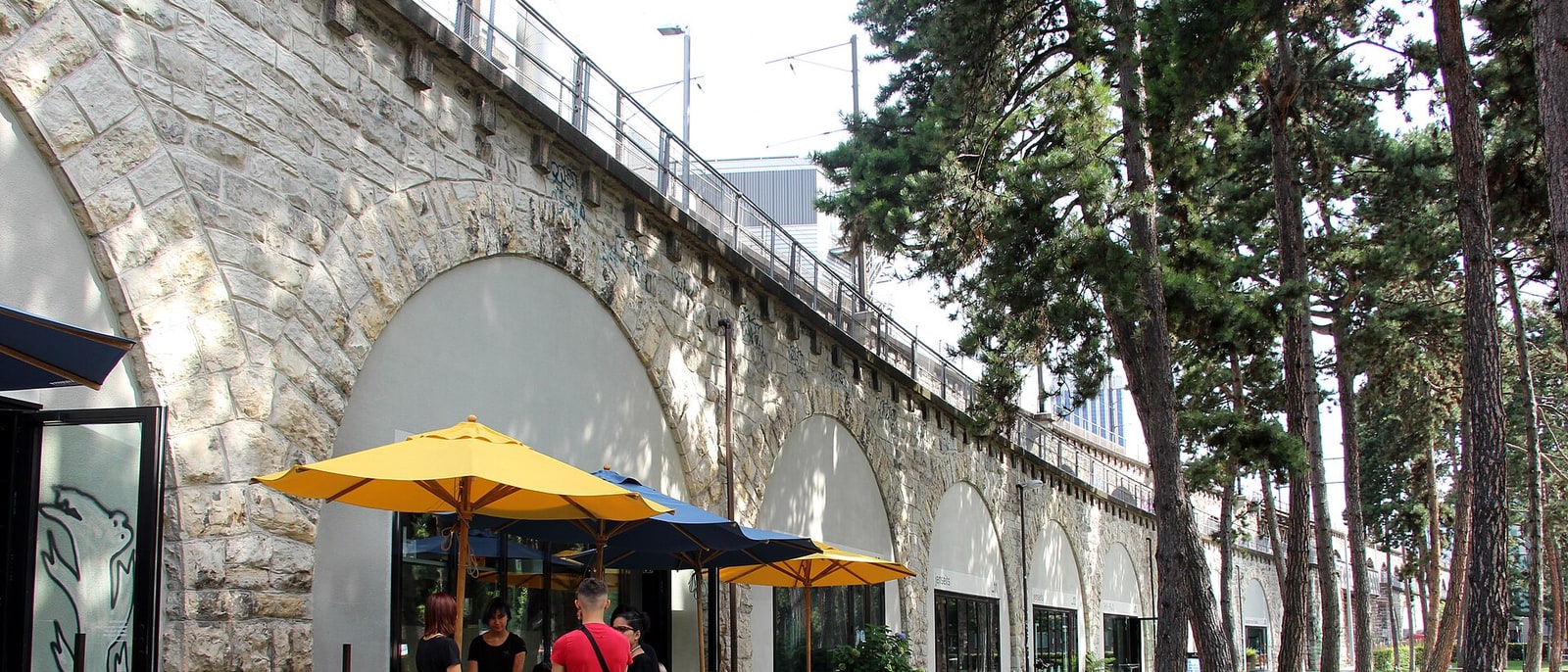
The district that changes your idea of Zurich. It was the industrial zone (shipyards, factories, rail lines) and when industry left, instead of demolishing it they reused it: the arches of the railway viaduct are now a row of shops and food stalls, with a covered market inside.
Next to it is Frau Gerolds Garten, a garden of stacked shipping containers with a bar and an urban vegetable patch, beneath the tallest tower in the city.
It sounds like a textbook of urban regeneration and it could be unbearable, but it works: this is where Zurich is on a Friday.
- 02
Kreis 4 and the Langstrasse
For decades the Langstrasse held Zurich’s red-light and drug trade, and that inheritance is still visible: it’s the one street in the city where Swiss order loosens.
Today it’s mainly the nightlife quarter, with the best bars, the cheapest and most varied food, and a mix you won’t find in the old town.
No need to dramatise: it’s safe and full of ordinary people. But it’s the contrast that makes Zurich interesting, and above all it’s where you eat without spending your salary: half the world’s kitchens are here at real prices.
- 03
Niederdorf, Kreis 1
Kreis 1 covers the old town, and its eastern half, the Niederdorf, is the pedestrian, lively part: narrow alleys, small bars, shops, and the Grossmünster above. It’s touristy, yes, but it’s also where the city stays at night.
This is where the Spiegelgasse is, with the Cabaret Voltaire, cradle of Dada, at number 1 and Lenin’s house at 14.
The other half of Kreis 1, west of the river, is the banks and the Bahnhofstrasse: same label, different planet.
- 04
Seefeld, Kreis 8
Following the lake south-east from the opera house: Zurich’s comfortable, quiet district, with handsome houses, cafés and the lakeside walk with the Alps ahead on clear days.
It’s where the Seebad Utoquai and the lake bathing area are, and it’s the Sunday walk par excellence.
There are no monuments: there’s water, trees and people strolling. After the old town, it’s a good place to do nothing.
- 05
Kreis 6: the Kunsthaus and the university
Up the slope from the old town are the university, the ETH, the technical institute, and the Kunsthaus, Switzerland’s most important art museum, extended in 2021. It’s the student zone, so it’s also where you eat at non-suicidal prices near the centre.
And right at the top, in the Fluntern cemetery, James Joyce is buried. He lived and died in Zurich and wrote a good part of Ulysses here. The grave has a statue of him seated, with a book.
It’s a short, quiet pilgrimage almost nobody makes.
Frequently asked
Which Zurich neighbourhood should you see besides the old town?
Zurich West (Kreis 5), the old industrial zone: the railway viaduct arches are now shops and bars, and next to it is Frau Gerolds Garten, a garden of stacked containers. It’s what dismantles the boring-city cliché.
Is Zurich’s Langstrasse safe?
Yes. It was the city’s red-light and drug district and the reputation lingers, but today it’s the nightlife zone: bars, ordinary people and the cheapest, most varied food in Zurich. It’s where you eat without spending your salary.
Where is James Joyce buried?
In the Fluntern cemetery, on the slope above Zurich, near the zoo. He lived and died in the city and wrote much of Ulysses here. His grave has a statue of him seated with a book.