Hanoi: practical tips
1 h route3 stopsBest: Read before landing: the crossing bit is the first thing you’ll needUpdated July 2026
Crossing the street in Hanoi is the first thing to learn and what frightens most in the first hours: there are millions of motorbikes and they don’t stop dead or leave gaps. The technique is counterintuitive and it works: walk slowly, in a straight line at a constant speed, without running and above all without stopping dead. The bikes flow around you by calculating where you’ll be.
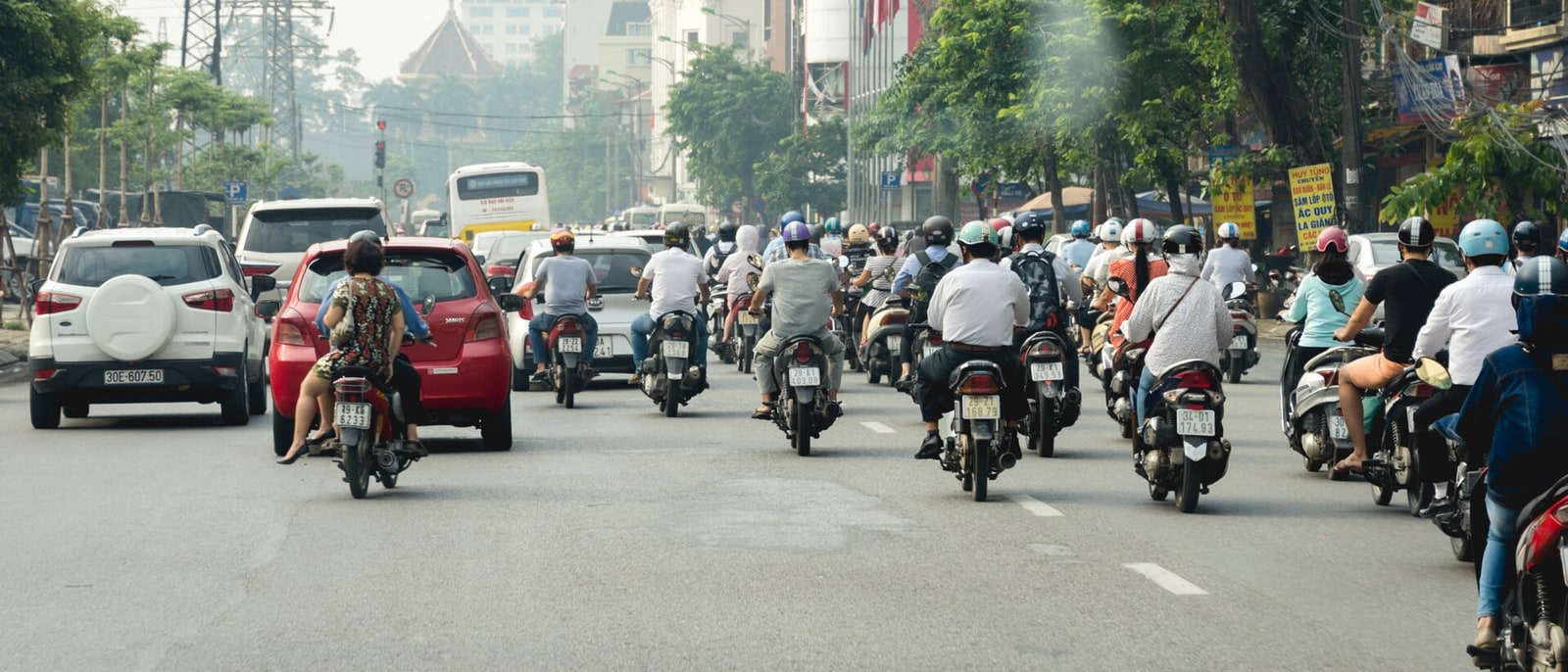
What doesn’t work is waiting for a gap, because there won’t be one, or breaking into a run, because it ruins the rider’s calculation. Do your first crossings alongside a local. By the third you have it.
The route, stop by stop
3 STOPS- 01
The northern winter
Vietnam stretches a long way north to south and the north has four real seasons, which surprises many who arrive expecting the tropics.
From December to February the temperature hovers around fifteen degrees and can drop below ten, with high humidity and no sun, and houses and hotels usually have no heating, so it feels colder than the thermometer says.
Spring brings mưa phùn, a fine persistent drizzle that’s very characteristic, summer is hot and humid with heavy rain, and autumn, September to November, is by far the best time of year: dry, mild and clear.
- 02
The dong and its zeros
The dong has a lot of zeros: a coffee costs tens of thousands and a dinner hundreds of thousands. The practical problem is that the 20,000 and 500,000 notes are similar in colour, and mixing them up when paying is a classic and expensive mistake. Worth separating them in your wallet for the first few days.
A trick many people use: drop three zeros and divide roughly to get a sense in euros.
Cards are accepted in hotels and mid-range restaurants, but stalls, taxis and markets need cash, and small notes are worth carrying because street vendors rarely have change for the big ones.
- 03
Air, water and connectivity
Hanoi has episodes of poor air quality, mainly between November and March, when lack of wind and temperature inversion trap pollution in the Red River valley. It doesn’t reach the extremes of some cities, but there are days when the index climbs considerably. If you’re sensitive or travelling with small children, it’s worth checking the way you check the weather.
Tap water isn’t drunk: bottled or filtered.
Mobile coverage is very good in the city and reasonable on northern roads, and an eSIM has you connected on arrival: which here solves the immediate things. Ordering a ride from the terminal, which is how you avoid haggling over a taxi, translating menus and checking routes. In the northern mountains, towards Sapa, there are stretches without signal.
Frequently asked
How do you cross the street in Hanoi?
Walk slowly, in a straight line at a steady pace, without running and without stopping dead. The bikes calculate your path and flow around you. What throws them is a sudden change. Waiting for the street to clear doesn’t work, because it doesn’t clear.
Do you need a visa for Vietnam?
It depends on your passport and the rules have changed several times in recent years, so check the official source before booking. There is an e-visa for many nationalities and exemptions of varying length for others.