OZU /MALAYSIA /KUALA LUMPUR /GUIDE
Kuala Lumpur in a day
9 h route4 stopsBest: Start early: the storm tends to arrive mid-afternoon, most of the yearUpdated July 2026
Kuala Lumpur makes far more sense if your first day runs chronologically, because it’s such a recent city that its entire history fits into one: you start at the exact spot where it was born, in 1857, and finish at the highest thing built here since.
It helps to know one thing before setting off: this isn’t a city with an ethnic quarter, it’s a city made of three communities (Malay, Chinese and Indian) that have lived alongside each other for a century and a half. The route crosses all three, and you notice it most in what you eat along the way.
The route, stop by stop
4 STOPS- 01
Masjid Jamek
The Klang and Gombak rivers meet here, and that mud is literally the “kuala lumpur” of the name. Tin miners came upriver as far as this point because it was as far as the boats went, set up camp, and everything else followed.
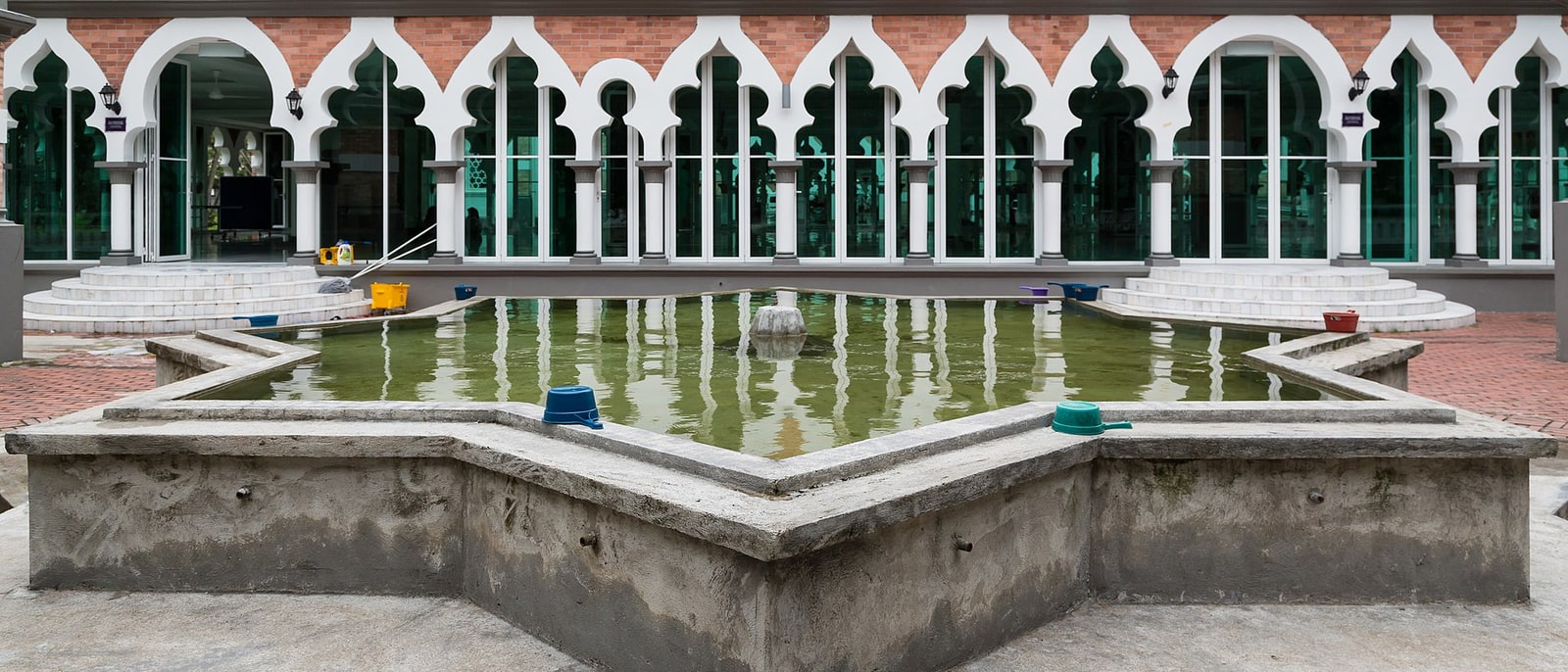
The mosque, from 1909, is built on that exact fork, with red-and-white brick domes and palms around it. It’s a good place to start because the new city stands behind it: two centuries in one frame.
Visit outside prayer times with arms and legs covered. They lend robes at the entrance.
- 02
Dataran Merdeka and the Sultan Abdul Samad Building
The colonial club played cricket on what is now Independence Square, and that’s exactly why it was chosen: on the most British spot in the city the Union Jack came down and the flag of Malaya went up, at midnight on 31 August 1957. The flagpole is still there and among the tallest anywhere. Opposite stands the Sultan Abdul Samad, from 1897, with its clock tower and arches: the British built it for the colonial administration in an Indo-Saracenic style mixing Mughal and Moorish. The irony is plain and worth a minute: the empire built its headquarters in architecture borrowed from other colonies.
- 03
Chinatown: Petaling Street and Central Market
Petaling Street sells everything, knock-offs included, and it’s fine for a wander, but what actually matters is in the side lanes: the long-standing food stalls, with hokkien mee, char kway teow and noodle soups that have been in the same spot for decades. Two steps away, Central Market is an art deco market hall from 1888 that used to be the wet market and now sells crafts. And a minute from there is the Sri Mahamariamman temple, Hindu and nineteenth-century, with its tower of coloured figures: the detail that sums the city up is that KL’s most important Hindu temple sits inside Chinatown.
- 04
The Petronas Towers and Merdeka 118
The Petronas towers are 452 metres and were the world’s tallest buildings from 1998 to 2004. They remain the tallest twin towers in existence.
You can go inside, and the thing to see is the bridge linking them at level 41, which isn’t bolted on: it slides on bearings, because the towers move in the wind and a rigid bridge would tear them apart.
From KLCC park at their feet comes the best photo at dusk. And looking south you see the newcomer: Merdeka 118, finished in 2023 at nearly 679 metres, today the second-tallest building in the world behind the Burj Khalifa. In twenty-five years this city has twice held something at the top of the global list.
Frequently asked
How many days do you need in Kuala Lumpur?
Two is enough for the city, three if you want to climb Batu Caves or take in Putrajaya. Many people use it as a one-night layover, and a single day covers the essentials because the centre is compact and well linked by metro.
Do you need to cover up to enter the mosques?
Yes: arms and legs covered, and hair covered for women. Mosques that receive visitors, such as Masjid Jamek or the National Mosque, lend robes and scarves free at the door, so you needn’t bring anything.