The Gòtic and El Born on foot
4 h route4 stopsBest: Early morning, before the tour groups arriveUpdated July 2026
The Gothic Quarter and El Born are Barcelona’s old town: two thousand years of city packed into one square kilometre of metre-wide alleys. Here the best strategy is to get lost on purpose, no map, and let the squares appear. It’s literally the best thing you can do in the city.
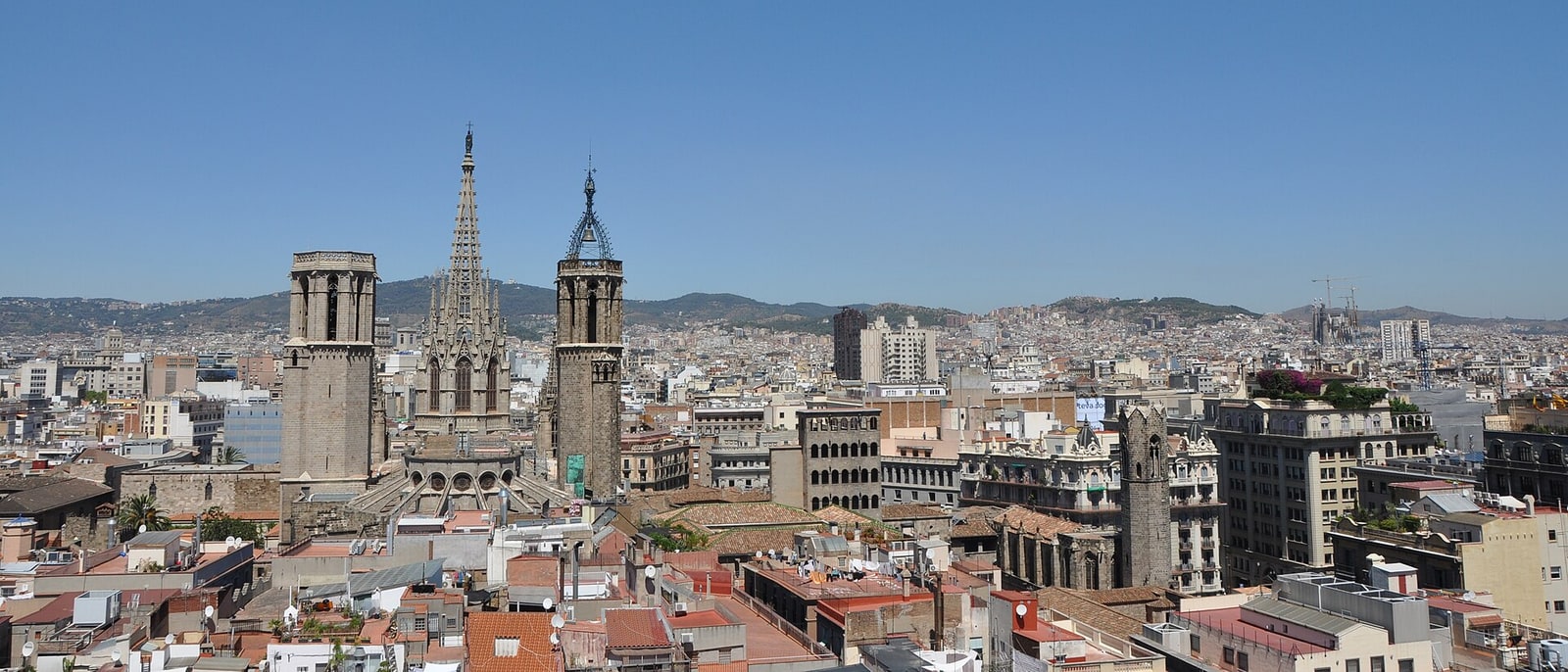
Beneath your feet is Barcino, the Roman city, which you can visit. Above it, a thousand years of Catalan Gothic, and beside it, El Born, the medieval guilds’ neighbourhood turned tapas-and-cocktail district. This route stitches them from the cathedral to the market.
The route, stop by stop
4 STOPS- 01
Barcelona Cathedral
The Gothic cathedral of the old town, which people confuse with the Sagrada Família though they have nothing in common: this one is 14th-century and has been finished for 600 years. Dedicated to Saint Eulalia, the city’s patron, martyred at thirteen.
The detail nobody expects: thirteen white geese live in the cloister, one for each year of the saint’s life, and they’ve been there for centuries.
Go up to the roof if it’s open: the maze of Gothic rooftops unfolds from above.
- 02
Plaça del Rei
An enclosed, stepped medieval square that served as the courtyard of the palace of the kings of Aragon. It’s where tradition says the Catholic Monarchs received Columbus back from the Americas, on the stairway that presides over it. The great part is underneath: the History Museum preserves four thousand square metres of Roman Barcino (streets, garum shops, a laundry) walked on gangways at basement level. It’s one of the most impressive and least crowded visits in the quarter.
- 03
Santa Maria del Mar
El Born’s church, and for many the most beautiful in Barcelona: pure Catalan Gothic, unadorned, with three naves of equal height that leave an interior of disorienting spaciousness. The neighbours and port stevedores raised it themselves in just 55 years, in the 14th century. It’s the star of the novel Cathedral of the Sea, which brought queues of readers. Go in at sunset, when the light pours through the rose window: the stone turns golden and the fame makes sense.
- 04
Mercat del Born
An 1876 iron market, closed as a market in 1971.
When they went to restore it into a library, they found beneath it the entire streets of the Ribera neighbourhood that Philip V had razed in 1714 to build a military citadel.
Today it’s a cultural centre displaying those ruins under the iron frame: seen from walkways, with the streets, wells and house foundations. It’s raw Catalan history, and entry to the site is free.
Frequently asked
What is the Gothic Quarter of Barcelona?
It’s the city’s medieval old town, a maze of narrow alleys between the Rambla and Via Laietana, built over Roman Barcelona. It packs in the cathedral, medieval squares and visitable Roman remains.
Are El Born and the Gòtic the same?
They’re two adjoining old-town neighbourhoods, split by Via Laietana. The Gòtic is the medieval and Roman core, El Born, to the east, was the guilds’ quarter and is now the tapas, shops and cocktails district. They’re walked together on foot.
How long does it take to see Barcelona’s old town?
Half a day covers the essentials: the cathedral, Plaça del Rei, Santa Maria del Mar and El Born, with time to get lost in the alleys. Seeing it slowly and going into the museums can take a full day.