Madrid: practical tips
1 h route5 stopsBest: Spring and autumn. July and August are another cityUpdated July 2026
Madrid is an easy city, but three things throw newcomers: people eat lunch and dinner extremely late, summer heat forces you to rearrange the day, and almost the whole centre is walkable even if the map suggests otherwise. Once those sink in, the rest takes care of itself.
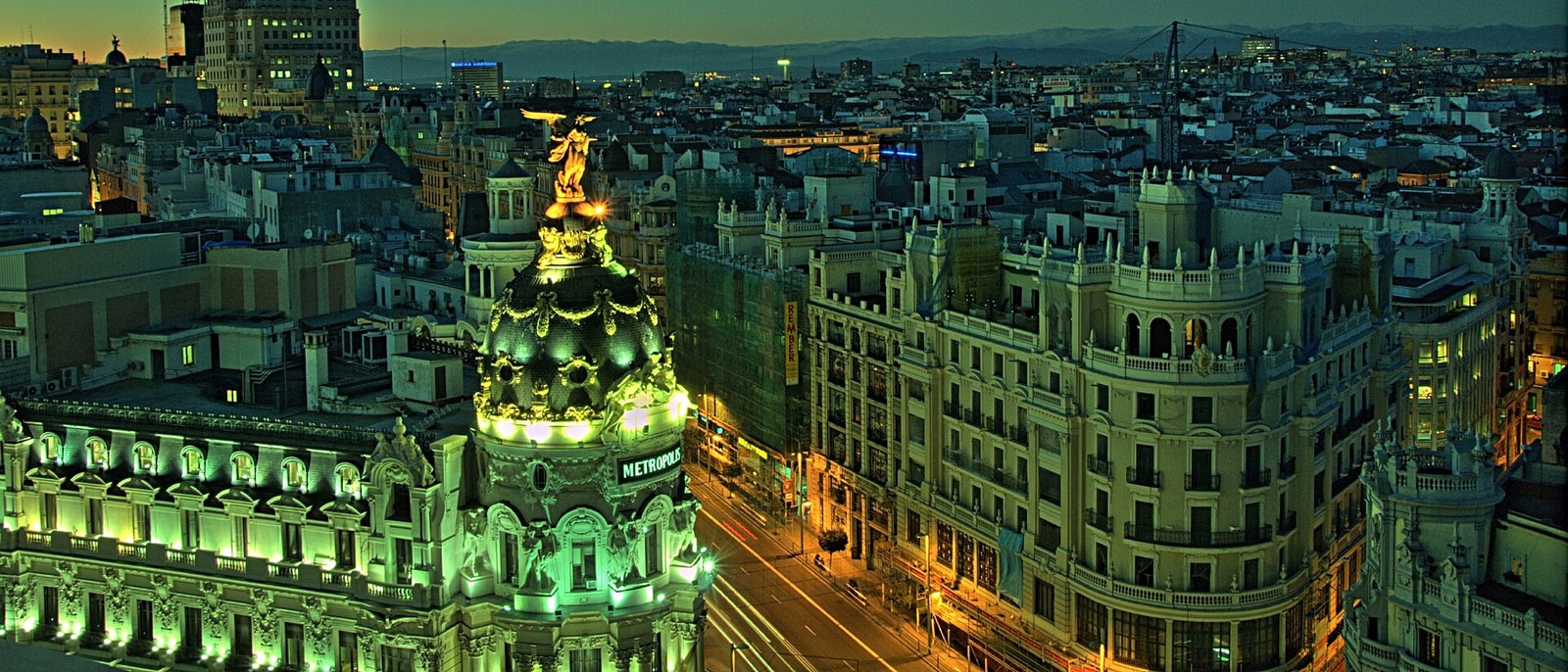
Here’s the practical stuff: hours, money, tipping, heat and connectivity. No prices or museum timetables, which change every season: only what holds year after year.
The route, stop by stop
5 STOPS- 01
The clock: lunch late, dinner later
Lunch runs 2 to 4pm and dinner starts from 9pm. Many kitchens don’t open earlier, and if you walk in at seven for dinner you’ll get a strange look or the tapas menu. It isn’t an eccentricity: the whole day is simply shifted.
If you’re hungry at "European" hours, use the tapas bars: they serve all day.
And don’t book dinner for eight thinking you’re being early: you’ll arrive before the chef.
- 02
The July and August heat
In high summer Madrid tops 40°C and the centre has no shade: from two to seven in the afternoon the street is genuinely hostile. The city is seen from eight to noon and from eight in the evening, when it cools and everyone comes out. The middle hours are for museums, which have air conditioning, or for the siesta, which here isn’t a cliché but survival. Carry water and a hat: the public fountains work.
- 03
Money and tipping
Card or phone works for practically everything, right down to a beer in a local bar. Carrying cash only pays off for markets like the Rastro. The currency is the euro. Tipping isn’t compulsory and isn’t expected: there’s no percentage, no arithmetic. If you enjoyed it, round up or leave some coins, and that’s that. Nobody will chase you for not leaving 20%.
- 04
Getting around: it’s nearly all on foot
The historic centre fits into very little: half an hour on foot from the Royal Palace to the Retiro, with almost everything you came to see in between. The metro only pays off for the airport, the outer neighbourhoods, or when the heat bites.
If you’ll use it for several days, the rechargeable multi card is worth it and is sold at any machine. It’s one of the largest and cleanest networks in Europe, and it runs until 1:30am.
- 05
Data on your phone
Madrid is navigated by phone: maps for the old town, museum tickets that are QR codes, the metro, ride apps, and even the menus in many bars, which are now a code on the table. Without data, half the trip gets harder. If you’re coming from outside the EU, roaming is expensive and hunting for wifi wastes time exactly when you don’t have it. A local eSIM activates the moment you land and saves you the conversation at the counter.
Frequently asked
What time is dinner in Madrid?
From nine at night. Many kitchens don’t open before then, and lunch runs from two to four. If you’re hungry at other times, tapas bars serve all day.
Do you tip in Madrid?
It’s not compulsory and it isn’t expected. There’s no set percentage: if you enjoyed it, round up the bill or leave some coins. In Spain a tip is a gesture, not a rule.
When is the best time to visit Madrid?
Spring (April-June) and autumn (September-November), with mild temperatures. July and August top 40°C and force you to rearrange the day: streets early morning and at night, museums at midday.