Madrid in a weekend
48 h route5 stopsBest: Friday afternoon to Sunday lunchtimeUpdated July 2026
It all fits: the historic centre, one big museum, a couple of neighbourhoods and even an escape to Toledo if you get up early. The key isn’t the list of sights, it’s the order: monuments and museums in the morning, neighbourhoods in the afternoon and evening, because the city changes hands after eight.
This is the split that works: Friday to arrive and eat tapas, Saturday for the centre and a museum, Sunday for the Rastro and the Retiro before your flight. It’s a three-piece plan you can trim without it collapsing: each day stands on its own.
The route, stop by stop
5 STOPS- 01
Friday: landing, then La Latina
Day one isn’t planned: you land, drop the bag and get out on the street. La Latina is the place: Cava Baja and its surroundings pack in the taverns, you move bar to bar and eat standing without booking a thing. If you land in daylight, go up to the Royal Palace and the Almudena Cathedral first: they’re next door and free from outside. It’s the city’s best opening photo and it puts you on the map for the rest of the weekend.
- 02
Saturday morning: the old town
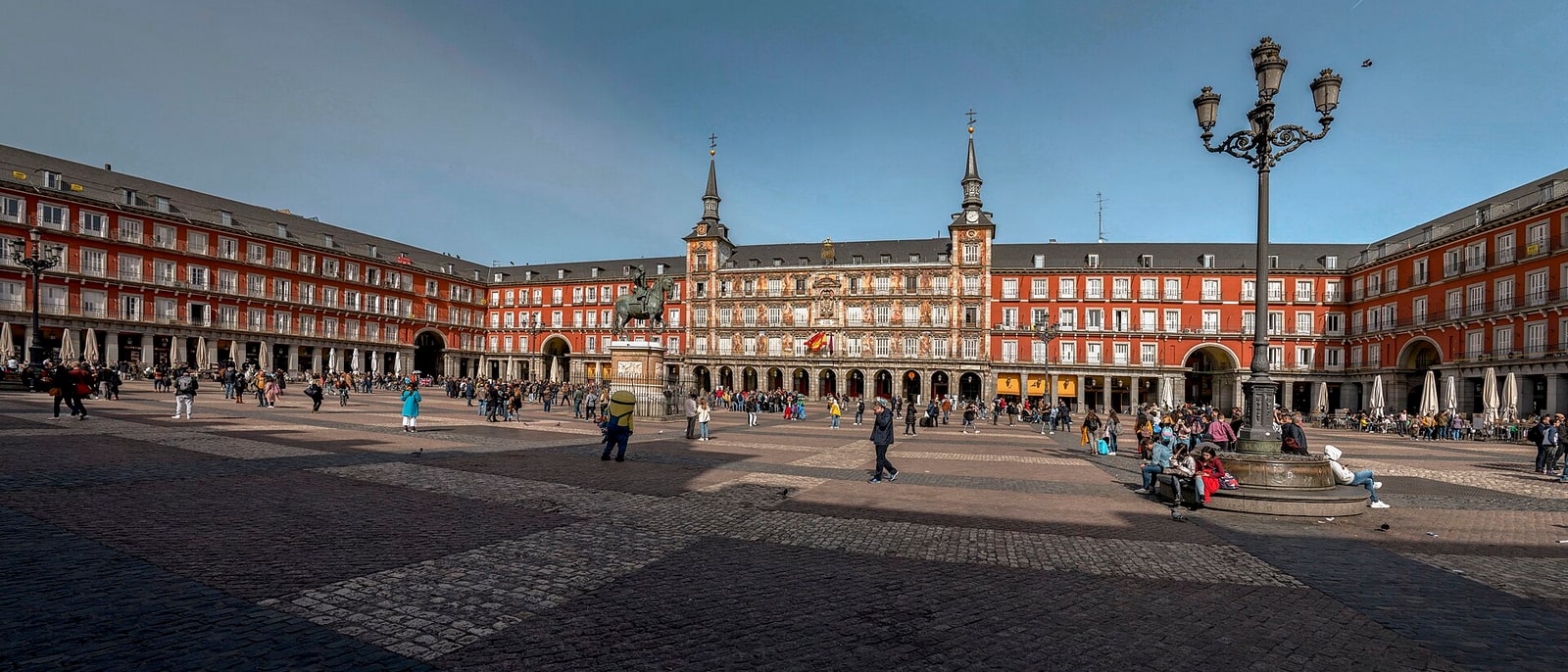
The classic line: Puerta del Sol, Plaza Mayor, Mercado de San Miguel and the Royal Palace, then back up the whole length of the Gran Vía. It’s four hours on foot without once taking the metro, and it’s all free unless you go inside the palace.
Start at nine: from eleven Sol and the Plaza Mayor fill with groups.
Eat around two, late as they do here, and save the afternoon for the museum.
- 03
Saturday afternoon: one museum, not three
Pick ONE: the Prado if you care about Velázquez and Goya, the Reina Sofía if you’re here for the Guernica, the Thyssen if you want the fullest, most manageable sweep. Doing all three in a weekend is the classic mistake and you leave hating painting. Book a slot online. The last two hours are usually free, and for that reason the most crowded: if you’re tight on time, pay and walk in calmly mid-afternoon.
- 04
Saturday night: Malasaña and Chueca
The two neighbourhoods north of the Gran Vía are where the city goes out: Malasaña with its Movida hangover and indie bars, Chueca with its terraces and Madrid’s gay scene. A single street, Fuencarral, divides them.
Dinner is late, from nine, and no plan is needed: go down and walk into wherever there are people.
Plaza del Dos de Mayo and Plaza de Chueca are the two meeting points.
- 05
Sunday: the Rastro, then the Retiro
Sunday morning the Rastro spills down the Ribera de Curtidores: it’s the old-school flea market and, more than shopping, you go to see it. It winds up around three and the whole neighbourhood ends up drinking beer. Then the Retiro: the lake, the Crystal Palace and the Cuesta de Moyano with its book stalls. It’s the best possible close, and it leaves you near Atocha if you fly out in the afternoon.
Frequently asked
How many days do you need for Madrid?
Two full days cover the historic centre, one big museum and a couple of neighbourhoods. With three, you can add a day trip to Toledo or Segovia. One day covers the centre on foot, but without museums.
What to do in Madrid on a Sunday?
The Rastro in the morning, the flea market running down the Ribera de Curtidores in La Latina, then beers in the neighbourhood and a walk in the Retiro, which on Sundays is full of local life.
Where to stay in Madrid for a weekend?
In the centre, between Sol, La Latina and Malasaña: everything in this plan is walkable and you won’t need the metro except for the airport. It’s a compact city and staying central saves more time than you’d think.