OZU /SWITZERLAND /GENEVA /GUIDE
International Geneva
8 h route4 stopsBest: Weekdays: the UN closes at weekends for much of the yearUpdated July 2026
Two hundred thousand inhabitants: fewer than a mid-size city. And here are the UN’s European headquarters, the Red Cross, the World Health Organization, the World Trade Organization and some two hundred more organisations. Around 40% of residents are foreign: this small city is the diplomatic capital of the world.
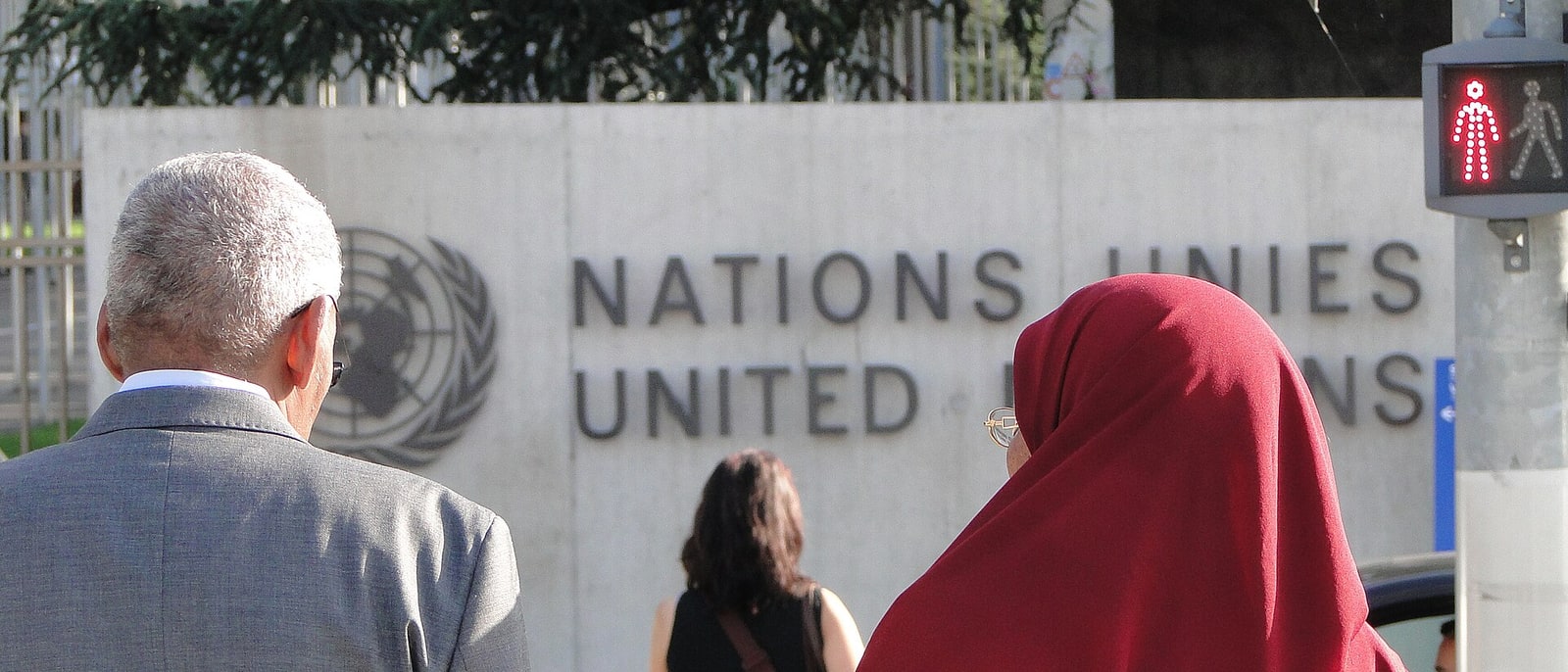
That isn’t a brochure statistic: it’s an entire district you can visit, and it tells the 20th century better than many museums. And on the edge of the city, underground, sits the largest machine ever built.
The route, stop by stop
4 STOPS- 01
The Broken Chair
In the middle of the Place des Nations, facing the UN gate: a twelve-metre, five-tonne wooden chair with one leg blown off. Daniel Berset raised it in 1997 at the request of anti-landmine organisations, exactly while the treaty to ban them was being negotiated.
The broken leg stands for those maimed by mines and cluster bombs, and the chair sits there, planted in front of the diplomats, so they see it going in and coming out. It was meant to be temporary, a few months. It’s still there almost thirty years later.
It’s free, it’s in the street, and it’s one of the best public sculptures in Europe.
- 02
The Red Cross Museum
If you enter one museum in Geneva, this one. It tells the story of the movement born here in 1863 (a Genevan, Henry Dunant, saw the carnage at the battle of Solferino and decided something had to be done) and from there, the entire 20th century from the side of those who suffered it.
It’s organised in three parts: defending human dignity, restoring family links and reducing natural risk. The best of it is the prisoner-of-war card index: seven million handwritten cardboard cards with which the Red Cross traced the missing of the First World War.
Seeing them stacked says more than any label.
- 03
The Palace of Nations
The UN’s second centre after New York and, by number of meetings, the first. The building wasn’t made for the UN: it was raised in the 1930s for the League of Nations, the organisation that was going to prevent another world war and didn’t. That the UN inherited its failed predecessor’s headquarters is the irony this whole district rests on.
The guided tour shows the assembly halls, among them Room XX, with the ceiling of coloured stalactites donated by Spain, the work of Miquel Barceló. Book ahead and bring your passport: this is international territory and the check is real.
- 04
CERN and the Science Gateway
At the end of an urban tram line sits the largest particle physics laboratory in the world, and beneath it, a hundred metres down, the Large Hadron Collider: a 27-kilometre ring that crosses under the French border without asking anyone’s permission. The Higgs boson was confirmed here in 2012, and the World Wide Web was born here in 1989, as a tool for physicists to share documents.
The Science Gateway, by Renzo Piano, opened in 2023 and is free: exhibitions, a real piece of accelerator, workshops. Guided tours of the facilities are booked separately, released weeks ahead, and they go fast.
It’s the best free thing to do in the most expensive city around.
Frequently asked
Why are the UN and the Red Cross in Geneva?
The Red Cross was born here in 1863, founded by the Genevan Henry Dunant after he saw the battle of Solferino. And the Palace of Nations was built in the 1930s for the League of Nations. When that failed, the UN inherited the building and the city’s neutral vocation.
What is the Broken Chair in Geneva?
A twelve-metre, five-tonne sculpture by Daniel Berset, installed in 1997 in front of the UN: a wooden chair with one leg blown off, standing for those maimed by landmines. It was meant to be temporary and it’s still there.
Where was the World Wide Web invented?
At CERN, on the edge of Geneva, in 1989: Tim Berners-Lee proposed it as a tool for the lab’s physicists to share documents. A tram gets you there from the centre and the visitor centre is free.