Bangkok: what’s worth knowing first
1 h route5 stopsBest: Before booking: the season changes the whole tripUpdated July 2026
Two things make an otherwise easy, cheap city hard: the heat and the traffic. Both are managed by knowing about them, and nothing below is a dramatic warning. These are the things that will happen to you on day one.
And one that gets told less often and saves you a bad afternoon: the most common scam in the city isn’t a pickpocket, it’s a friendly, well-dressed man who stops you near a temple.
The route, stop by stop
5 STOPS- 01
The season changes everything
Bangkok has three seasons and they bear no resemblance to each other. November to February is the good one: hot, but bearable, and little rain. March to May is the hot dry season, and April in there is simply brutal: forty degrees with humidity and no cloud. June to October it rains, though not all day: an hour’s downpour in the afternoon and that’s it.
The practical conclusion: if you can choose, come in winter. If you come in April, organise your day like the locals do (out first thing, indoors from midday to four) and don’t fight the sun, because you lose.
And if you come in mid-April, Songkran will catch you, which is the largest water fight on the planet and cannot be dodged: either you join in or you don’t go outside.
- 02
“The Grand Palace is closed today”
It works like this: you approach the Grand Palace and an immaculate man with good English, sometimes with a lanyard, kindly informs you that today it’s closed for a ceremony, a Buddhist holiday, or whatever occurs to him. But not to worry: he knows a better temple, and look, there’s a tuk-tuk right there that will take you for almost nothing.
The real destination is a jeweller’s or a tailor’s where you’ll be worked on for an hour. The Grand Palace opens every day, and if there genuinely were a ceremony the ticket office would tell you, not a stranger on the pavement.
The rule is simple and covers everything: nobody who approaches you in the street unprompted is going to solve your day.
- 03
The tuk-tuk is worse than the taxi
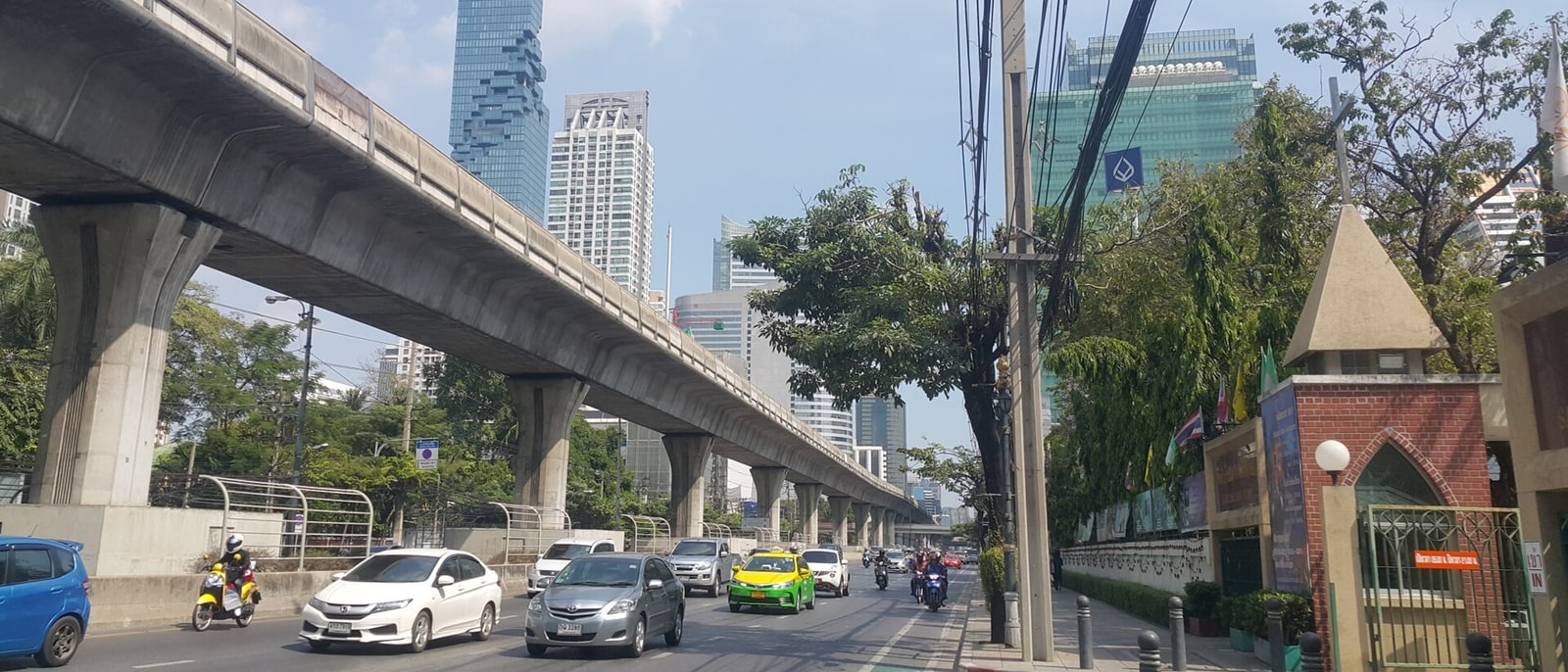
The tuk-tuk gives you the photo of Bangkok and also the worst transport in Bangkok: no meter, so the price is negotiated and you always negotiate worse than a taxi’s meter, no air conditioning, so you breathe the exhaust of the bus in front, and it sits in exactly the same jam as everyone else. Take one once, at night, for a short hop, with the price agreed before you get in. As an experience, fine. As a way of getting around, a metered taxi is cheaper and more comfortable, and the Skytrain beats them both.
- 04
The water, the ice and the head
Tap water isn’t drunk, full stop. Bottled water costs pennies and is on every corner. Ice, on the other hand, has an unfair reputation: the stuff at the stalls is industrial, arrives in cylinders with a hole through the middle and is made with treated water. If it has that shape, go ahead.
And two things that aren’t hygiene but respect, and are taken seriously here: you don’t touch anyone’s head, not even a child’s as a joke, because it’s the highest part of the body and therefore the most sacred.
And feet are the opposite: don’t point at anything with your foot or aim your soles at an image of the Buddha. It sounds like a detail and it isn’t.
- 05
Data on your phone
In Bangkok your phone does real work: the street names are in an alphabet you can’t read, the sois are numbered in a way that isn’t obvious, and the difference between catching the train and sitting in a jam is knowing where the station is. Add the translator for a stall’s menu and the apps for a car at a fixed price. With an Ozu eSIM you land already connected, without hunting for an operator’s desk in the terminal or paying roaming. It installs before you fly and switches itself on when you arrive.
Frequently asked
When is the best time to visit Bangkok?
November to February: it’s still hot, but bearable, and there’s little rain. April is the hardest month, forty degrees with humidity, and Songkran lands in the middle of it. June to October it rains, though usually an hour’s downpour in the afternoon rather than a whole day of it.
Is Bangkok safe?
Very, as far as violence goes. The problem is the con, not the mugging: the classic scam starts with a friendly stranger telling you the Grand Palace is closed today and offering a cheap tuk-tuk that ends at a jeweller’s. The Grand Palace opens every day.
Can you drink the tap water in Bangkok?
No, you drink bottled, which costs pennies and is on every corner. The ice at the stalls is safe: it’s industrial, arrives as cylinders with a hole through the middle and is made with treated water.