Eating in Bangkok: the street wins
3 h route4 stopsBest: Yaowarat from 6pm. The rest, any hourUpdated July 2026
Here you eat in the street, and it isn’t an eccentricity for travellers: it’s where the people who live in this city eat, every day, because home kitchens are small and the one on the corner has been making a single dish for thirty years. The rule is the usual one and it never fails: a queue of locals, one dish on the menu, and the wok lit.
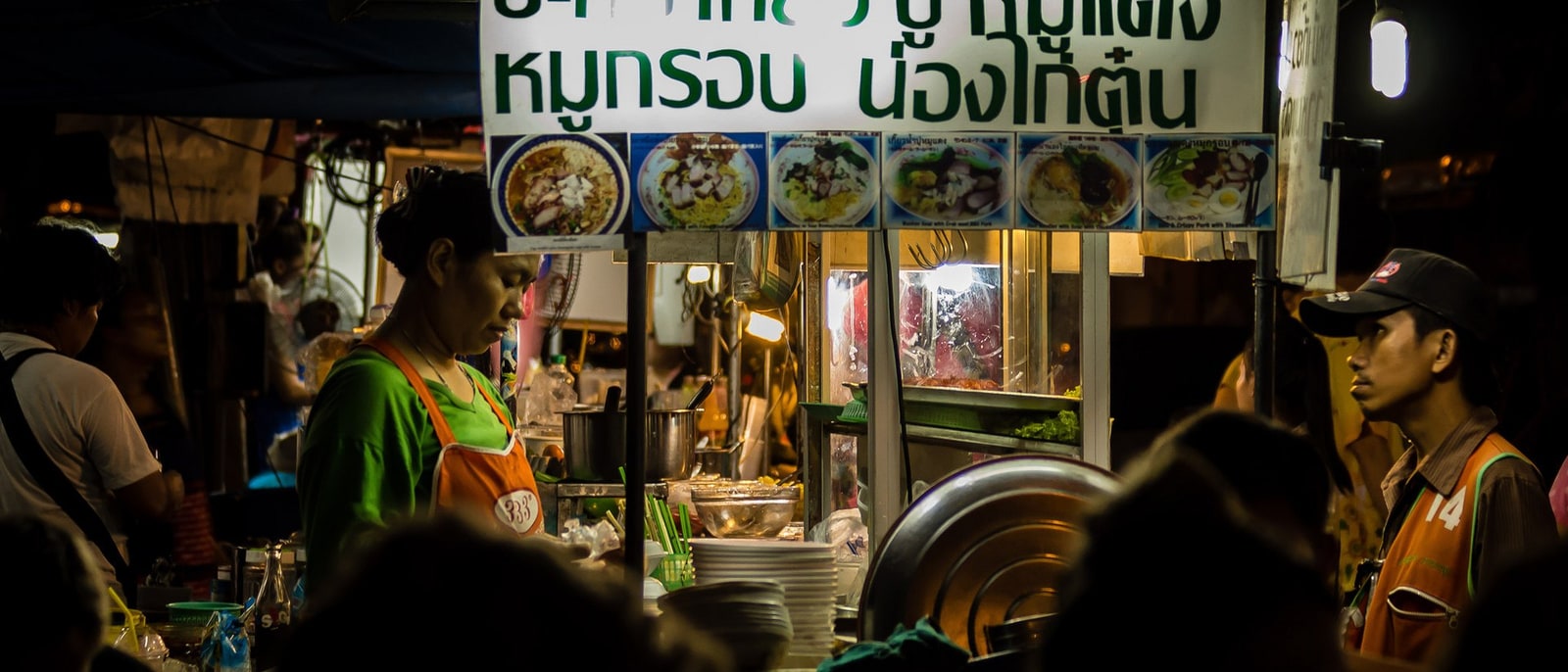
Here’s what to eat, and a warning: pad thai isn’t the national dish you’ve been told about, it’s the one that’s easiest to explain to a foreigner. What people actually eat every day is something else, and it’s two stalls further along.
The route, stop by stop
4 STOPS- 01
Pad kra pao, the real dish
Minced meat fried over savage heat with garlic, chilli and holy basil, on rice, with a fried egg with crisp edges on top. That’s what a Thai orders when they don’t want to think, and it’s what you should order. It takes two minutes to make and five to eat.
Ask for it with the egg (kai dao) or something will be missing. And say something about the chilli: the default here is not your default.
Holy basil isn’t the pesto kind: it tastes of clove and pepper and it’s half the dish.
- 02
Som tam, and the sound of the mortar
Shredded green papaya pounded in a clay mortar with lime, fermented fish, peanut, tomato and however much chilli you say. It’s from the northeast, from Isan, and today it’s eaten across the country. The sound of the mortar is the soundtrack of any market. Serious warning: the Thai level of heat in som tam is a different sport. Say “not spicy” and they’ll still make it spicy. Say “a little” and brace. It isn’t an urban legend or a test of manhood: the scale simply isn’t the same.
- 03
Boat noodles
They’re called that because they were sold from boats on the canals, and the bowl had to be small so it wouldn’t spill as it passed from hand to hand. The canals were covered over. The bowl stayed: it’s three spoonfuls of dark, intense, spiced broth, and nobody has just one.
The fun is stacking the empty bowls on the table until the tower leans. Six is normal, ten raises no eyebrows.
The broth has pig’s blood in it, which is what gives it the colour and the body, and telling you afterwards would have been cowardly.
- 04
The 7-Eleven, without irony
It sounds like a joke to recommend a convenience-store chain, but in Bangkok the 7-Eleven is part of the circulatory system: there are thousands, they’re always open, and they’re where the air conditioning saves you at two in the afternoon. The toasted sandwich from the machine has an entirely deserved reputation. It’s also where you buy cold water, pay for things in cash and top up whatever needs topping up. It never replaces the street: the street is the food. But at three in the morning, hungry and with nothing open, it exists.
Frequently asked
Is it safe to eat street food in Bangkok?
Yes, and it’s where you eat best. The rule is to look for a queue of locals and a lit wok: high turnover and food cooked in front of you. What’s worth watching isn’t the food but the ice and the tap water.
What should you eat in Bangkok?
Pad kra pao with a fried egg, which is what people actually eat daily, som tam if you can take the heat, boat noodles by the bowl, and mango sticky rice for pudding. Pad thai is fine, but it’s what gets shown to the tourist, not the national dish.
Where do you eat best in Bangkok?
In Yaowarat, the Chinatown, from six in the evening when the kitchens come out onto the pavement. Duck into the side alleys and don’t stay on the main avenue: the three-generation stalls are inside.