Sydney: practical tips
1 h route4 stopsBest: The austral summer runs December to February: Christmas is on the beachUpdated July 2026
Australia has some of the highest skin cancer rates in the world, and in Sydney that stops being a brochure statistic and becomes a daily instruction. The sun here doesn’t hit like the Mediterranean: ultraviolet radiation is appreciably more aggressive, and one careless afternoon at Bondi is genuinely paid for. The long-running official campaign boils down to three verbs (cover up, put on cream, wear a hat) and Australians follow it without arguing. Copy them.
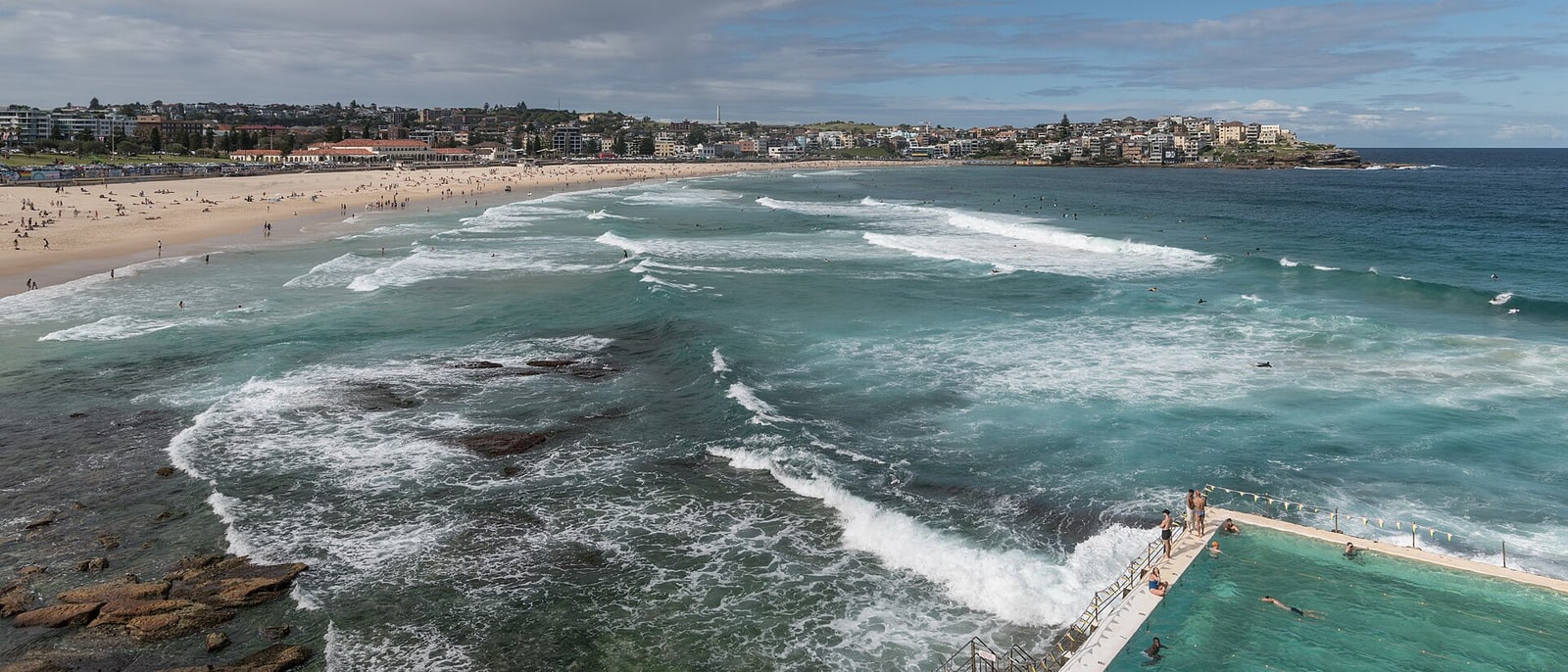
From there, several things in this city work the opposite way to what you expect: the seasons are inverted, tipping isn’t done, the sea water has rules and transport is paid for by tapping. None of it is complicated, but all of it is welcome known in advance.
The route, stop by stop
4 STOPS- 01
The sun, which here is another thing
Look at the locals on the beach: many swim in a shirt, with a hat and shade, and it isn’t modesty. Australia has some of the highest skin cancer rates on the planet and public awareness of it is enormous, to the point that a health campaign has spent decades repeating the same thing: cover up, put on cream, wear a hat.
The reason is that the UV index here reaches values Europe almost never sees, and the damage is done in minutes, not hours. In summer, between ten and four, shade isn’t a luxury. The practical part: high-factor cream and reapply it, a real hat, and if you’re going to be in the water for hours, a lycra shirt like the locals.
And don’t trust cloud or cool air: cloud filters the heat but lets the ultraviolet through, and the ultraviolet is what burns.
- 02
The flags on the beach
On Sydney’s ocean beaches there are two flags, one red and one yellow, planted in the sand some distance apart. They mark the stretch the lifesavers have chosen because there’s no rip there, and that zone moves day to day, because the current moves. Swimming between them isn’t a tourist recommendation: it’s this country’s basic rule.
Outside the flags the danger has a name: rip currents, channels of water heading back out to sea that drag swimmers offshore every year. They’re hard to see from the shore and can’t be beaten by swimming straight at them. Bondi has well-documented rips.
If you’re ever caught, the instruction is not to swim against the current but parallel to the beach until you’re out of it, and to raise an arm. Volunteer surf lifesaving is a national institution here, and doing what they say is the least you can do.
- 03
Tipping, which doesn’t exist
In Australia you don’t tip and it isn’t meanness: the legal minimum wage is among the highest in the world and hospitality staff earn a salary that doesn’t depend on what you leave on the table. Nobody will look at you badly for leaving nothing, because the bill is already the bill.
Two related things are worth knowing. One: at weekends and on public holidays many places add a surcharge to the bill, because the law requires higher pay for people working those days. It’s stated and it isn’t a scam: it’s the system working.
And two: the price on the menu is the final price, tax included, with no surprises at the till. You can round up if you loved it, but it’s genuinely optional, not a disguised tax.
- 04
The calendar upside down
The seasons flip here, and that, which everyone knows by heart, gets forgotten at the booking stage. The austral summer runs December to February, winter June to August, and the best times to come are the ones in between: March to May and September to November, when neither the sun punishes nor the water is cold.
What almost nobody calculates properly is January. Here it isn’t an ordinary month: it’s the equivalent of August in Europe, with the long school holidays and the whole country out of the office. Prices rise, the beaches fill and the city runs at another rhythm. Christmas, besides, falls in high summer, and what happens on 25 December isn’t a roast at the table but cold prawns and beer on the sand.
And from May to November the humpback migration passes offshore, visible free from the cliffs. The calendar here decides more than it seems.
Frequently asked
Do you tip in Sydney?
No. The Australian minimum wage is among the highest in the world and hospitality doesn’t depend on tips: the bill is already the bill, with tax included in the menu price. You will see a surcharge at weekends and on public holidays in many places, because the law requires higher pay for people working those days. It’s stated and it isn’t a scam.
When is the best time to visit Sydney?
March-May or September-November: the seasons are inverted and those are the in-between months, without punishing sun or cold water. Avoid January if you can, it’s the Australian August: school holidays, the whole country out and prices up. From May to November the humpback whales pass and can be seen free from the cliffs.