Day trips from Sydney
9 h route4 stopsBest: May to November the whales pass along the coast. Not a minor extraUpdated July 2026
The blue of the Blue Mountains is literal and has a physical explanation: eucalypts release droplets of oil into the atmosphere, those particles scatter short-wavelength light, and that’s why anything more than a couple of kilometres away looks blue. It isn’t a metaphor or a pretty name: it’s what you see from the first lookout.
That place is two hours from the centre on a suburban train, and that detail, a suburban train, sums up Sydney’s day trips. You don’t need to hire a car or book a tour to get out: the train network reaches the mountains, the ferries reach the northern beaches, and the second-oldest national park in the world has its own railway station. What surrounds this city is bush, cliff and ocean, and it’s all under two hours away.
The route, stop by stop
4 STOPS- 01
The Blue Mountains
These mountains give no peaks: they form a sandstone plateau split by enormous gorges, with eucalypt forest as far as you can see. From the Echo Point lookout, in Katoomba, you see the Three Sisters, three rock spires leaning into the void, and a valley that fades into blue. That colour is eucalyptus oil scattering light, and it’s why the park is called what it’s called.
There are two ways to do it and both are good: along the top, chaining lookouts together, or down to the gorge floor on the tracks. To go down there’s the scenic railway, with a fifty-two-degree gradient that makes it the steepest in the world. It began as a mining train hauling coal out of the valley and now it carries people. It’s all done by train from Central, no car and no organised tour. Take warm clothes: it’s a thousand metres up and it frosts in winter.
- 02
The Royal National Park
South of the city, an hour by train, there’s a national park declared in 1879 which is, after Yellowstone, the second oldest in the world. That fact alone justifies the trip: when this was protected, the very idea of a national park was seven years old.
What’s there is cliff coast, sand coves, bush and a thirty-kilometre coastal track you can do in sections. The odd jewel is the Figure Eight Pool, a natural figure-of-eight pool cut into the rock platform, which only appears at low tide and which has become famous to the point that visits have to be regulated: people have gone at high tide and had to be rescued, because the waves sweep the platform.
If you go, read the tide table and obey it. The rest of the park is quiet, vast and has train stations along its edge.
- 03
The Hunter Valley
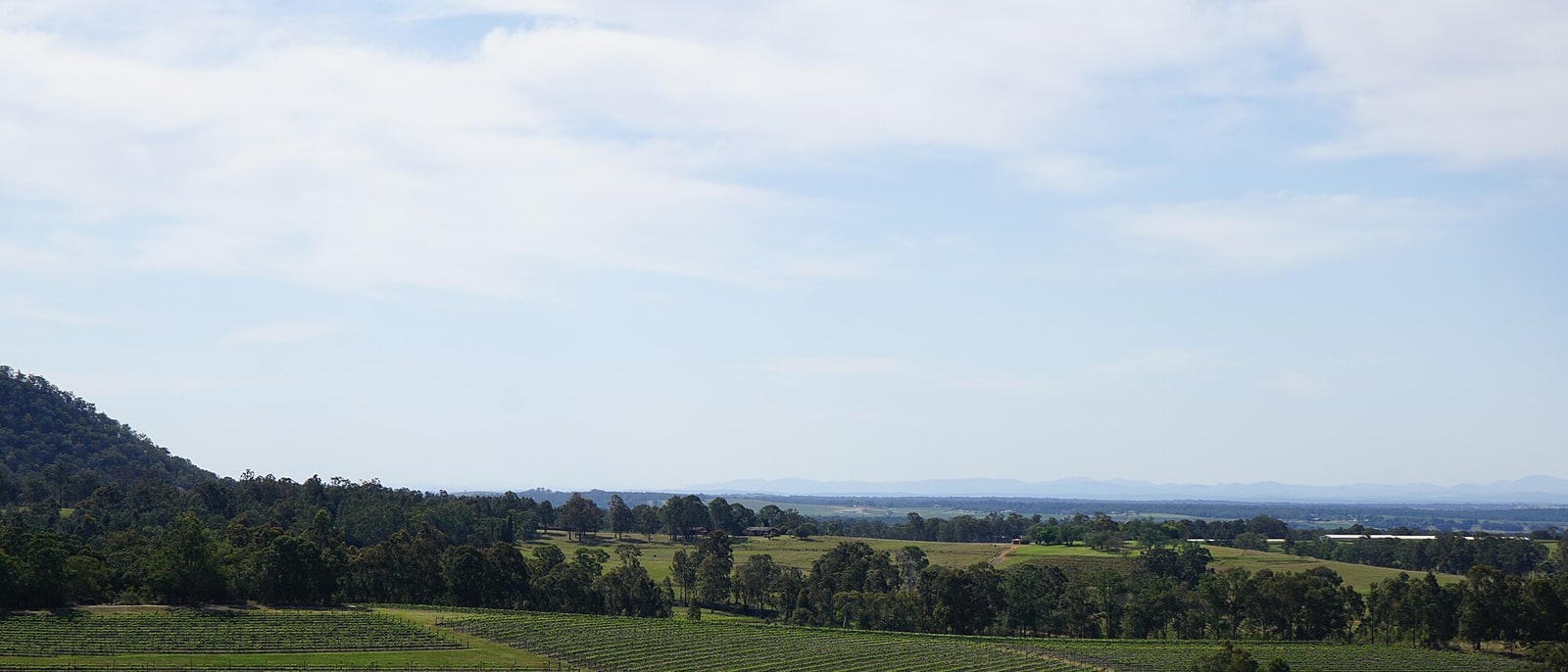
Two hours north grows Australia’s oldest wine region, planted since the first half of the nineteenth century. It’s the classic weekend outing from Sydney and it works as one: cellars, food and road between the vines.
What you need to know for the visit to make sense: the grape here is semillon, and it makes a white that’s a global oddity. It’s bottled young, at very low alcohol, and freshly made it’s lean and doesn’t say much. What happens is that with ten or fifteen years in bottle it turns into something toasty and complex that resembles no other white. It’s one of the few wines in the world made with a long decade in mind. If you taste a young one and an old one from the same place and can’t tell the difference, there was no difference.
And a practical warning: this is roads and wine, so either someone who isn’t drinking drives or you go with hired transport.
- 04
The whales, and the northern cliffs
Between May and November humpback whales pass in front of Sydney on their annual migration between Antarctica and warm northern seas, and this isn’t a compulsory paid excursion: you see them from land, from any cliff facing the open ocean. Thousands of them travel this coast each season.
The places are the headlands: North Head at Manly, reached by ferry and bus, and The Gap at Watsons Bay, also reached by ferry, are two balconies over the ocean. You bring patience, watch the horizon and the spouts appear. You can hire boats that go out to find them, and that gets you closer, but it’s worth knowing you can see them from the cliff just as well and for nothing.
And besides, those two headlands are among the best lookouts in the city even if no whale passes: sandstone cliff dropping sheer into the Pacific, and behind it, the harbour.
Frequently asked
Can you get to the Blue Mountains by train from Sydney?
Yes, and it’s the best way: about two hours on a suburban train from Central to Katoomba, no car and no organised tour. There you’ll find the Echo Point lookout with the Three Sisters and the scenic railway, which drops into the gorge on a 52-degree gradient and is the steepest in the world. Take a coat: it’s a thousand metres up.
Why are the Blue Mountains blue?
Because eucalypts release droplets of oil into the atmosphere and those particles scatter short-wavelength light, so anything more than a couple of kilometres away looks blue. It isn’t a poetic name: it’s a physical effect you can see from any lookout in the park.