A weekend in Prague
20 h route4 stopsBest: April to June and September to OctoberUpdated July 2026
With two days, the first is the obvious one, the uphill route from old town to castle, and the second decides what you remember. There are two ways to spend it, and they’re quite different: stay and go down into the neighbourhoods where people actually live, or take an hour’s train and see Bohemia.
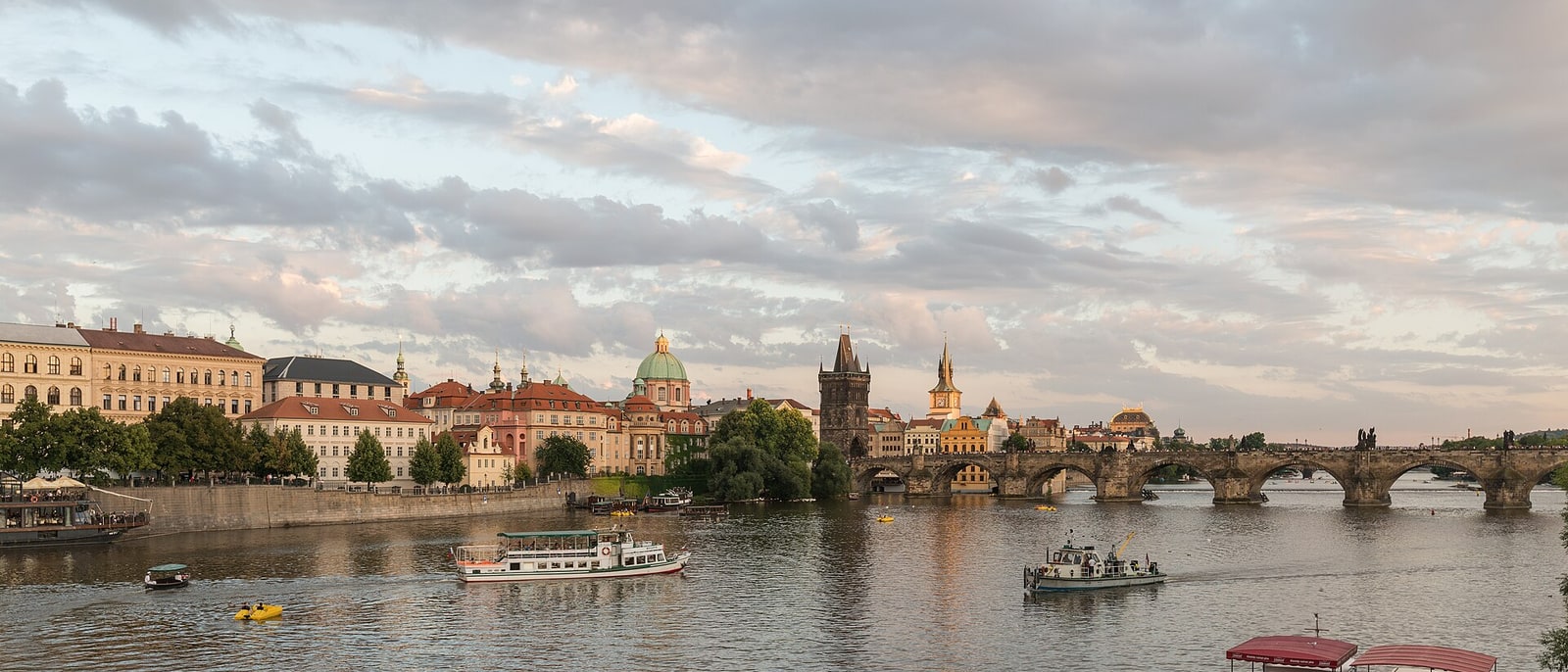
What nobody who has been more than twice recommends is doing the centre again. The old town runs out fast, and by the second lap you start noticing how many of its shops sell the same thing.
The route, stop by stop
4 STOPS- 01
Saturday: the uphill route
The day comes from the one-day route and works the same: clock at nine, Josefov, bridge before eleven, castle in the afternoon once the tour groups have come back down. With two days you can afford to go inside things without watching the clock.
- 02
Saturday night: the beer, and how to order it
The Czech Republic has led the world in beer per head for decades, and it shows in the fact that beer isn’t a night out here, it’s dinner. You ask for “pivo” and get a pale lager under three fingers of dense foam, which here means it was poured properly, not that you’ve been short-changed. The pours have names: the standard one is hladinka. Ask for mlíko and the glass arrives almost entirely foam, which sounds like a joke and is a real way to drink it, very sweet and very soft. In neighbourhood places the glass keeps being replaced until you put the beer mat on top of it: that’s the sign you’re done.
- 03
Sunday A: Vinohrady and Žižkov
Vinohrady means what it says: royal vineyards, built over in the nineteenth century with bourgeois blocks and stucco fronts. It has parks with a view, the strangest church in the city (the Sacred Heart, 1932, with a giant clock set into it like an eye) and cafés where nobody addresses you in five languages.
Žižkov next door is the opposite: working-class, with more bars per square metre than any other part of Prague and an eighties television tower that shows up from everywhere. Since 2000 it has had ten giant bronze babies crawling up its pillars, by David Černý, and it remains unclear whether they improve the tower or not.
- 04
Sunday B: Kutná Hora and the bone chapel
Kutná Hora financed the kingdom of Bohemia with its silver, and it once rivalled Prague. Today it has a Gothic cathedral dedicated to St Barbara, patron of miners, with buttresses that look like a skeleton seen from outside.
What made it famous is in the Sedlec district: an ossuary where the bones of between forty and seventy thousand people are arranged as decoration. A chandelier using every bone in the human body, pyramids, a coat of arms. A woodcarver arranged them that way in 1870, from remains that had piled up after plague and the Hussite wars.
It is genuinely affecting and it isn’t a theme park: entry is by timed ticket and photography is restricted in some rooms.
Frequently asked
Are two days enough for Prague?
For the historic centre, more than enough. Two days let you do the classic route without rushing and add either a real neighbourhood or a train trip. With three you start seeing the city people actually live in, which is when Prague gets better.
How long does Kutná Hora take?
About an hour by direct train from the main station. Watch one detail that trips people up: Kutná Hora’s main station is out of town, next to the Sedlec ossuary, and the historic centre is some three kilometres away, linked by a local shuttle train.