Eating and drinking in Prague
3 h route4 stopsBest: All year. Winter is pork and soup seasonUpdated July 2026
Start with what it isn’t: that cylinder of sweet dough rolled in sugar and cinnamon sold on every old-town corner under a sign saying “traditional Czech pastry”. It isn’t Czech, it isn’t traditional and it hasn’t been here twenty years. It resembles the Hungarian-Transylvanian kürtőskalács and was set up as a business for tourists.
Real Bohemian cooking is long-winter food: pork, thick sauces, knedlíky, slices of boiled bread that exist to mop up, and soup first. It isn’t light and doesn’t pretend to be.
The route, stop by stop
4 STOPS- 01
Svíčková
A round of beef is marinated and roasted, then served in a sauce of carrot, celeriac and parsley root pushed through a sieve, with cream. On top go a spoonful of cranberry jam and a slice of lemon, with knedlíky alongside. The sweet-sour-creamy combination is disconcerting at the first bite and addictive by the third. It’s the Sunday dish at home and the best measure of a restaurant: if the sauce tastes of a jar, you know where you are.
- 02
The beer, and the word hladinka
Pilsner was born in 1842 in Plzeň when a new brewery combined pale malt, soft water and bottom-fermenting yeast, and out came a golden, clear beer at a time when all beer was cloudy and dark. The world copied it. The word “pilsner” is that town’s name.
Here it’s served with plenty of foam, and that isn’t carelessness: a hladinka carries about three fingers, and that layer protects the beer from the air.
Want less foam and you ask for a šnyt. Want almost all foam and it’s a mlíko. Asking for “no foam” is what gets you the look from a Czech bartender.
- 03
Chlebíčky and the lahůdky counters
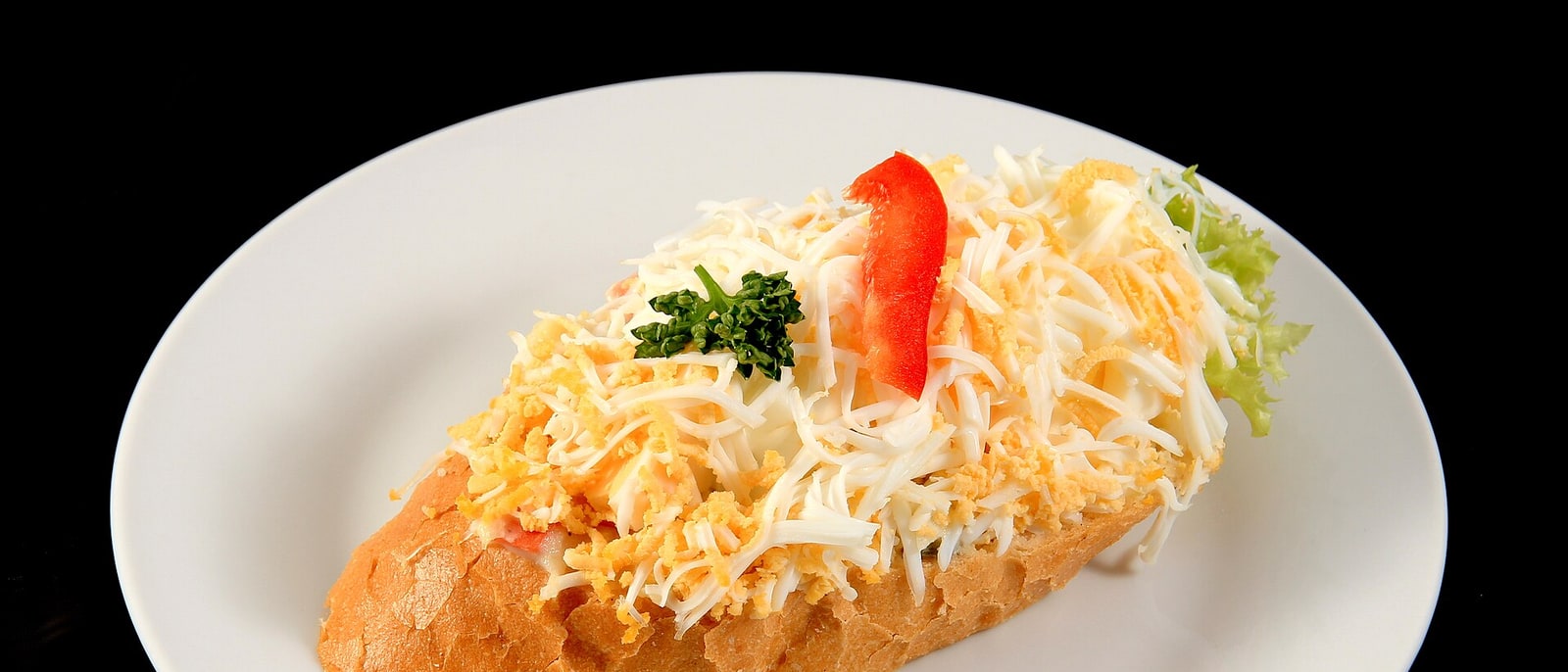
Slices of long white bread loaded with potato salad, ham, boiled egg, gherkin, salami or salmon, assembled with an almost geometric precision. You eat them standing at the lahůdky, delicatessen counters with a glass case, and they’ve been the quick office lunch since before the war. They’re one of the few genuinely fast things in Czech cooking, and the best breakfast going before the climb to the castle.
- 04
Soup, always first
A Czech meal starts with soup and in practice that isn’t optional. Česnečka is a garlic broth with potato and croutons, prescribed for hangovers with medical seriousness. Kulajda is stranger and better: sour cream, dill, mushrooms and a poached egg floating in it.
On a weekday lunch menu the soup is usually included, and that menu is the cheapest and most honest way to eat in the centre.
Frequently asked
Is trdelník a typical Czech pastry?
No. It’s related to the Hungarian and Transylvanian kürtőskalács and was popularised in Prague as a tourist product about two decades ago. It tastes fine, but it isn’t a traditional pastry of this city or this country, whatever the sign says.
What do you order to drink in a Czech pub?
“Pivo”, and you get the house lager, which is what people drink. To be precise: hladinka is the standard pour with its foam, šnyt has less beer and more foam, and mlíko is nearly all foam. To finish, a becherovka, the herbal liqueur from Karlovy Vary.