OZU /GERMANY /FRANKFURT /GUIDE
Frankfurt: practical tips
5 stopsUpdated July 2026
The hard part of Frankfurt isn’t the city, which walks, works and speaks English, but three administrative details nobody tells you about that decide whether the trip comes out cheap or expensive: the trade-fair calendar, the German Sunday, and cash.
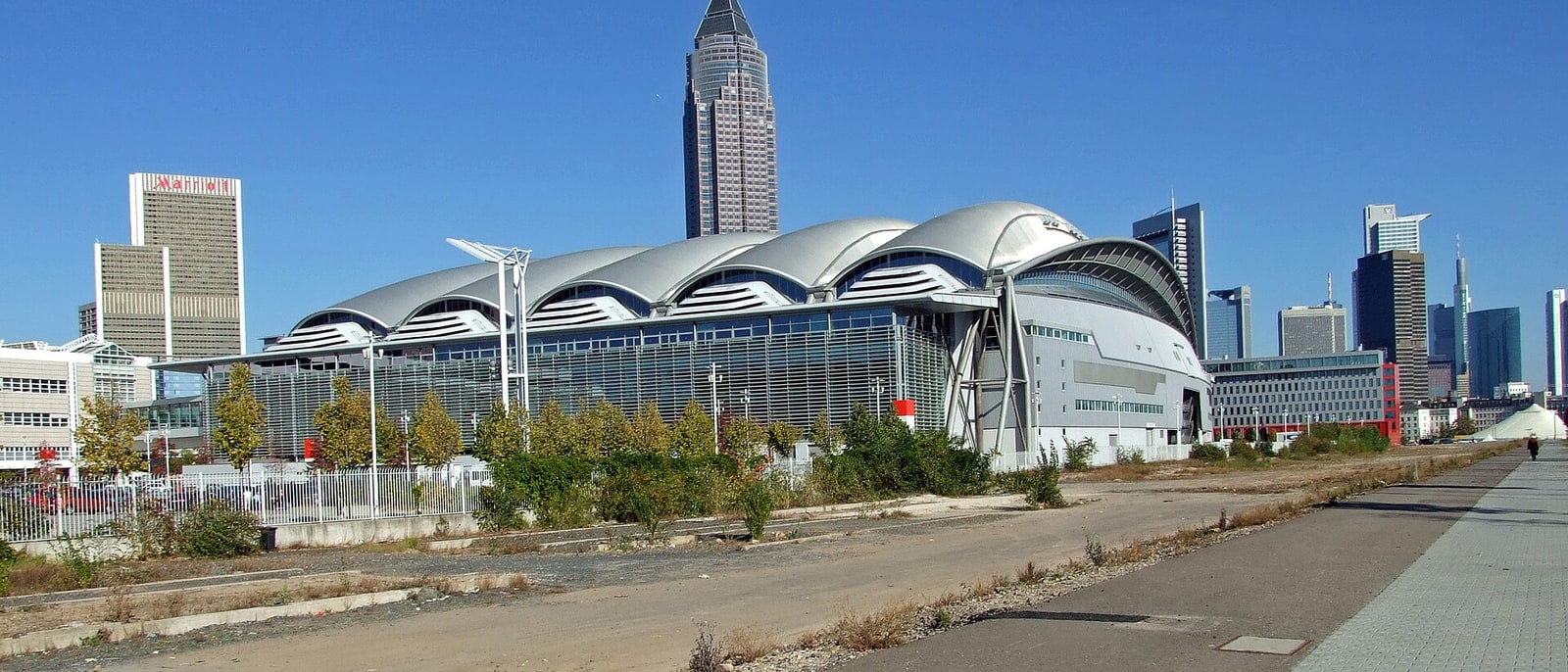
The first is the expensive one. Frankfurt is the country’s most important trade-fair city, and in the big weeks a hotel price multiplies without the room improving in any way. No guidebook mentions it because it isn’t glamorous, but it’s the line on this page that saves you the most money.
The route, stop by stop
5 STOPS- 01
The Messe, and why your hotel costs triple
Frankfurt has lived off trade fairs since the Middle Ages, the first is documented in the twelfth century, and the current site is one of the largest in the world. When a big fair is on, the city fills with people whose rooms are paid for by their employer, and the price of everything else follows.
We’re talking about tripling or quadrupling the same room in the same chain, and about not getting a table anywhere. The Book Fair in October and the motor show are the ones you notice most, but there are fairs nearly all year.
Before fixing your dates, look at the exhibition centre’s calendar: moving your trip three days is the difference between a normal hotel and an absurd one.
- 02
The German Sunday
German shops close on Sundays and it isn’t a custom, it’s a federal law, and it’s enforced: supermarkets, clothes, everything. For anyone arriving from southern Europe this wrecks half a weekend if they didn’t know, because Saturday afternoon is already winding down as well.
There are two escapes, and they’re the same across the country: what sits inside a major station and what sits inside an airport does open, because they’re legal exceptions. So the Hauptbahnhof supermarket is your Sunday plan B.
Museums, parks and restaurants run normally: what doesn’t run is shopping.
- 03
Cash
Germany pays in cash more than any other rich country in Europe, and although it improves year by year, it’s still true in the places you care about: the Apfelwein taverns of Sachsenhausen, the Kleinmarkthalle stalls, the neighbourhood bars. Plenty of them post a “nur Barzahlung” sign and won’t be argued with. The irony is obvious and locals enjoy it: in the city of the European Central Bank, the tavern won’t take your card. Carry forty or fifty euros in small notes and you skip the scene. Hotels, museums, big restaurants and transport all take cards without a problem.
- 04
The station quarter, without the drama
You’ll come through here for the station and for the food, and it helps to arrive knowing what’s in it: a red-light district with windows and drug use in plain sight, pressed against the bank towers. The city decided decades ago to concentrate it and treat it rather than disperse it, under a public-health policy studied outside Germany.
What that means for you is simple: it’s a place that startles, not a place that attacks. The main streets walk fine at any hour. The sensible things are not cutting through alleys at night, not walking along looking at your phone, and not leaving a bag unwatched in the station: which is what you’d do at any big European station anyway.
- 05
Mobile data
In Frankfurt you won’t need your phone to find your way, because the city is crossed on foot and can’t be got lost in. You’ll need it for something else: checking the train. With the 2026 works on the S8 and S9, the airport line’s status changes week by week, and the only way to know is to look it up on the day. Coverage is good across the city and at the airport, and on the ICE it holds up reasonably. An eSIM activates before you leave home and works on landing, which here covers the first thing you’ll do: check which station your train leaves from, and whether it’s running.
Frequently asked
Why are hotels in Frankfurt so expensive?
Trade fairs. It’s Germany’s most important fair city and in the big weeks (the Book Fair in October, the motor show) the same room triples or quadruples. Check the exhibition centre’s calendar before fixing dates: moving the trip by three days changes everything.
Do shops open on Sundays in Frankfurt?
No. German shops close by federal law, supermarkets included. The two practical exceptions are whatever is inside the Hauptbahnhof and inside the airport, which open anyway. Museums, parks and restaurants run normally.
Can you pay by card in Frankfurt?
In hotels, museums, larger restaurants and on transport, yes. In the Sachsenhausen cider taverns, at the Kleinmarkthalle stalls and in plenty of neighbourhood bars, no: they post a cash-only sign. Carry forty or fifty euros in small notes.