Santorini: practical tips
1 h route4 stopsBest: May, June, September. August stacks it all: heat, crowds and windUpdated July 2026
Santorini has no fresh water. It isn’t that it’s scarce: there is none. There isn’t a river, a spring or an aquifer worth the name, and for centuries the island lived by collecting rainwater in cisterns under the houses and rationing it. Today the water from the tap comes from a desalination plant, and that’s why the first practical rule on this island is that you don’t drink it: it’s brackish and you can tell. You buy it bottled.
That lack explains far more than it seems: why the vines coil on the ground to catch the dew, why the tomato isn’t watered, why the hotels ask you not to waste it and why this island never had much population until tourism arrived. It’s a thirsty volcanic rock in the middle of the Aegean. From there, a few more things are worth knowing before you land.
The route, stop by stop
4 STOPS- 01
The water and the sun
The tap water comes from a desalination plant, it’s brackish and it isn’t meant for drinking: it’s for showering and washing up. Everyone buys bottled, and it isn’t a tourist fussiness. And while we’re here, bear in mind that in the hotels water is a genuinely expensive resource, so the short-showers sign isn’t decoration.
The other thing is the sun, which on this island is especially treacherous for a specific reason: the wind blows almost constantly, and the wind deceives you. It cools you, you don’t sweat, and you burn without noticing. Add to that that the houses are white and reflect, the beach is black and absorbs, and there’s no natural shade anywhere because there are no trees.
High-factor cream, a hat and water on you. And if you’re going to walk the rim path or climb the volcano, do it first thing: neither has a metre of shade.
- 02
The meltemi
In July and August the meltemi blows, a strong northerly that’s a fixed climatic feature of the Aegean, not an anomaly. It has a good side: it’s what makes summer bearable, because without it these forty degrees would be unworkable. And a side that can wreck your trip.
That side is that when it blows hard, the boats don’t sail. Inter-island ferries are cancelled, sometimes at very short notice, and the volcano excursions too. If you’re chaining islands, this is the first thing to account for: don’t plan to arrive in Santorini by boat on the morning of your return flight, because if the meltemi decides otherwise you’re stuck with no recourse.
Leave a day’s cushion. And if you get seasick, the Santorini-Naxos crossing with the meltemi blowing is one you remember.
- 03
The cruise ship clock
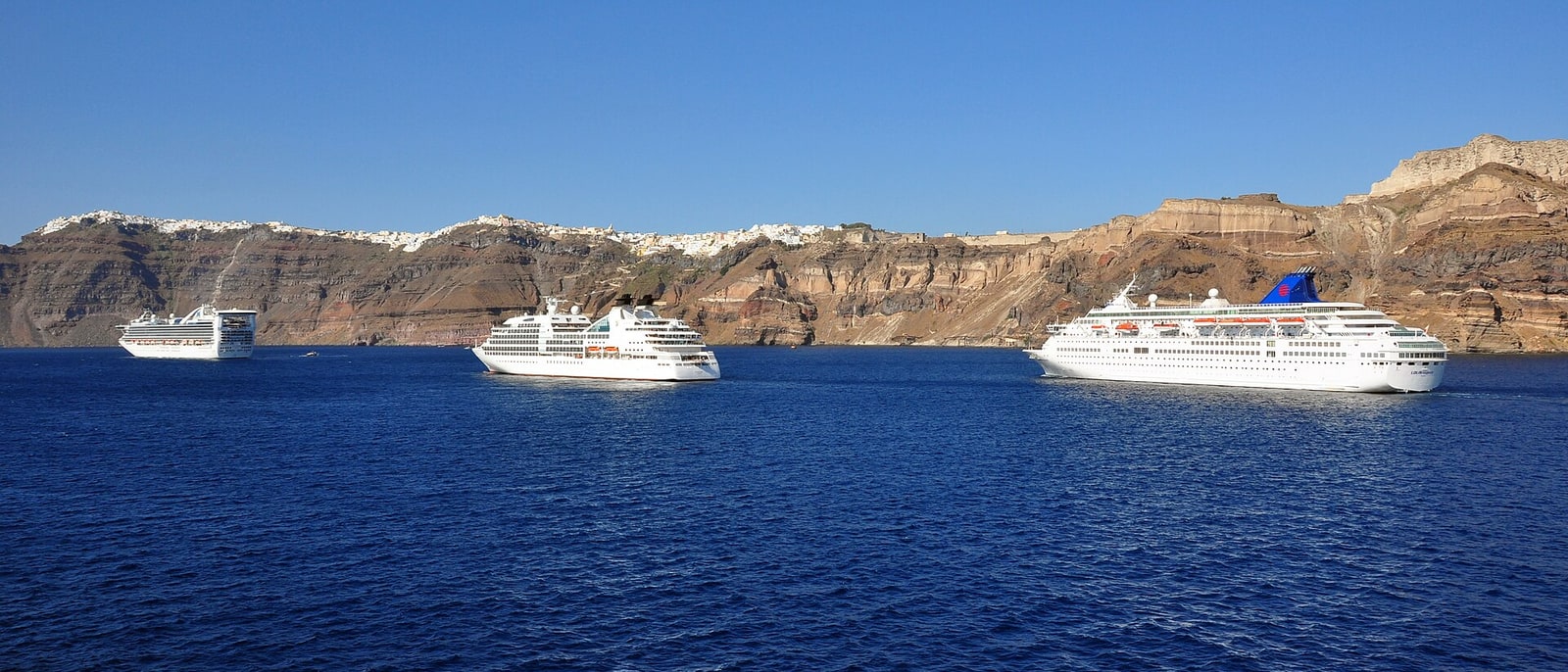
Santorini takes more cruise calls than almost any port in the Mediterranean, and that has a very concrete effect on your day. The ships anchor in the caldera in the morning, land thousands of people by tender at the old port, those people take the cable car up to Fira and spread across the island in coaches, and at dusk they all go back to the ship and vanish.
The island has gone as far as setting limits on daily cruise numbers precisely because of this.
Use it rather than suffer it, because it’s a predictable timetable: if Fira is unwalkable mid-morning, that’s why.
The tactic is simple: do whatever you want to do first thing, then get into the wineries or Akrotiri, which are inland and under cover, while the wave of people passes along the rim.
And mind the Fira cable car: when a cruise ship lands, that queue is a serious one.
- 04
Money, season and expectations
Greece uses the euro and cards are accepted practically everywhere here, but carry loose cash for two reasons specific to this island: the bus ticket is paid to the conductor inside, and in the inland village tavernas and on Thirasia, assume nothing.
On season: May, June and September-October are the months. July and August stack everything (heat, meltemi, cruise ships, prices and crowds) and you have to want it badly. And from November to March, half the island shuts: hotels, restaurants and boats. That has its good side, because you see Santorini as it actually is, empty and with its residents, at prices from another planet and with beautiful winter light. But go knowing there’ll be no boat to the volcano many days and that Oia will be shut.
And one expectation worth adjusting: this island is expensive, more than the rest of Greece and by a distance. The same dinner costs half in Naxos.
Frequently asked
Can you drink the tap water in Santorini?
No. The island has no fresh water (no rivers, no springs, no aquifer) and what comes out of the tap comes from a desalination plant: it’s brackish and it’s for showering and washing up, not drinking. You buy it bottled. That lack of water explains half the island: why the vines coil on the ground to catch the dew and why the tomato is grown without ever being watered.
When is the best time to visit Santorini?
May, June or September-October. July and August stack everything: forty degrees, cruise ships, high prices, crowds and the meltemi, the northerly that cancels boats at short notice. From November to March half the island shuts (hotels, restaurants and the volcano trips) though in exchange you see it empty and with its residents. And accept that it’s expensive: the same dinner costs half in Naxos.