Dublin in a day
9 h route4 stopsBest: May to SeptemberUpdated July 2026
Dublin fits into a day with a comfort almost no other European capital allows: the centre is a good half hour’s walk across and nearly everything worth seeing sits inside that rectangle, on both sides of the Liffey.
That leaves time to do things slowly, which matters here: half of what’s good about Dublin isn’t a monument, it’s sitting somewhere and staying a while.
The route, stop by stop
4 STOPS- 01
Trinity College and the Book of Kells
Celtic monks made the Book of Kells, an illuminated gospel book from around 800 AD, with a density of decoration you have to see up close to grasp: there are pages with interlace so fine that more than a hundred spirals have been counted in a space the size of a coin. One opening is displayed at a time and changed periodically.
Above it is the Long Room, the old library’s long hall, with its timber barrel vault and marble busts. And here’s a warning no photograph will give you: almost all of its two hundred thousand books have been removed for a conservation project, so the shelves in the famous image are today largely empty.
The architecture still impresses, but it isn’t what the postcard promises.
With dates: it can be visited until the end of 2027. Then the Old Library closes for structural work for two or three years, with reopening expected around 2030 and the books back. The Book of Kells will remain on display throughout that closure.
- 02
The castle and the cathedrals
From Dublin Castle the British ruled Ireland for seven hundred years, until it was handed over to the new Free State in 1922. Little of the medieval fortress remains: what you visit are the eighteenth-century State Apartments, with remains of the original Viking wall preserved beneath.
A walk away are the two cathedrals, Christ Church and St Patrick’s, and there’s an oddity worth knowing: both are Anglican, in an overwhelmingly Catholic country, because they were retained at the Reformation. The Catholic pro-cathedral is a more modest church on Marlborough Street.
Jonathan Swift, author of “Gulliver’s Travels”, was dean of St Patrick’s and is buried there.
- 03
The Guinness Storehouse
In 1759 Arthur Guinness leased a derelict brewery at St James’s Gate and signed a lease for nine thousand years, at a fixed annual rent of forty-five pounds. The original document is displayed under glass in the floor of the building’s ground level. The brewery is still there and still producing.
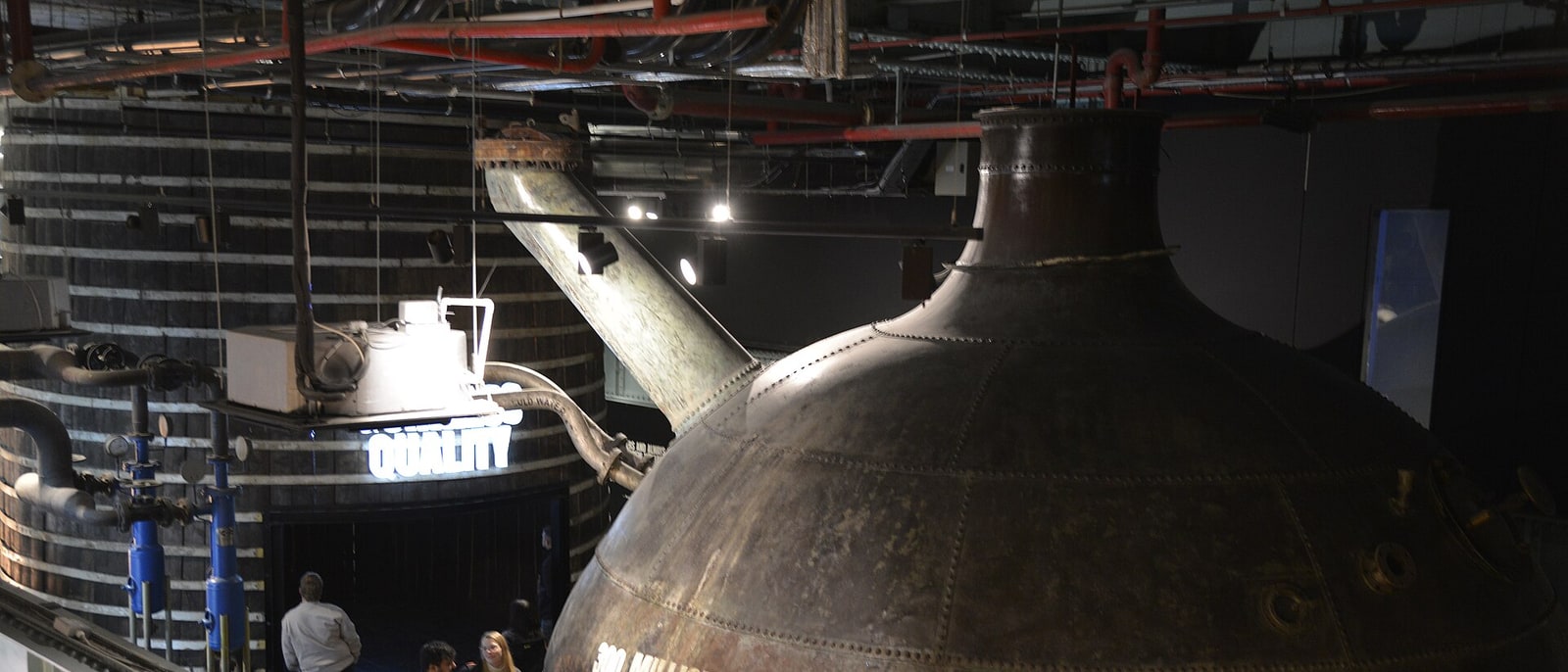
The Storehouse is a seven-storey museum built around an atrium shaped like a pint glass, they say if filled it would hold fourteen and a half million pints, and ends at the Gravity Bar, glazed, with a 360-degree view of the city and a pint included.
It’s Ireland’s most visited attraction, so book ahead and avoid midday.
- 04
A pub, and not in Temple Bar
Temple Bar packs cobbled streets and live music at all hours, and also the place where a pint costs considerably more than anywhere else in the city. It’s worth a walk, but Dubliners don’t drink there, and you can feel that in the room.
The pubs you remember are five minutes away: the Victorian ones with snugs (those little wooden booths with a door, originally so women could drink unseen) the ones with traditional music sessions on Sunday afternoons, the ones that have been on the same corner for two hundred years.
Asking at your hotel for a local one works better than any list.
Frequently asked
Can you see Trinity’s Long Room in 2026?
Yes, until the end of 2027, but with an important caveat: almost all of its two hundred thousand books have been removed for conservation, so the shelves are largely empty and it doesn’t look like the famous photograph. After that it closes for two or three years, with reopening expected around 2030.
Is Temple Bar worth it?
To walk through and see it, yes. To drink in, not particularly: it’s the priciest area in the city and locals don’t go. The good pubs are five minutes away in the surrounding streets, and cost considerably less.