Eating and drinking in Dublin
3 h route4 stopsBest: All yearUpdated July 2026
Guinness is poured in two stages: the glass is filled about three quarters, left to settle while the bubbles fall in that cascade that actually rises, and then topped off. The process takes over a minute and it isn’t folklore for tourists: asking the barman to hurry marks you out instantly.
On food, Dublin has changed enormously in twenty years. The home cooking is still there (heavy, potato and lamb) but the city today has a far better scene than its reputation suggests.
The route, stop by stop
4 STOPS- 01
The pint, and why it tastes different here
Guinness uses nitrogen as well as carbon dioxide, and that’s the reason for the dense creamy head and the tiny bubbles. It’s served cool but not cold, around six degrees, because chilled it loses its flavour.
The legend that it tastes better in Dublin has a prosaic explanation: turnover here is very high, kegs empty fast and lines are cleaned often, so it arrives in better condition.
And one detail shows: a properly poured head leaves a ring on the glass with every mouthful. If there are five or six rings at the end, the pour was good.
- 02
Coddle and home cooking
Coddle, the specifically Dublin dish, boils sausages and bacon instead of frying them, with potato and onion, in a clear broth. There’s no colour and no browning, and that’s precisely the usual complaint: it’s a pale stew.
It began as a thrift dish, to use up what was left before Friday abstinence, and is mostly eaten at home. You’ll find it in neighbourhood pubs.
The rest of the traditional menu: Irish lamb stew with potato and carrot, boxty, a grated potato cake, and soda bread, made with bicarbonate instead of yeast because Irish wheat didn’t give good strong flour, and baked in an hour with no proving.
- 03
Seafood and breakfast
Ireland grows its seafood in cold clean water, and it’s among the best things you’ll eat here: oysters (traditionally with a Guinness alongside, which works better than it sounds) mussels, crab, and seafood chowder, a thick fish and shellfish soup with cream and potato served with soda bread that will hold you all afternoon.
The full Irish breakfast has egg, bacon, sausages, tomato, mushrooms, beans and two things that distinguish it from the English: black pudding and white pudding, pork puddings with and without blood, and sometimes a potato farl.
It’s a meal, not a breakfast.
- 04
Whiskey, with an “e”
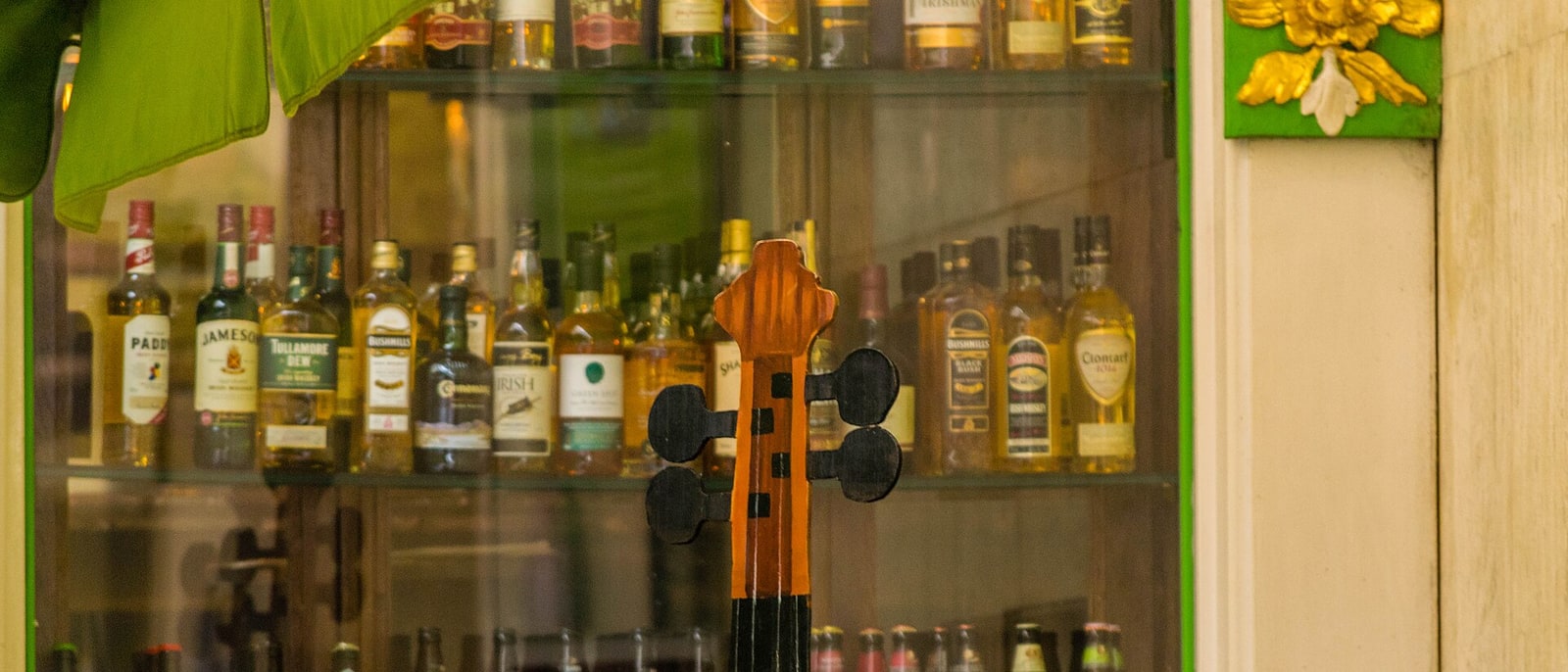
Irish whiskey is spelled with an “e”, the Scotch without, and is traditionally distilled three times rather than twice, which gives a smoother result. It also doesn’t usually use peat to dry the barley, so it lacks the smokiness that marks many Scotches.
The industry nearly died out in the twentieth century: from dozens of distilleries it fell to barely two, and since the 1990s it has revived strongly.
In Dublin you can visit the Jameson distillery in Smithfield and Teeling, which in 2015 became the first new distillery to open in the city in over a hundred and twenty years.
Frequently asked
Why does a Guinness take so long to pour?
Because it’s poured in two stages: filled about three quarters, left to settle while the head forms, then topped off. It takes over a minute and it’s the correct method. Hurrying the barman speeds up nothing and marks you as a visitor.
What is coddle?
A specifically Dublin stew of sausages and bacon boiled with potato and onion in a clear broth. It’s pale and unbrowned, which tends to disconcert people, and began as a thrift dish. It’s eaten more at home than in restaurants, but neighbourhood pubs have it.