Venice: practical tips
1 h route5 stopsBest: April to June and September to OctoberUpdated July 2026
Venice’s access fee is almost always explained badly, so it’s worth setting out properly: it isn’t a permanent toll to enter the city. It’s a charge applied only on a calendar of specific days, only in daytime hours, and only to those visiting without sleeping there.
In 2026 the calendar ran from 3 April to 26 July, on sixty non-consecutive days from 8:30 to 16:00. Since the calendar and conditions are set annually, the only sensible thing is to check the official site before travelling.
The route, stop by stop
5 STOPS- 01
The access fee, in detail
How it works: on the calendar days and between 8:30 and 16:00, anyone entering the historic centre without staying overnight must register on the official portal, cda.ve.it, and carry a QR code that may be requested at checks. It’s usually cheaper booked several days ahead than at the last minute.
And the nuance almost nobody mentions: being exempt isn’t the same as having nothing to do. Those sleeping in accommodation within the comune, which includes Mestre, don’t pay, but must still register on the portal and get their confirmation. The same applies to Veneto residents and several other categories.
Outside those days and outside those hours there’s nothing to do. Since the calendar changes every year and so do the amounts, we give no figures here: check cda.ve.it, which is the authority.
- 02
Bridges, suitcases and timing
Nearly every bridge in Venice has steps, so a big wheeled suitcase is a real problem, not a minor nuisance. If your hotel is far from a landing, think about luggage you can carry. Porters with trolleys exist, but they cost.
And there’s a timetable to the city worth exploiting: day visitors arrive around ten and leave by six, so between seven and nine in the morning and after dusk, St Mark’s and the Rialto are another thing entirely.
Seeing the square empty first thing is free and among the best things in Venice.
- 03
The vaporetto, and what isn’t done
The vaporetto works as the city bus and charges dearly for a single ticket. If you’ll use it several times a day the hourly or daily pass pays off, bought at the landing-stage ticket offices. You validate it every time, transfers included.
For short hops you almost always get there faster walking.
And there are rules the city genuinely fines and that surprise visitors: you can’t sit down to eat on bridge steps, on the bridges themselves or around the monuments, you can’t swim in the canals, and you can’t feed the pigeons in St Mark’s. They’re administrative penalties and they’re enforced.
- 04
When to come
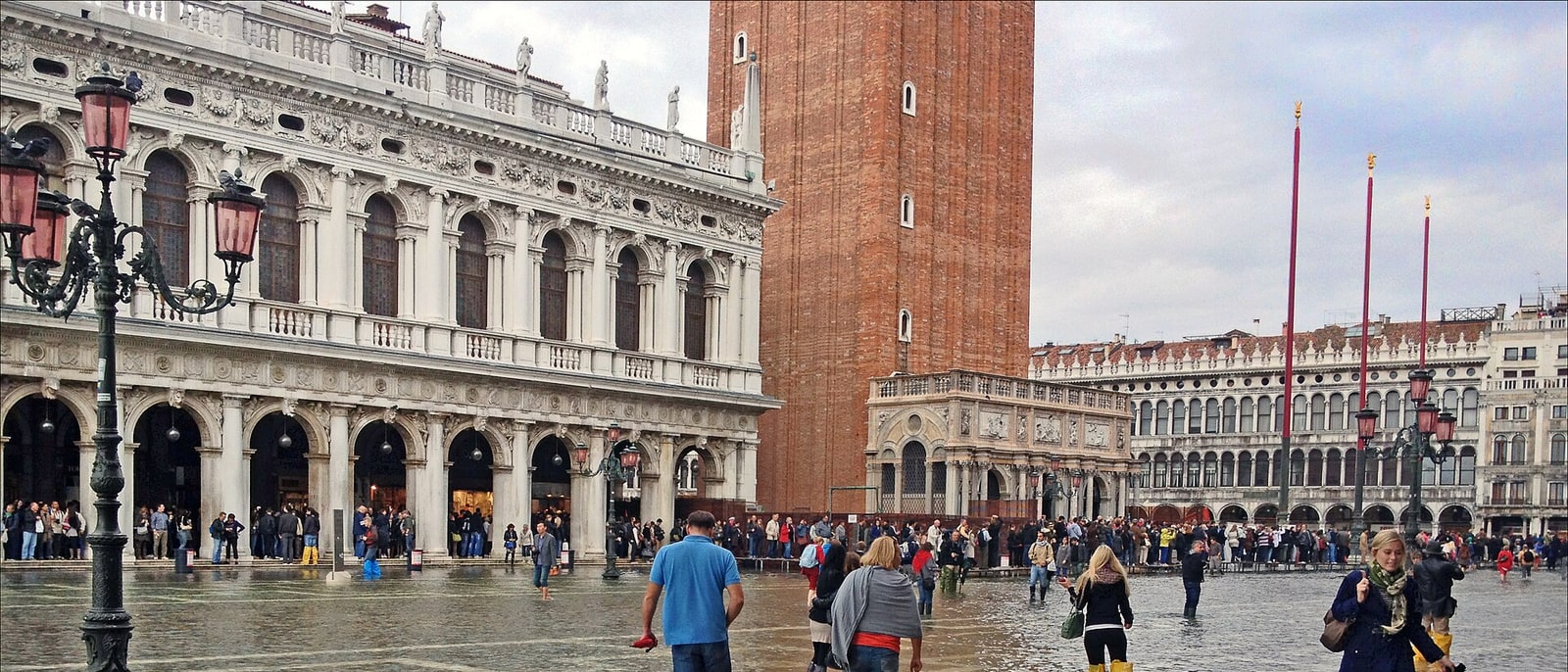
Spring and early autumn are best: pleasant temperatures and fewer people than in summer. July and August are hot, humid and very crowded, and the smell of the canals at low tide in the heat is not a myth. October to January is acqua alta season, which doesn’t ruin a trip, it lasts a few hours and there are walkways, but bring waterproof shoes and check the tide forecast. February brings Carnival, with the city full and prices through the roof, and in alternate summers, the Biennale.
- 05
Mobile data
Coverage holds up across the city and the lagoon. Getting connected has very specific uses here: registering or checking the access fee at cda.ve.it if you travel on calendar days, checking the tide forecast between October and January, and looking up vaporetto timetables, which vary by line and season.
And the map, which in Venice is more necessary than anywhere: with addresses numbered by sestiere and alleys that dead-end, your phone saves a great deal.
With an eSIM you leave the terminal already on data and reach the hotel without circling with a suitcase.
Frequently asked
Do you have to pay to enter Venice?
Only on specific days from a calendar set each year, between 8:30 and 16:00, and only if you visit without sleeping in the city. In 2026 it was sixty non-consecutive days between 3 April and 26 July. Anyone staying overnight in the comune is exempt, but still has to register at cda.ve.it.
When is the best time to go to Venice?
April to June and September to October: pleasant temperatures and fewer people. Summer is hot, humid and very crowded. October to January brings acqua alta, which lasts a few hours and is dealt with by walkways and waterproof shoes. In February, Carnival sends prices soaring.
Do you need a visa for Italy?
It depends on your passport and the rules change, so check the official source before travelling. Italy is in the European Union and the Schengen area, so arriving from another Schengen country there is no border check.