A weekend in Venice
20 h route4 stopsBest: April to June and September to OctoberUpdated July 2026
Murano and Burano are why Venice deserves two days rather than one. They’re half an hour and an hour by vaporetto from Fondamente Nove, and they’re two places entirely unlike each other and unlike the centre.
And there’s a second reason: sleeping here. Venice receives millions of day visitors who arrive in the morning and leave by six, and after that hour the city empties in a way you can’t explain without seeing it.
The route, stop by stop
4 STOPS- 01
Saturday: the centre
The one-day route, with time to go into the Accademia or the Guggenheim and to get lost in Castello or Cannaregio, which is where you actually see how people live.
- 02
Saturday night: the bacari
The evening plan goes by giro di ombre: going from bacaro to bacaro over cicchetti (small things on bread, half a sardine, a piece of salt cod) with a small glass of wine, called here an ombra, “shade”, because it was sold in the shade of St Mark’s campanile, the stall moving as the sun went round.
The good bacari are in Cannaregio and around the Rialto market, not in St Mark’s.
You eat standing at the counter, pay little and change bar every couple of rounds: it’s the Venetian way to have dinner and works out far cheaper than a restaurant.
- 03
Sunday: Murano and Burano
In 1291 the Republic ordered every glass furnace to move to Murano: the city was made of wood and a lit furnace in the centre was a bomb. It also concentrated the masters on one island, which made keeping the techniques secret easier: they were forbidden to leave the Republic under very serious penalties. Working studios remain today and you can watch glassblowing demonstrations.
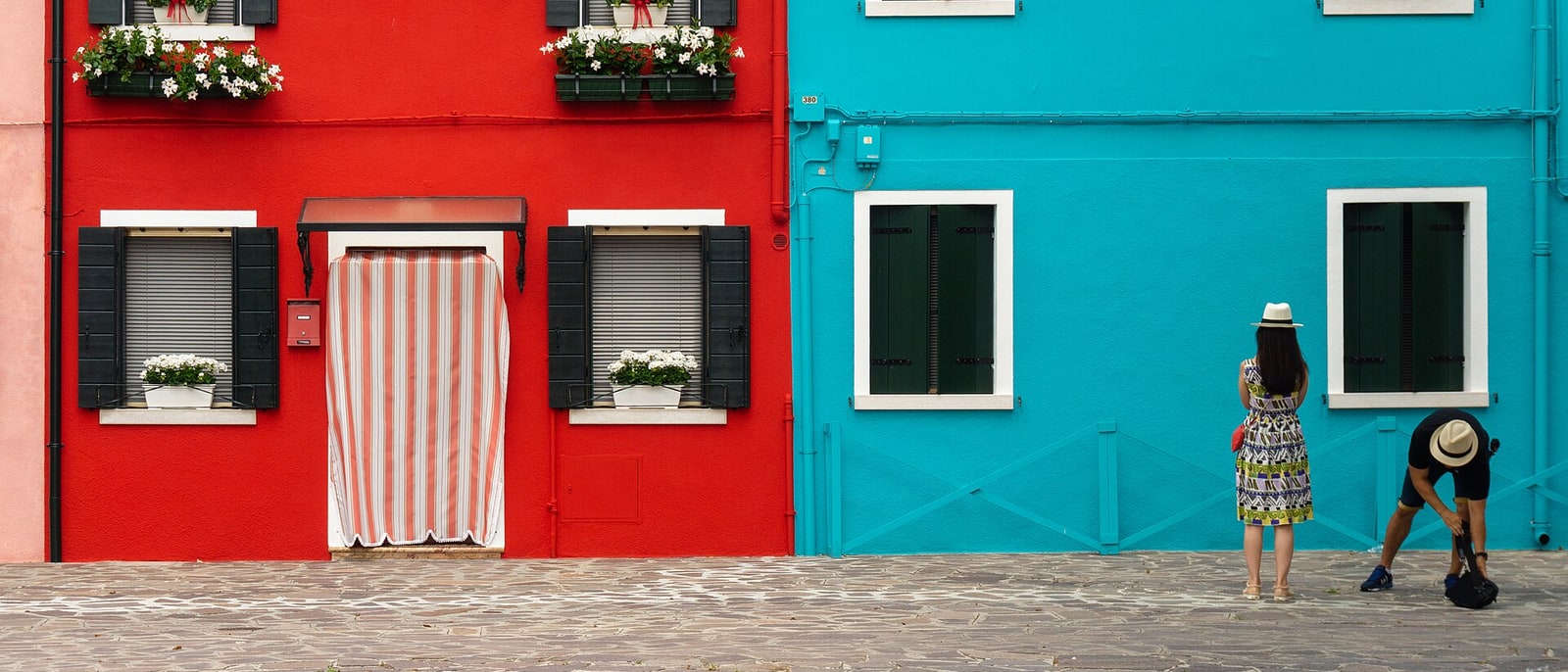
Burano is half an hour further and is the opposite: low houses painted in intense colours, each different from its neighbour. The traditional explanation is that fishermen could pick out their own from the lagoon in fog. It’s also the lace island, an almost lost craft that still has a museum and a few remaining lacemakers.
If there’s time, Torcello is five minutes from Burano and was the first inhabited island in the lagoon: it once had twenty thousand people and today has a few dozen. What remains is an eleventh-century cathedral with Byzantine mosaics of a startling Last Judgement.
- 04
Sunday afternoon: the empty Venice
On the way back, rather than returning to St Mark’s, it’s worth walking through Cannaregio and Castello. The Ghetto is there (the word was born here: the quarter where Venice’s Jews were confined from 1516 was the site of an old foundry, “geto” in Venetian) with its abnormally tall houses because they couldn’t grow outwards.
And there you see the figure that explains today’s Venice: the historic centre has gone from around a hundred and seventy-five thousand residents in the 1950s to under fifty thousand.
There are whole districts of holiday flats and chemists closing down. Walking where there are still schools and greengrocers is the best way to understand the city’s argument with itself.
Frequently asked
Why are Burano’s houses coloured?
The traditional explanation is that fishermen painted each house a different colour to recognise their own from the lagoon in fog. Today the custom is regulated: to change a façade’s colour you have to ask permission and are told which colours apply.
Is it worth sleeping in Venice or doing a day trip?
Sleeping, by a distance. The city receives millions of day visitors who arrive in the morning and leave around six. After that the streets empty and Venice resembles what it was. And anyone staying overnight in the comune is exempt from the access fee, though they still have to register.