What to see in Amman
7 h route3 stopsBest: Museums in the morning. Many close on Fridays or open lateUpdated July 2026
Beneath Amman lies far more than the city shows at first glance. It’s one of the longest continuously inhabited cities in the world, and its museum holds objects that change the scale of what you expect here: nine-thousand-year-old human figures and part of the Dead Sea Scrolls.
In exchange, the modern city isn’t especially monumental: it grew very fast and with little planning, absorbing waves of population, and it shows. What’s interesting is concentrated, and the country’s real jewels are outside it.
The route, stop by stop
3 STOPS- 01
The Jordan Museum
The national museum, next to downtown. The piece that justifies the visit is the Ain Ghazal statues, found on Amman’s outskirts: human figures nearly a metre tall made around 7000 BC from plaster over reeds, with eyes outlined in bitumen.
They are among the oldest monumental human representations in existence.
It also displays the Copper Scroll, one of the Dead Sea Scrolls and the only one written on metal: an inventory of treasure caches whose locations have never been fully deciphered. Seven thousand years separate the two pieces, and both came out of this country.
- 02
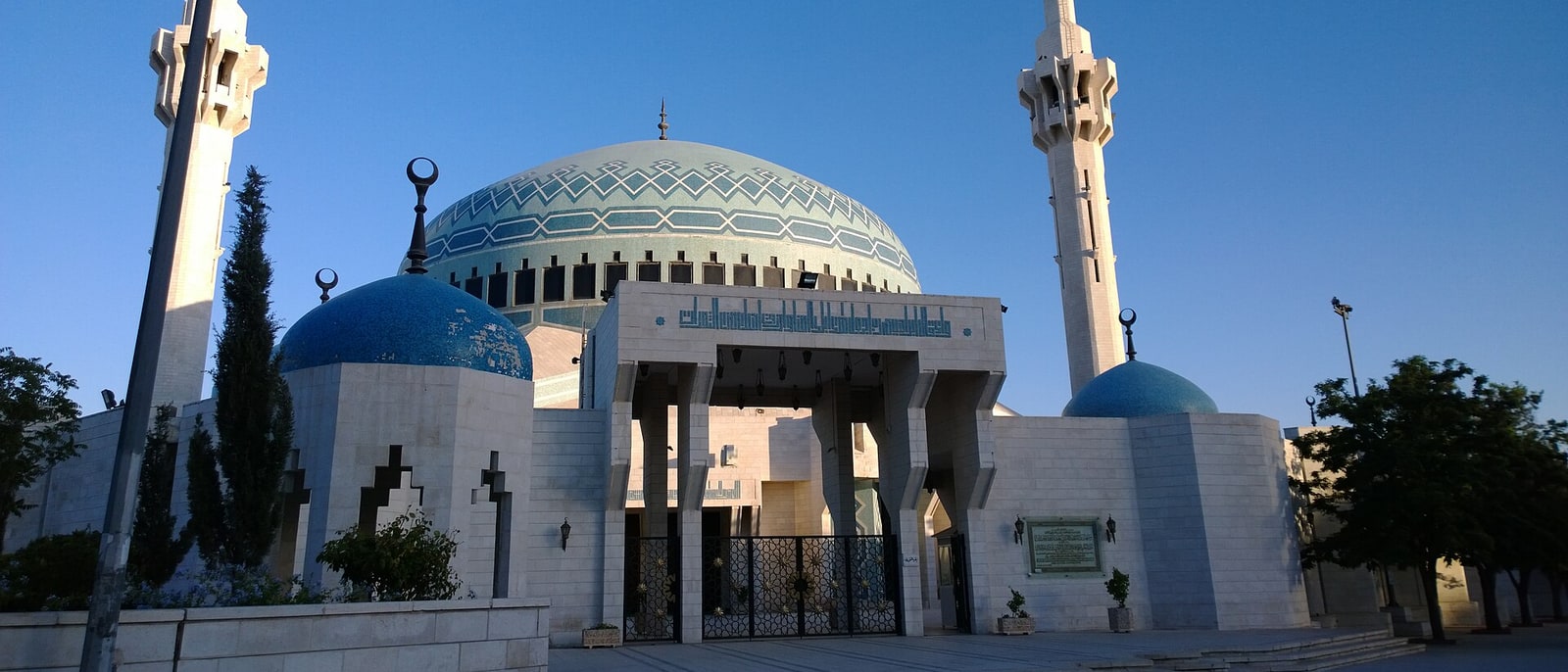
King Abdullah I mosque
Completed in 1989, its thirty-five-metre blue mosaic dome is the largest in the country and visible from half the city. Inside there are no columns: the dome covers the entire prayer hall, which holds around three thousand worshippers.
It’s the Amman mosque set up to receive non-Muslim visitors, outside prayer times. Go covered, arms and legs, and women with hair covered. Robes are lent at the entrance.
Opposite stands the Coptic church, another image that says a good deal about the city.
- 03
The desert castles
East of the city, already in the desert, stands a series of eighth-century Umayyad buildings visited as a loop. They aren’t castles in the military sense: they were hunting lodges, caravanserais and pleasure residences for the caliphs, who came here to get away from Damascus.
The most remarkable is Qusayr Amra, a World Heritage Site: a small bathhouse with walls and vaults covered in frescoes. Hunting scenes, musicians, nude female figures and a map of the heavens painted on the dome.
It’s one of very few surviving examples of Umayyad figurative painting, which is why it matters so much.
Frequently asked
Can you visit mosques in Amman?
King Abdullah I mosque, yes, outside prayer times and in clothing covering arms and legs. Women also with hair covered, and robes are lent. Most of the others don’t receive non-Muslim visitors.