Where to eat in Amman
4 h route3 stopsBest: The main meal is mid-afternoon, between two and fourUpdated July 2026
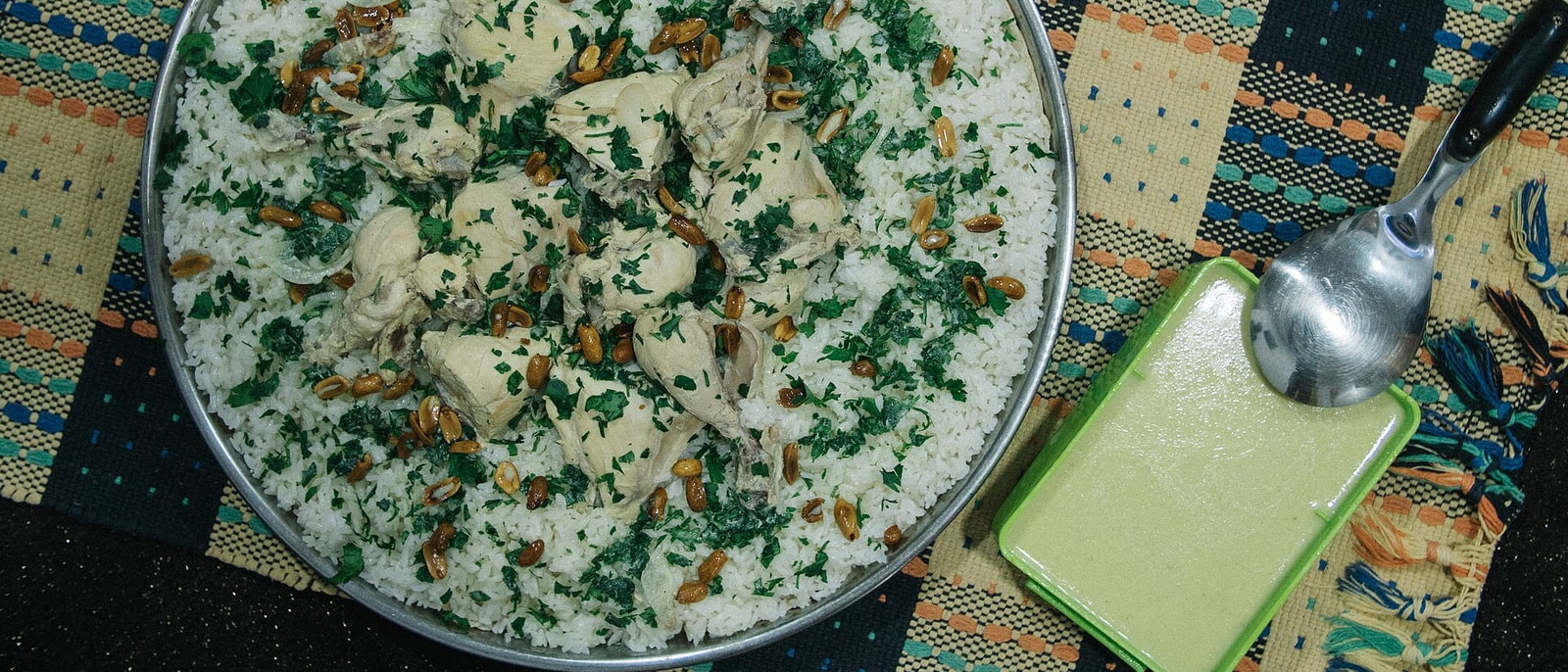
Mansaf is Jordan’s national dish and it’s a good deal more than a recipe: it’s the dish of weddings, funerals, reconciliations between families and celebrations. Eating it has rules, and knowing them completely changes the experience if you’re invited.
Around it sits the whole Levantine repertoire known abroad (hummus, falafel, mutabbal, tabbouleh) but made here daily and without concessions, plus two or three things specific to this area.
The route, stop by stop
3 STOPS- 01
Mansaf
Jameed defines it: fermented sheep’s yoghurt, sun-dried into hard balls and kept for months, rehydrated into a white, sour sauce. The lamb is cooked in it, and everything is served over a base of rice and shrak bread, a very thin flatbread, on a large communal tray.
The rules: you eat standing around the tray, with the right hand, forming balls of rice and meat and bringing them to your mouth without your hand touching your lips. The left hand isn’t used. And a warning: the best pieces get pushed towards the guest’s side, and refusing them is poor form.
If you’re invited to a mansaf, it’s an honour and worth treating as one.
- 02
Falafel, hummus and breakfast
Here hummus is breakfast and served warm, spread in a shallow dish with a well in the centre for oil, and scooped with torn pita. Never with cutlery. It usually comes with fatteh, chickpeas with yoghurt and toasted bread, and freshly fried falafel. Levantine falafel is made with raw soaked chickpeas, never cooked ones, ground with parsley, coriander and spices and fried to order: that’s why it’s green inside and crisp outside. The good places in Amman have been going for decades and queue up mid-morning, order by the piece or in a sandwich.
- 03
Knafeh nabulsi
Knafeh nabulsi uses a fresh unsalted white cheese made specifically for it, melted under a layer of kataifi, very fine semolina threads, tinted orange, baked in enormous trays and doused in orange-blossom syrup as it comes out. It’s served hot, and that’s the point: cold isn’t the same thing. You eat it standing, a portion on a sheet of paper, and in El-Balad there are places where you watch the tray come out of the oven every few minutes because it never has time to cool. It’s the region’s dessert and in Amman it’s an institution rather than a sweet.
Frequently asked
Do you have to eat mansaf with your hand?
In a traditional setting or if you’re invited into a home, yes: right hand, from the communal tray, standing. In restaurants geared to visitors it’s served plated with cutlery without any issue. Nobody minds if you ask how it’s done.