OZU /MOROCCO /MARRAKECH /GUIDE
Marrakech: practical tips
1 h route5 stopsBest: March-May and October-NovemberUpdated July 2026
Marrakech is intense and disorienting on arrival, but it isn’t dangerous: what there is, is an entire economy built on the distracted tourist. With four clear rules, the trip changes completely.
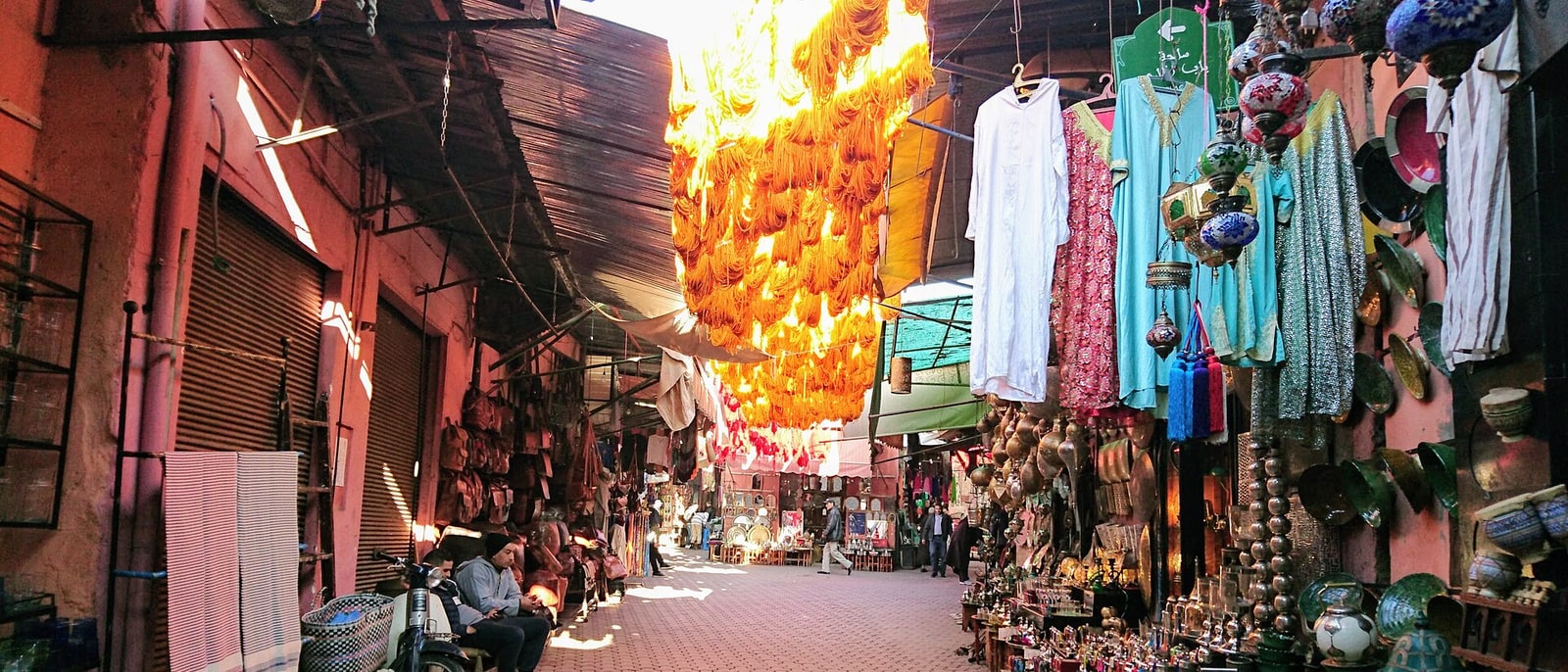
Here they are: how haggling works, the spontaneous-guide trap, money (the dirham is a closed currency) and the heat, which in summer is a real factor. No specific prices: they change and any figure ages badly.
The route, stop by stop
5 STOPS- 01
Haggling: how it works
In the souk and with taxis you always haggle: the first price is the opening bid and everyone knows it, the seller included. It isn’t a conflict, it’s a ritual: done in good humour, counter low, and if there’s no deal, absolutely nothing happens.
The rule that works: decide beforehand what you’re willing to pay and don’t go above it.
And if haggling embarrasses you, go to shops with marked prices, there are plenty, where the price is the price.
- 02
The “guides” who offer themselves
The classic scene: you look lost in the souk, a friendly person offers to take you to the square "free, no problem", and you end up in a carpet shop, a tannery, or paying a tip you didn’t expect. Nobody guides for free.
The answer: a firm "no, thank you" and keep walking, without engaging. If you need directions, ask a shopkeeper inside their shop, or a woman: they’re usually not in that trade.
Official guides exist, carry accreditation and are hired.
- 03
The money: the dirham doesn’t leave the country
The Moroccan dirham stays home: you can’t buy it outside Morocco and officially it shouldn’t leave the country. Change on arrival, at the airport or in the city, or withdraw from an ATM, which usually gives a better rate. And carry cash: in the medina, the souks, the taxis and the square’s stalls it’s cash and nothing else. Cards work in hotels, riads and Guéliz restaurants, but don’t count on them inside the walls.
- 04
The heat, and what to wear
In July and August Marrakech tops 45°C and the medina has no shade: the city is seen from seven to noon and after six in the evening, with a courtyard in between.
Spring and autumn are perfect. Winter is mild by day and cold at night.
On clothing: Morocco is a Muslim country and relatively relaxed with visitors, but covering shoulders and knees, men and women, avoids stares and comments, and at religious sites it’s required. It isn’t an imposition, it’s guest common sense.
- 05
Data on your phone
Warning: Morocco falls OUTSIDE the European Union, so your European roaming plan doesn’t apply, and this is where the surprise bills arrive. It’s fourteen kilometres from Spain but for your phone it’s another continent. And you will use it: the map to avoid getting completely lost in the souk, taxi apps to skip the negotiation, the translator, and letting your riad know you’re coming. A local eSIM activates on landing and costs a fraction of roaming.
Frequently asked
Is Marrakech safe for tourists?
Yes: violence against tourists is very rare. What there is, is commercial persistence and small scams: spontaneous guides who end up in a shop, inflated prices. With a firm "no, thank you" and some haggling, there’s no problem.
Can you pay by card in Marrakech?
In hotels, riads and Guéliz restaurants, yes. In the medina, the souks, taxis and the square’s stalls, no: it’s cash. The dirham is a closed currency, so you change on arrival or withdraw from an ATM.
Does EU roaming work in Morocco?
No: Morocco is not in the European Union, so EU roaming rules don’t apply and it’s billed as an international destination, despite being fourteen kilometres from Spain. It’s a classic source of surprise bills.