Tirana’s neighbourhoods
4 h route4 stopsBest: The Pazari i Ri in the morning. Blloku at nightUpdated July 2026
You can walk it end to end, so neighbourhoods here aren’t about distance: they’re about layers of history stacked in a few blocks. The nightlife district is the one that was forbidden, the big park was built by the regime, and the market nearly disappeared.
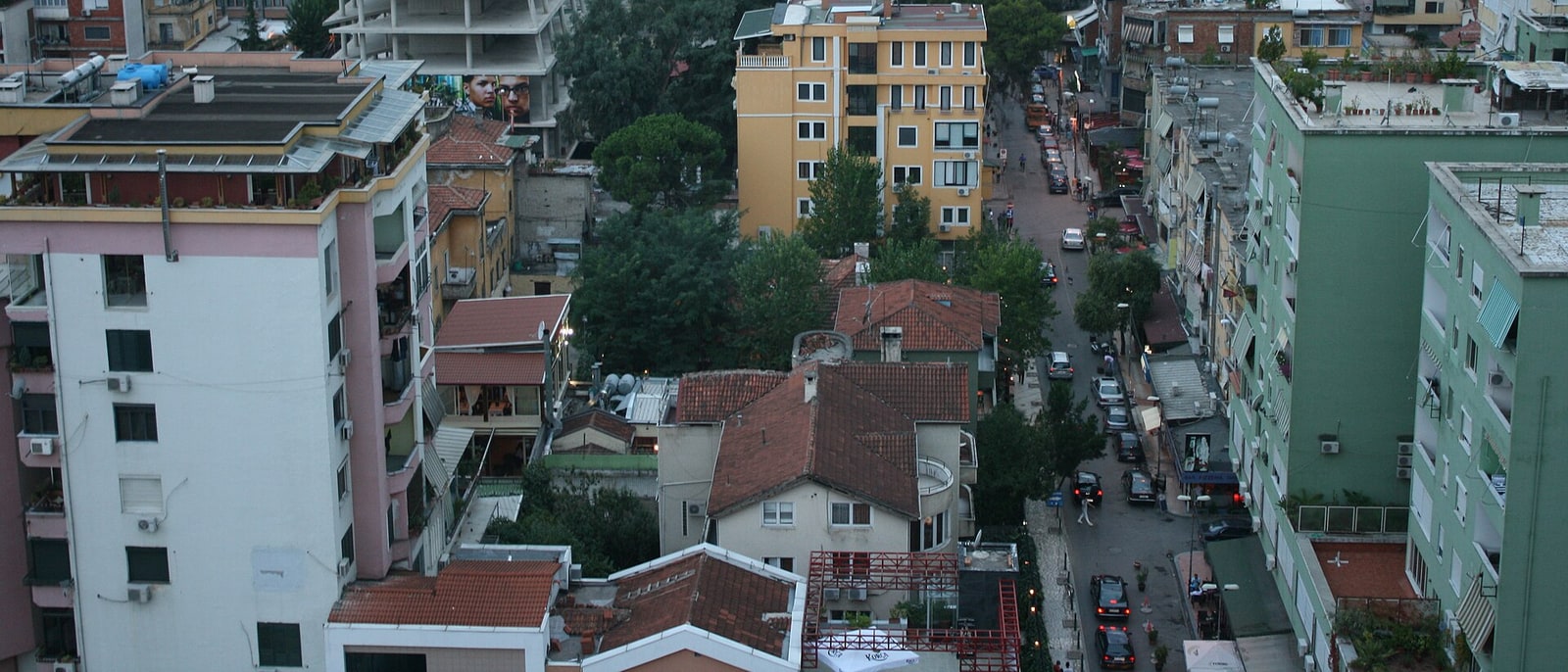
These are the four that matter, and all are a walk from the centre.
The route, stop by stop
4 STOPS- 01
Blloku
The district with the harshest history in the city and today the liveliest. Until 1991 it was cordoned off and guarded: Hoxha and the Party elite lived here, and an ordinary Albanian could not enter. Not walk, not cross. A forbidden block existed in the middle of their own capital and everyone knew where it was.
It opened in 1991 and the city took the whole thing over: bars, restaurants, terraces and shops, and it’s where Tirana goes out. Hoxha’s villa is still standing, on a corner, and you can see it from outside.
Having a beer on the street where you’d have been arrested for walking is a strange and highly recommended experience.
- 02
Pazari i Ri
The new market hides the old one: it was refurbished a few years back instead of demolished, which in Tirana wasn’t the predictable outcome. Around the fruit, vegetable, cheese and meat stalls is a square with restaurants, and the streets nearby have filled with small places.
It’s where the city shops in the morning and eats at night, and it’s where you eat best without pretension. The buildings are painted in strong colours, an inheritance from Rama’s time as mayor.
Go in the morning for the market and come back for dinner.
- 03
The boulevard and the centre
The Boulevard of the Nation’s Martyrs crosses Tirana north to south and holds almost everything: Skanderbeg Square, the ministries, the university, the Pyramid. Italian architects laid it out during Mussolini’s occupation, in the 1930s, which is why the centre has that fascist monumentality that fits with nothing else.
Then communism added its own, and then came Rama’s colours and the new towers. The result is a centre where in two hundred metres you see four regimes building on top of the last.
It’s ugly in patches and fascinating throughout.
- 04
The Grand Park and the lake
At the end of the boulevard, the Parku i Madh: woods, trails and an artificial lake built in the regime’s time, and today where Tirana runs, walks and sits.
It’s genuinely large and in summer it’s the only shade going.
It’s a good counterweight to the bunker museums: here you see the normal city doing normal things, families on Sunday, people running, couples. After a morning of secret police, it helps.
Frequently asked
Where should you stay in Tirana?
In the centre or in Blloku: the city is small and from there everything is walkable. Blloku has the bars and restaurants. The centre puts the square and the museums a step away. The Pazari i Ri area is the best for eating.
Why are Tirana’s buildings coloured?
By decision of Edi Rama, a painter by trade, when he became mayor from 2000: with no money to renovate, he had the grey facades painted in strong colours. He’s credited with changing the city’s mood, and he went on to become prime minister.
Is Tirana safe?
Yes, and the bad reputation is out of date: it’s a calm capital and visitors don’t run into trouble. What there is is chaotic traffic, so the real risk in Tirana is crossing the road, not crime.