What to see in Toronto
4 stopsUpdated July 2026
Half the city was born outside Canada. Around fifty per cent of Toronto’s residents are first-generation immigrants, there are over two hundred ethnic origins in the census and more than a hundred and sixty languages spoken: by that share, it’s the most diverse city on the planet. And that isn’t a fact for a plaque: it’s what there actually is to see here.
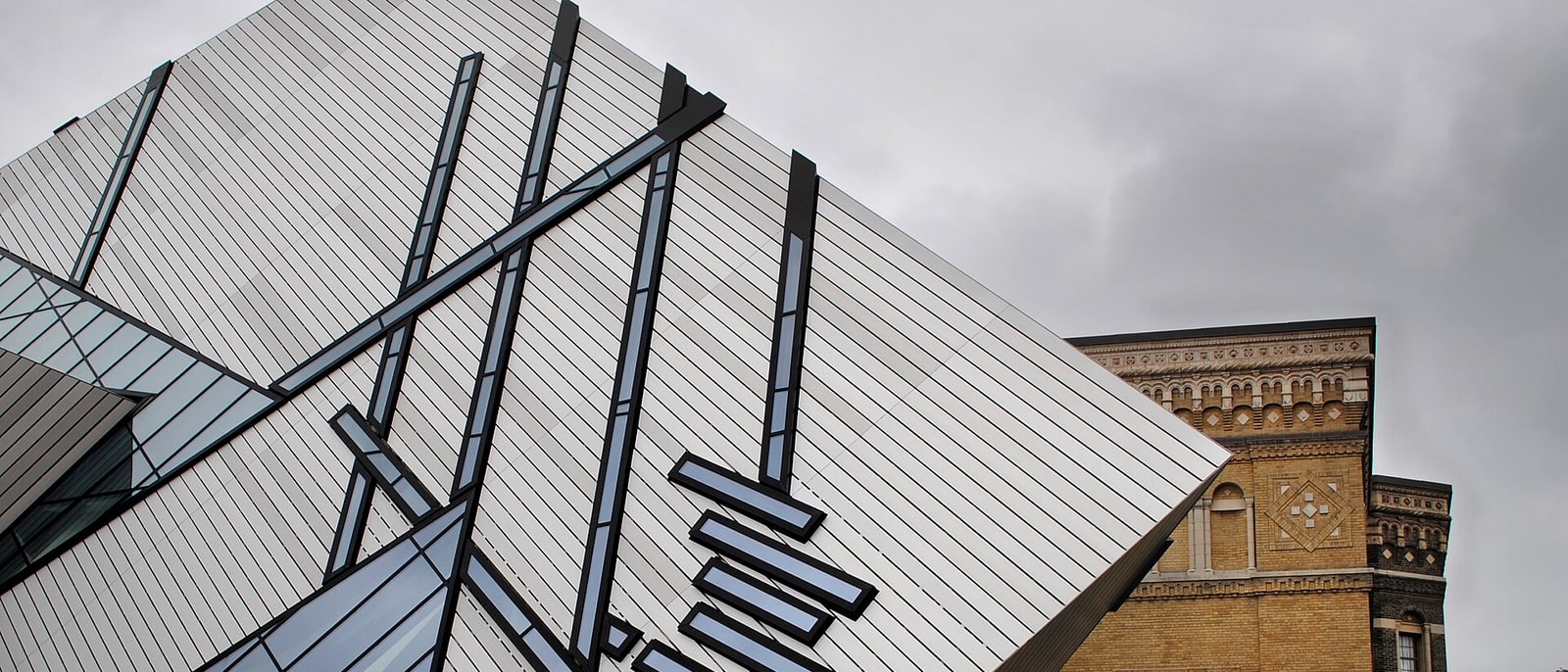
Because Toronto doesn’t compete on monuments and it knows it. It has a very tall aerial, a fake castle built by a ruined banker, and a museum with an iceberg on it. All of that is fine. But what no other city has is a corner where a Portuguese bakery, a Jamaican stall and a Tamil place have coexisted for forty years without anything happening.
The route, stop by stop
4 STOPS- 01
The CN Tower
Five hundred and fifty-three metres and thirty-two years of world record, from 1975 to 2007, until the Burj Khalifa passed it. Canadian National, a railway company, put it up because the new skyscrapers were blocking radio and television signals and an aerial above all of them was needed. That’s still what it is: half the city’s broadcasting comes off the top of it.
It gets struck by lightning around seventy-five times a year on average and nothing happens, because it has copper conductors running the length of the structure. And two things inside justify it: the 1994 glass floor, the first of its kind anywhere, and the EdgeWalk, which involves stepping outside at three hundred and fifty-six metres clipped to a rail.
The whole city orients itself visually from it: if you can see it, you know where south is, because it’s in the lake.
- 02
The neighbourhoods
Kensington Market tells the city’s history in four blocks: Jewish in the twenties, Portuguese after, then Caribbean, then Vietnamese, and no layer erased the last. The Danforth is genuinely Greek, with Greek signage and an August festival that closes the street. Gerrard Street is Tamil and Bengali. And out in Scarborough, beyond downtown, is probably the best Chinese and Sri Lankan food in North America.
The difference from other cities’ “ethnic quarters” is that these haven’t been emptied of residents to be shown to anyone. Nobody designed them: they formed because people arrived and settled where someone from their town already was.
Walking two of them in a day teaches you more about Canada than any museum, and incidentally it’s the best food you’ll eat on the trip.
- 03
Casa Loma
A medieval-style castle with ninety-eight rooms, towers, glasshouses and stables with mosaic floors, built between 1911 and 1914 on top of a hill. There’s nothing medieval about it: Henry Pellatt, a financier who got rich bringing electricity to Ontario, put it up because he wanted to live in a castle and could.
And here’s the ending: he couldn’t. The First World War, a shift in the electricity business and municipal taxes that multiplied on him left him without money, and in 1924, ten years after moving in, he lost the house and went to live in a flat. He died broke. The city took the castle for unpaid debts.
It’s a monument to miscalculated ambition and that’s why it’s worth it: the tunnels, the stables and the view are still there, and the story is better than the building.
- 04
The Toronto Islands
They weren’t islands: they were a sand peninsula joined to the shore, until in 1858 a storm opened a channel and cut it. Since then they’ve been a car-free archipelago fifteen minutes by ferry from the financial district, with beaches, channels, an 1808 lighthouse and seven hundred people living in wooden houses.
That community is the most interesting thing about the place: since the fifties the city had been trying to demolish the houses for parkland, and the residents organised, held out, put up barricades when the excavators arrived and finally won in 1993, with a protected leasehold. Today there’s a waiting list to get in.
It’s the only place in Toronto where you see the whole CN Tower at once, and it’s also a neighbourhood that exists because its people refused to leave.
Frequently asked
What should you see in Toronto?
The CN Tower, St Lawrence Market, the Distillery District, the ROM with its Libeskind crystal, Casa Loma and the islands by ferry. But what really sets Toronto apart is the neighbourhoods: it has the highest share of foreign-born population of any city on the planet, and you can see it and eat it.
Is Toronto the most diverse city in the world?
By share of foreign-born population, yes: around half its residents are first-generation immigrants, there are over two hundred ethnic origins in the census and more than a hundred and sixty languages spoken. And the neighbourhoods aren’t themed: they’re real, with people living in them.
What is Casa Loma?
A 98-room castle built between 1911 and 1914 by Henry Pellatt, a financier who got rich on electricity and wanted to live in a castle. Ten years later he lost it to debt and died broke. The city took it. The story is better than the building.