OZU /MOROCCO /CASABLANCA /GUIDE
Casablanca’s Art Deco
4 h route4 stopsBest: In the morning, with raking light on the façadesUpdated July 2026
Between 1912 and 1956, under the protectorate, Casablanca was the largest laboratory of modern architecture in the world: French architects came here to build what France wouldn’t approve. The result is the biggest concentration of Art Deco in Africa and one of the largest anywhere.
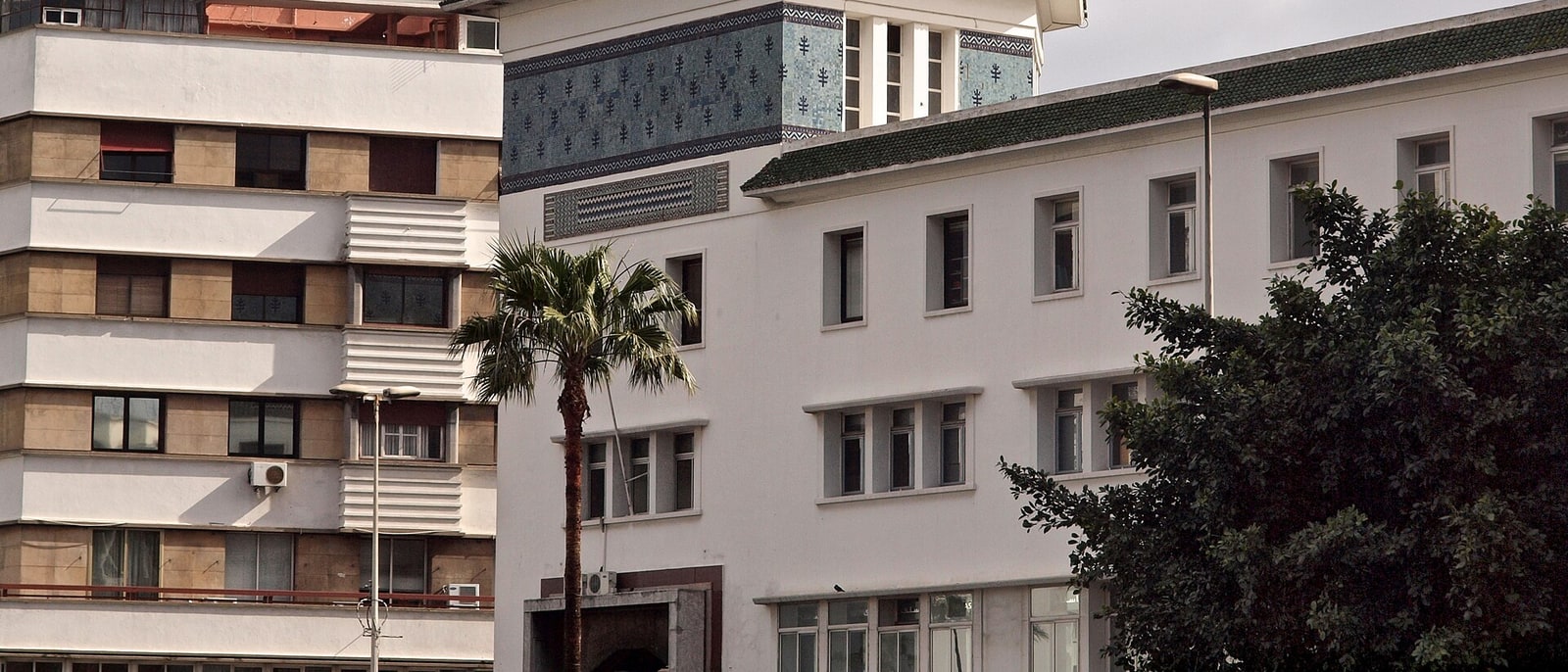
They even invented a style, mauresque: European Art Deco with zellige, horseshoe arches and Moroccan latticework. Today it’s grimy, peeling and half-ruined, and that abandonment is precisely what makes the walk so good. Almost no tourist does it.
The route, stop by stop
4 STOPS- 01
Place Mohammed V
The square the French designed as the administrative centre, ringed by official buildings from the 1920s and 30s in mauresque style: the Wilaya with its bell tower, the courthouse, the old post office and the French consulate.
Nowhere else concentrates so much of it, notice how they mix European Art Deco symmetry and lines with Moroccan tiles, arches and latticework.
In the middle there’s a fountain and pigeons, and it’s where the city takes its photo.
- 02
Boulevard Mohammed V
The commercial artery of the colonial centre: 1920s and 30s apartment blocks with curved balconies, covered shopping arcades with skylights and the old cinemas, like the Rialto, still working.
Look up: the ground floor is taken over by modern shops and signage, but from the first floor upwards it’s all intact, if peeling.
It’s an open-air museum nobody preserves and that is still lived in regardless.
- 03
The Habous quarter
The "new medina": in the 1930s the French built from scratch a quarter imitating a traditional medina, with arcaded streets, squares and arches, but orderly and drawn on plans. It sounds like a theme park and it isn’t.
It worked: today it’s a living neighbourhood, with the best Arabic bookshops, patisseries, craft shops without hassle and marked prices.
It’s the pleasantest place to shop in Casablanca and the strangest example of colonial urbanism.
- 04
Villa des Arts and the Corniche
A 1934 Art Deco villa, restored and turned into a centre for contemporary Moroccan art, with a garden.
It’s free, it’s empty and it’s the only way to see inside what these houses were like.
From there, carry on towards the coast and end the walk on the Corniche, with the Atlantic and the mosque beyond. The contrast between the peeling Art Deco and the mosque’s new marble sums up the whole city.
Frequently asked
Why is there so much Art Deco in Casablanca?
Because during the French protectorate (1912-1956) architects came here to build what France wouldn’t approve. Casablanca was their laboratory and holds the largest concentration of Art Deco in Africa, with a style of its own, mauresque, mixing it with Moroccan motifs.
What is the mauresque style?
It’s the blend invented in Casablanca: European Art Deco symmetry and lines combined with zellige tiles, horseshoe arches and Moroccan latticework. It’s clearest in the official buildings of Place Mohammed V.
What is the Habous quarter?
A "new medina" the French built from scratch in the 1930s imitating a traditional one, but orderly and planned. Today it’s a living neighbourhood with bookshops, patisseries and crafts with marked prices and no hassle.