A weekend in Cusco
20 h route3 stopsBest: April to October, the dry season. In February it genuinely rainsUpdated July 2026
The Sacred Valley isn’t only Cusco’s pretty day out: it’s also the intelligent way to acclimatise. It sits five to eight hundred metres lower than the city, so dropping down there on day two goes far better than climbing anywhere else.
With two days, the split that works is city on the first, gently, and valley on the second. If you’re also going to Machu Picchu, nearly everyone fits it from day three on, because the train leaves from the valley itself.
The route, stop by stop
3 STOPS- 01
Písac
Above the town stands an Inca complex with andenes, farming terraces, curving down the hillside, and they weren’t decorative: they gained cultivable surface, held the soil in place and created stepped microclimates for testing varieties at different heights.
Below, in the town, is the market, larger on Tuesdays, Thursdays and Sundays.
It’s where to buy real textiles, and it helps to know the test: genuine alpaca feels cool to the touch and doesn’t warm your hand. Acrylic heats up straight away.
- 02
Ollantaytambo
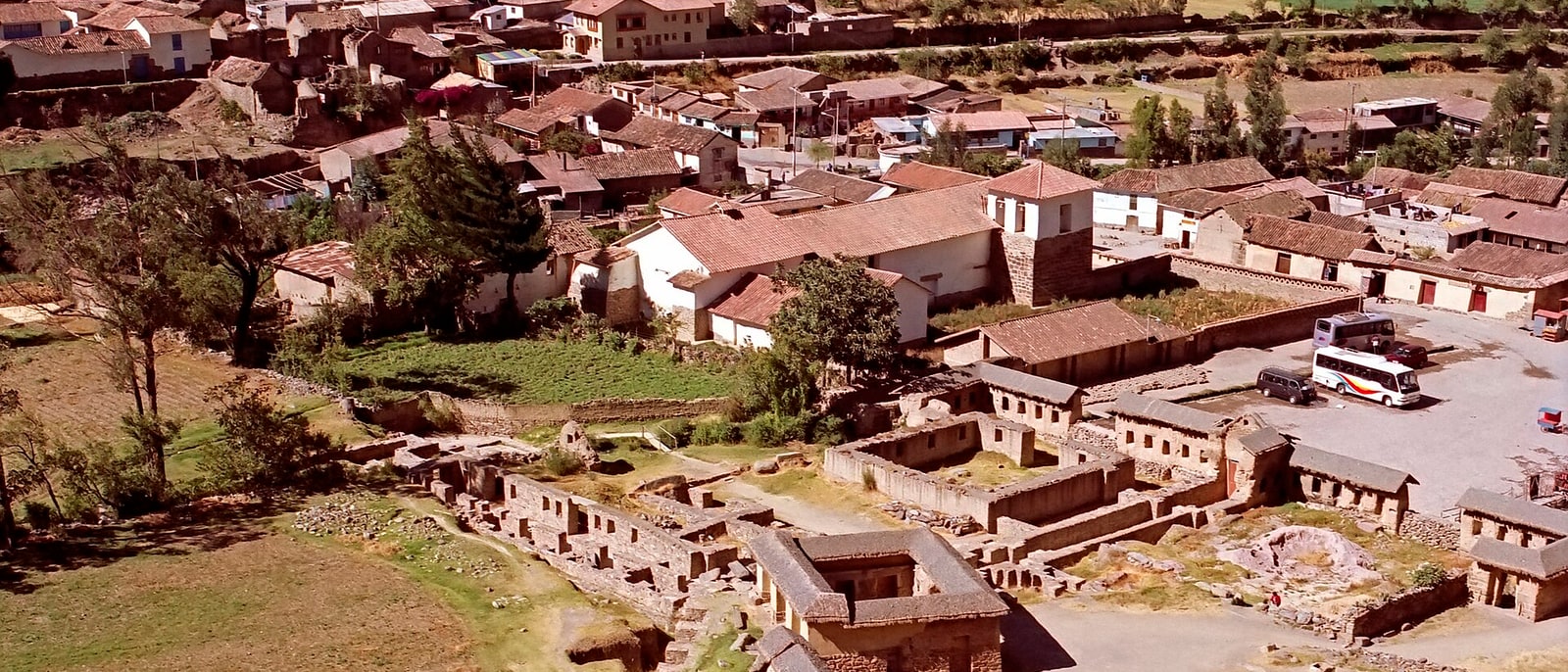
The town keeps its original Inca street plan, with water channels running down the lanes, and it’s one of the few places on earth where people live inside fifteenth-century urban planning. Above it stands the fortress, with enormous terraces and an unfinished sun temple.
In 1536 Manco Inca defeated Hernando Pizarro’s cavalry here: he flooded the plain by diverting the river and the horses bogged down. It was one of very few Inca victories in open field.
Most trains to Machu Picchu also leave from here.
- 03
Moray and the Maras salt pans
Moray drops in concentric terraces dug in the shape of an amphitheatre, and the most accepted theory is that it worked as an experimental station: there are several degrees of difference between the top and bottom levels, allowing crops to be tested in different microclimates without moving.
A few kilometres away, the Maras salt pans are some three thousand stepped pools fed by a salty spring emerging from the mountain. They have been worked since before the Inca and remain in the hands of village families, each with their own pools.
The water evaporates in the sun and the salt is gathered by hand.
Frequently asked
Better to sleep in Cusco or the Sacred Valley?
If you’ve just flown in, the valley is kinder on your body: it’s five to eight hundred metres lower and you sleep better. Cusco has more life, more restaurants and more to see. Many people spend their first night in the valley and then settle in Cusco.