Where to eat in Cusco
4 h route3 stopsBest: Big meal at midday. Light at night, since digestion suffers at altitudeUpdated July 2026
Cusco eats Andean, which is not the same as the coastal Peruvian cooking that became famous abroad. Here it’s potato, maize, quinoa and highland meats (alpaca, lamb, guinea pig) and the fish comes from a long way off.
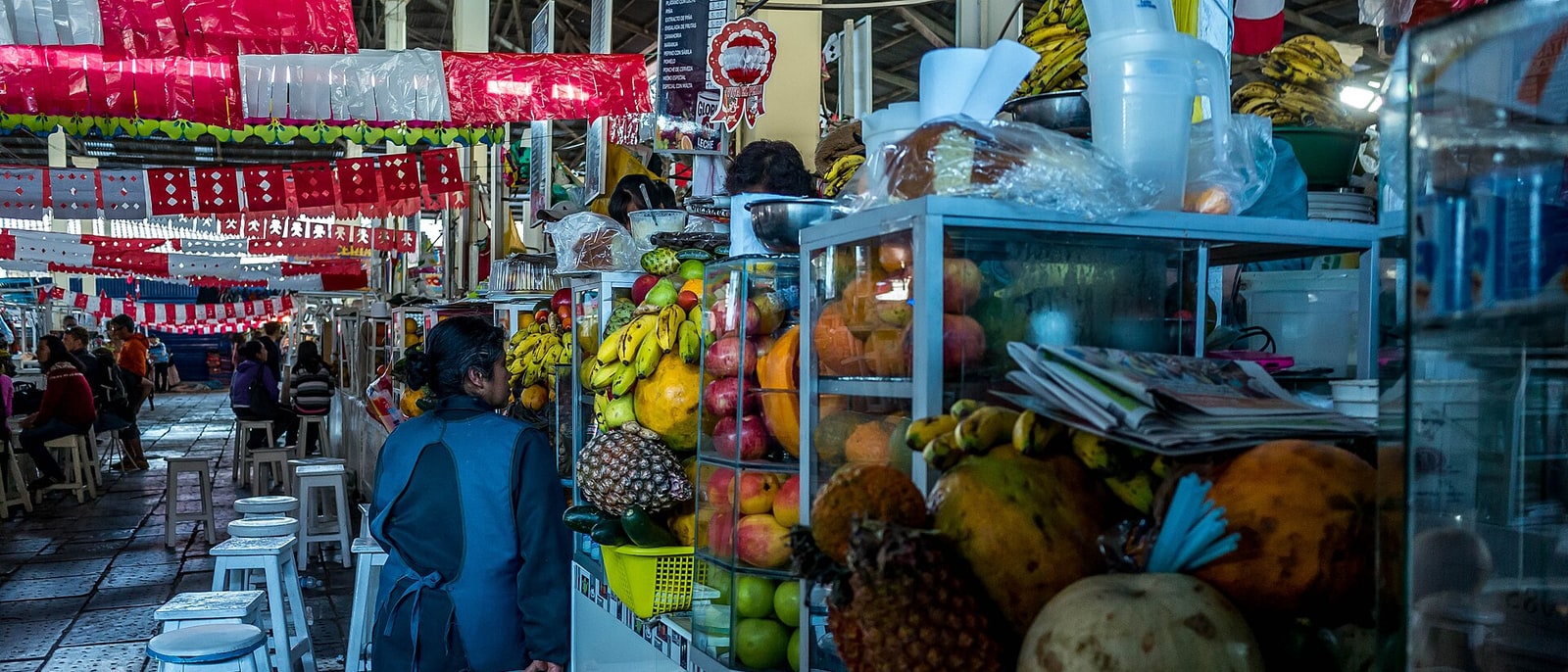
One piece of advice worth more than any restaurant recommendation: at this altitude digestion slows and heavy dinners sit badly. The big meal is at midday and supper is light. Everyone here does it and there’s a physiological reason.
The route, stop by stop
3 STOPS- 01
The potato, seriously
The potato was domesticated in the Andes some eight thousand years ago and went out to the rest of the world from here.
In the market you see dozens of varieties with markedly different texture and taste, and on menus they appear in dishes that aren’t a side: causa, papa a la huancaína, ocopa.
The version to try is chuño: potato freeze-dried by the Inca method, letting it freeze overnight and dry in the sun by day, repeated for days until it’s hard as stone and keeps for years. It’s a centuries-old preservation technology still in the kitchens here.
- 02
Cuy, alpaca and feast food
Cuy, guinea pig, has been raised in the Andes for millennia and is celebration meat, not everyday food: at home it comes out for christenings, weddings and patron saint festivals. It’s roasted or oven-baked and served whole, head and feet included, which is worth knowing before ordering. Alpaca is far easier to approach: lean meat, very low in fat, with a mild flavour close to beef. It appears on menus as loin or in skewers. Another classic is pachamanca, cooked underground with hot stones, though that belongs more to the countryside than to a city restaurant.
- 03
Coca, chicha and what to drink
The coca leaf has been chewed and brewed in the Andes for thousands of years, it’s legal in Peru and it sits in every hotel in a bowl beside the hot water. It helps with soroche and with tiredness.
One important practical warning: it’s legal here and **it isn’t in most countries**, so it doesn’t go in your luggage home, neither as leaves nor in teabags.
For a soft drink, chicha morada, made from purple maize boiled with pineapple, cinnamon and clove, sweet and alcohol-free. Chicha de jora does contain alcohol, it’s fermented maize, and it’s sold in neighbourhood chicherías, traditionally marked with a red bag or a flower hung at the door.
Frequently asked
Can you take coca leaf home?
It’s a bad idea. It’s legal in Peru and Bolivia, but in most countries it is banned, teabags included, and it can cause serious trouble at customs or in a drug test. You consume it there and leave it there.