OZU /SOUTH KOREA /SEOUL /GUIDE
Day trips from Seoul
4 stopsBest: October, for the colour. And check the DMZ’s status firstUpdated July 2026
The most militarised border on earth is an hour from here. The demilitarised zone, which is what it’s called and is exactly the opposite, is a strip four kilometres wide and two hundred and fifty long that has split the peninsula since 1953, and it can be visited: there are trips with advance booking, passport and screening, and you can’t go independently.
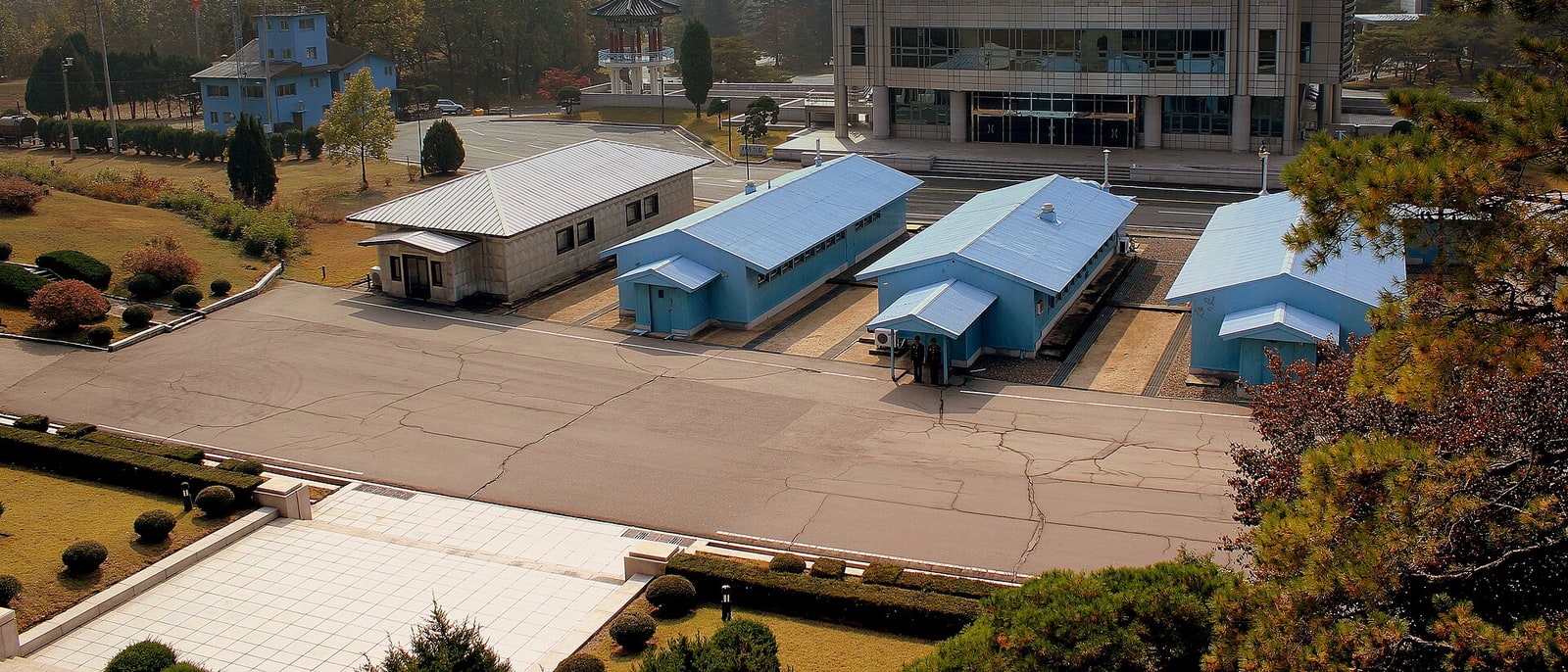
And one thing needs saying clearly: the part almost everyone wants to see, the Joint Security Area at Panmunjom, the blue huts where you cross the line, gets suspended frequently and has been closed for long periods over the political situation and over incidents. The rest of the visit, with the tunnels and the viewpoints, usually runs. Check the status before booking and don’t assume what you saw in a video years ago.
The route, stop by stop
4 STOPS- 01
The DMZ
The strip is four kilometres wide, two hundred and fifty long, and nobody has entered it since 1953. The standard visit includes the infiltration tunnels dug from the north and discovered between 1974 and 1990, you can go down one, a viewpoint from which you see North Korean territory through binoculars, and a railway station built for a line that goes nowhere.
And there’s a consequence nobody foresaw: seventy years without human activity have turned the DMZ into one of the most important accidental wildlife reserves in Asia. There are red-crowned cranes, black bears and probably leopards, in a strip full of anti-personnel mines which is precisely why nobody enters. It’s a nature sanctuary created by fear.
Book ahead, take your passport and check the status: the Panmunjom part is often suspended.
- 02
Suwon and its fortress
An hour on subway line 1, you don’t even need a train, is Hwaseong, a late eighteenth-century fortress listed as World Heritage, with nearly six kilometres of wall you can walk in full along the top, with its gates, its towers and its firing posts.
And a king built it for a personal and fairly tragic reason: Jeongjo’s father had been killed by being shut in a rice chest until he died, on the orders of his own grandfather. When he came to the throne he moved his father’s tomb here and set out to move the entire capital to be near it, so he raised this fortress in only two and a half years, with cranes and pulleys designed by an engineer of the period and paying the labourers, which wasn’t done then.
He died before finishing the move. The wall remains.
- 03
Nami Island
A small island in a reservoir, with avenues of lined-up trees that turn yellow and red in October and fill with snow in winter. It became world-famous through a 2002 television series that used it as a location, and since then people come from across Asia to be photographed on the same metasequoia avenue.
And it has something that’s half a joke and half not: in 2006 it declared itself the Naminara Republic, an independent country. They issue a passport, which is your ticket, they stamp you on arrival, and they have a currency, a flag and an anthem. It’s an obvious marketing operation and at the same time it’s put together with a seriousness that makes it funny. It’s a trip that’s both lovely and silly, and in October, with the colour, it earns the three hours there and back.
- 04
Incheon and its Chinatown
Korea’s only official Chinatown is in Incheon, the port through which nearly everything that entered this country entered, and it’s an hour by subway from Seoul, on the way to the airport. You can do it on your last day before flying, leaving your suitcase in a locker.
And something happened here with consequences: in the late nineteenth century, Chinese immigrants from Shandong adapted a noodle dish with soybean paste to Korean taste, sweetening it with caramel. That’s jjajangmyeon, and today it’s probably the most home-delivered dish in Korea: thick noodles with a heavy black sauce of fermented soy, onion and pork. There’s a museum devoted only to it, in the building of the restaurant where it’s said to have been invented.
A Chinese dish that no longer exists in China and that became another country’s national food.
Frequently asked
Can you visit the DMZ from Seoul?
Yes, on an organised trip, with advance booking and your passport: you can’t go independently. But the Panmunjom part, the blue huts, gets suspended frequently and has been closed for long periods. The rest, the infiltration tunnels and the viewpoints, usually runs. Check the status before booking.
What’s in the DMZ?
A strip 4 km wide and 250 long that nobody has entered since 1953. You visit tunnels dug from the north, a viewpoint towards North Korea and a station on a line that goes nowhere. And seventy years without people have made it an accidental wildlife reserve, with cranes and bears, because it’s full of mines.
What is Hwaseong fortress?
A late eighteenth-century fortress in Suwon, an hour by subway from Seoul and World Heritage, with six kilometres of wall you can walk along the top. King Jeongjo built it in two and a half years to move the capital near his father’s tomb: his father had been killed by being shut in a chest.