OZU /SOUTH KOREA /SEOUL /GUIDE
A weekend in Seoul
22 h route4 stopsBest: October, for the colour. Or April, for the blossomUpdated July 2026
Dinner is at midnight, cafés open at three in the morning and the subway runs past one. That means a day in Seoul yields double what it does in Europe: you can do palaces in the morning, climb a mountain in the afternoon and eat at eleven without anyone looking at you oddly. The city doesn’t switch off, and you should use that rather than fight it.
With two days, the split that works is this: one day of old Korea (the palaces, the hanok quarter, the 1905 market) and one of the new, which is the one people know without knowing it. The river, Gangnam, the design. And there’s a third thing almost nobody includes that’s inside the city: a national park with real mountains, reachable by subway.
The route, stop by stop
4 STOPS- 01
Saturday: Changdeokgung and its garden
Of Seoul’s five palaces, this is the only World Heritage one, for a specific reason: it’s the least destroyed and the one that best keeps the original idea. The others were levelled twice, the 1592 Japanese invasion and the twentieth-century occupation, and are largely reconstruction. This one keeps original buildings from the seventeenth and eighteenth centuries.
And what to see is the Huwon, the secret garden: thirty hectares of forest behind the palace that were the royal family’s exclusive use. The idea of a Korean garden is not to touch: the terrain was used as it was and pavilions and ponds were only added where there was already a clearing.
Entry is guided-only, at an assigned time and with a ticket separate from the palace’s, and places run out. Book it before you go, because it’s half the reason for coming here.
- 02
Saturday: Bukhansan
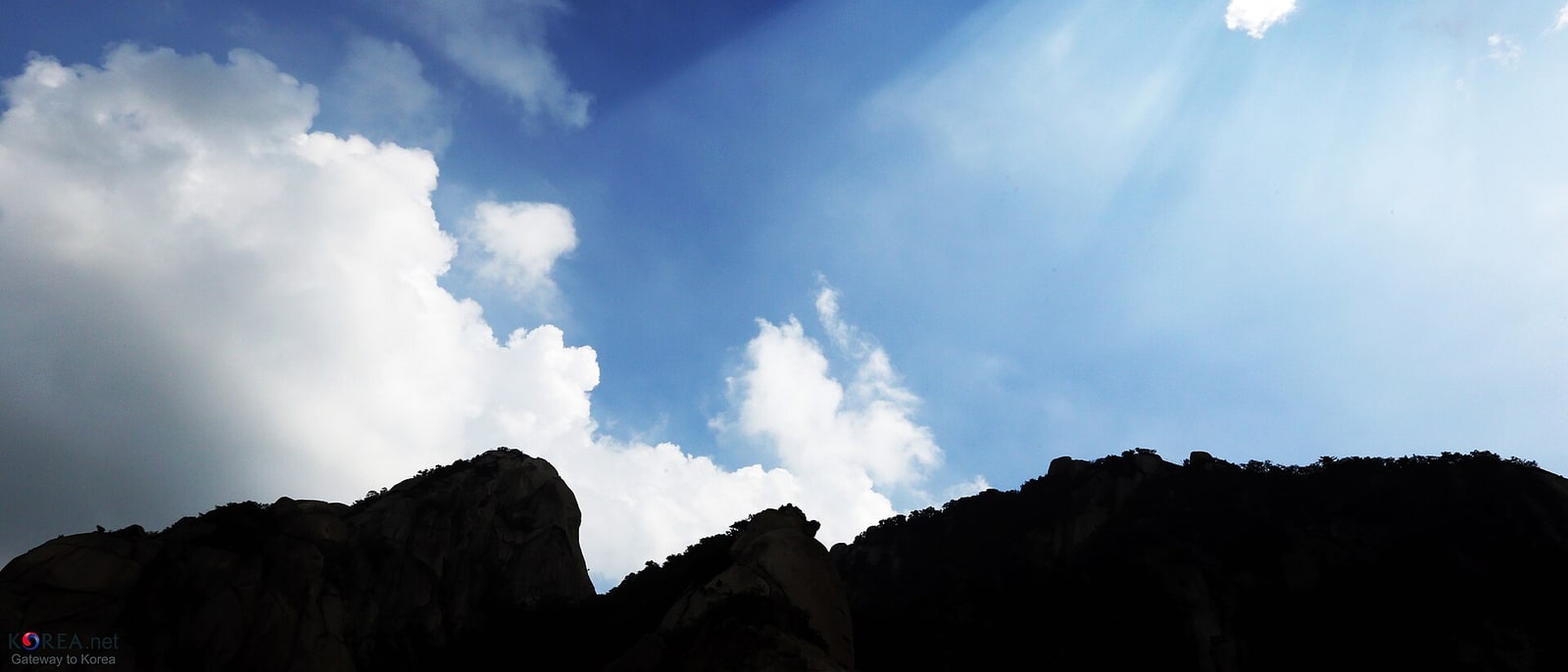
Seoul has a national park inside the city limits, with eight-hundred-metre granite peaks, Buddhist monasteries and fortress walls, reachable by subway. It has a Guinness record that explains everything: it’s the most visited national park in the world per unit of area, around five million people a year across seventy-seven square kilometres.
And that tells you what people are like here: hiking isn’t a minority hobby, it’s a national sport. You’ll see pensioners kitted head to toe in brightly coloured technical gear, overtaking you. There are routes at every level and the classic one climbs to the summit of Baegundae, about three hours there and back, with sections where you haul on a steel cable. From the top you see the whole of Seoul.
If you go on a Sunday, go with patience: there are queues at the chains.
- 03
Saturday night: the barbecue and the scissors
At a Korean barbecue nobody serves you cooked meat: you get a table with a charcoal or gas grill in the middle and an extractor coming down from the ceiling, where you cook it. The waiter brings the pork belly or the ribs whole and raw, and halfway through cooking comes over with enormous scissors and cuts it into pieces on the grill. Scissors are the national kitchen utensil and that isn’t a joke.
What makes it something else is the banchan: the little dishes that arrive unasked (kimchi, sprouts, omelette, seaweed, raw garlic) are free and refilled as often as needed, you just ask. And there’s a rule that saves the night: the meat is eaten wrapped in a lettuce leaf with a little ssamjang paste, garlic and rice, and the parcel goes in your mouth in one bite. Cutting it is considered poor eating.
- 04
Sunday: Gangnam and the river
Gangnam literally means “south of the river”, and that unimaginative name tells the story: until the seventies this was farmland, with paddies and vegetable plots, and there weren’t even enough bridges. The government decided to expand Seoul that way, drew a grid over nothing, and in thirty years it became the most expensive and most aspirational district in the country. The 2012 song was about that, about people who boast about living there, and it was a mockery half the world danced to without noticing.
You see it in an afternoon and what’s interesting isn’t the shops, it’s the contrast with the morning. And then go down to the river: the Han is a kilometre wide in places and both banks are enormous parks where the whole of Seoul sits in summer, orders food delivered to an exact point on the grass, this works and it’s normal, and watches the sunset.
Banpo park has a bridge with a fountain that throws coloured water off the sides. It’s kitsch and everyone goes.
Frequently asked
Which palace in Seoul should you see?
Changdeokgung, the only World Heritage one and the least destroyed, with original seventeenth- and eighteenth-century buildings. And inside it, the Huwon secret garden: guided-only, at an assigned time, with a separate ticket, and places run out, so book before you go.
Are there mountains in Seoul?
Yes: Bukhansan is a national park inside the city limits, with eight-hundred-metre granite peaks, reachable by subway. It has a Guinness record: the most visited national park in the world per unit of area. Hiking here is a national sport and the pensioners overtake you.
What does Gangnam mean?
“South of the river”, literally. Until the seventies it was rice paddy: the government drew a grid over nothing and in thirty years it became the most expensive district in the country. The 2012 song was mocking precisely the people who boast about living there.