Seville: practical tips
1 h route5 stopsBest: March-May and October-November. July and August, only if you mustUpdated July 2026
Seville is easy and compact, but it has one variable that dominates everything: the heat. From June to September it routinely tops 40°C and at midday the street is uninhabitable. You don’t choose the timetable, the thermometer does.
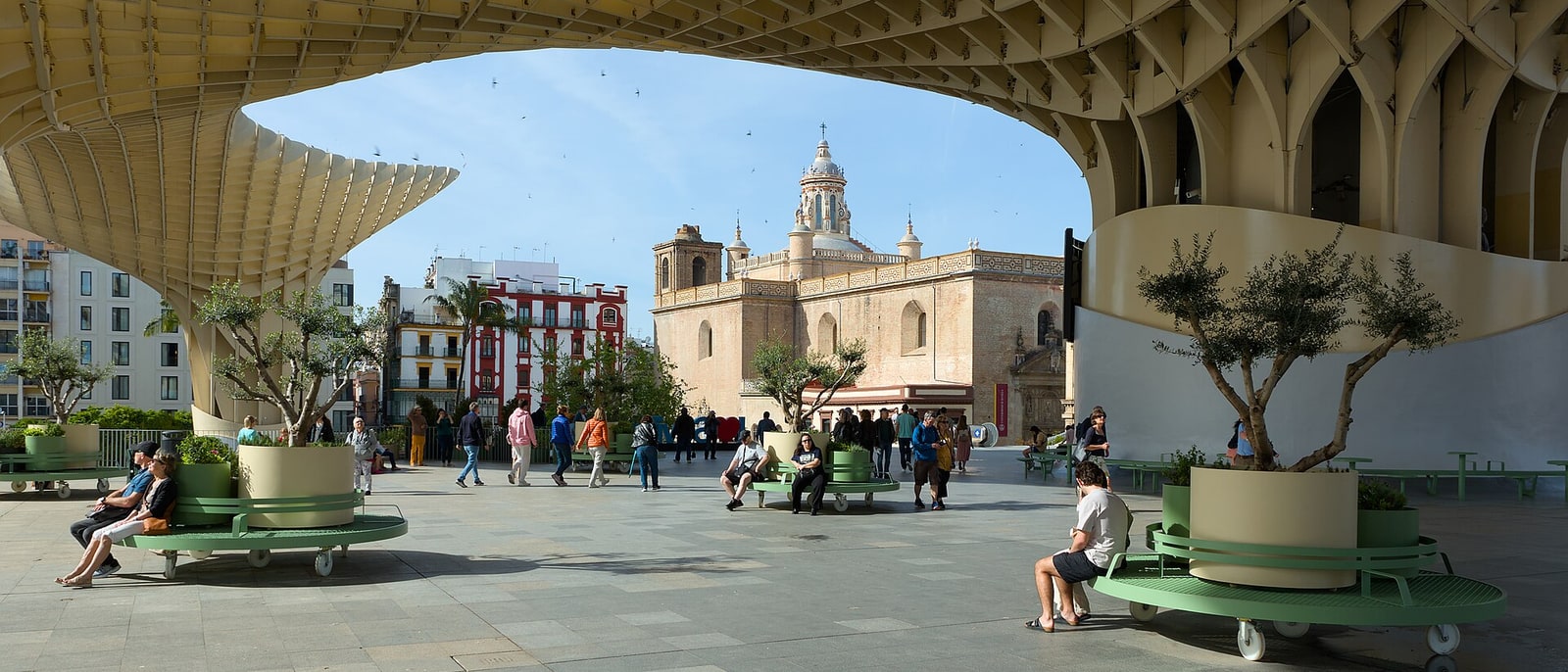
The other variable is the festivals: Holy Week and the April Feria transform the whole city, for better if you came for them and for worse if you came for monuments. Here’s the practical stuff for both situations.
The route, stop by stop
5 STOPS- 01
The heat rules
Seville ranks among the hottest cities in Europe: in summer it tops 40°C without breaking a sweat, and from two to eight in the afternoon the street is literally uninhabitable. This isn’t tourist grumbling: the whole city stops.
The strategy is local and it works: streets nine to two, a long lunch and a siesta or a museum until seven, then out again from eight, when it cools and everyone emerges.
In spring and autumn none of this is needed and the city is a gift.
- 02
Semana Santa and the Feria
Seville’s Holy Week (March or April, depending on the year) fills the streets with processions day and night for a week: it’s astonishing, but the centre closes, moving is impossible and hotels spike. The April Feria, two weeks later, is the other face: casetas, horses and flamenco dresses. Both are very much worth it if you came for them. If you came to see the cathedral in peace, avoid them: they’re the worst possible dates for conventional sightseeing.
- 03
Booking ahead: the Alcázar above all
The Real Alcázar sells out first: it caps numbers by time slot and in high season it goes days in advance.
The cathedral is also worth buying online to skip the queue in the sun, which is the worst part of all.
The Archive of the Indies, by contrast, is free and never has a queue: use it as plan B if you miss out on tickets or need half an hour in the shade.
- 04
Getting around, paying, tipping
The historic centre covers little ground and runs pedestrian: everything is walked and many streets don’t take cars. There’s a tram and a metro, but a visitor barely needs them. The taxi is for the airport. Card works for everything, the currency is the euro, and tipping isn’t compulsory or expected: round up the bill if anything. At the bars you pay at the end, all together.
- 05
Data on your phone
Here the phone is needed for the usual things and one more: Alcázar and cathedral tickets are timed QR codes, Santa Cruz is a maze of alleys where the map is compulsory, and hunting for shade in summer is done through the screen.
If you’re from outside the EU, roaming is expensive, and stopping to find wifi at 42°C is no plan.
A local eSIM activates the moment you land and spares you the counter queue with your case in the sun.
Frequently asked
When is the best time to visit Seville?
March-May and October-November, with pleasant temperatures. From June to September it tops 40°C and you must rearrange the day: streets nine to two and after eight in the evening.
Is Seville worth it during Holy Week or the Feria?
Very much, if you come specifically for the festival: they’re two of the most impressive celebrations in Spain. But the centre closes, moving around is hard and hotels spike, so they’re bad dates for calm sightseeing.
Do you need to book tickets for Seville’s Alcázar?
Yes, strongly advised: it caps numbers by time slot and sells out several days ahead in high season. The cathedral is also worth booking online to avoid queueing in the sun.