Phuket: practical tips
6 stopsUpdated July 2026
Almost everything that goes wrong here goes wrong for three reasons, and ten minutes of reading avoids all three: the water in monsoon season, the rental bike and transport. None of them is bad luck, which is why all three are at the top of this page.
The rest is standard tropics: humid heat twelve months a year, sun that burns through cloud, and a rainy season that isn’t a wall of water but one hard storm a day. The island works all year. What changes from season to season isn’t the sky, it’s the sea.
The route, stop by stop
6 STOPS- 01
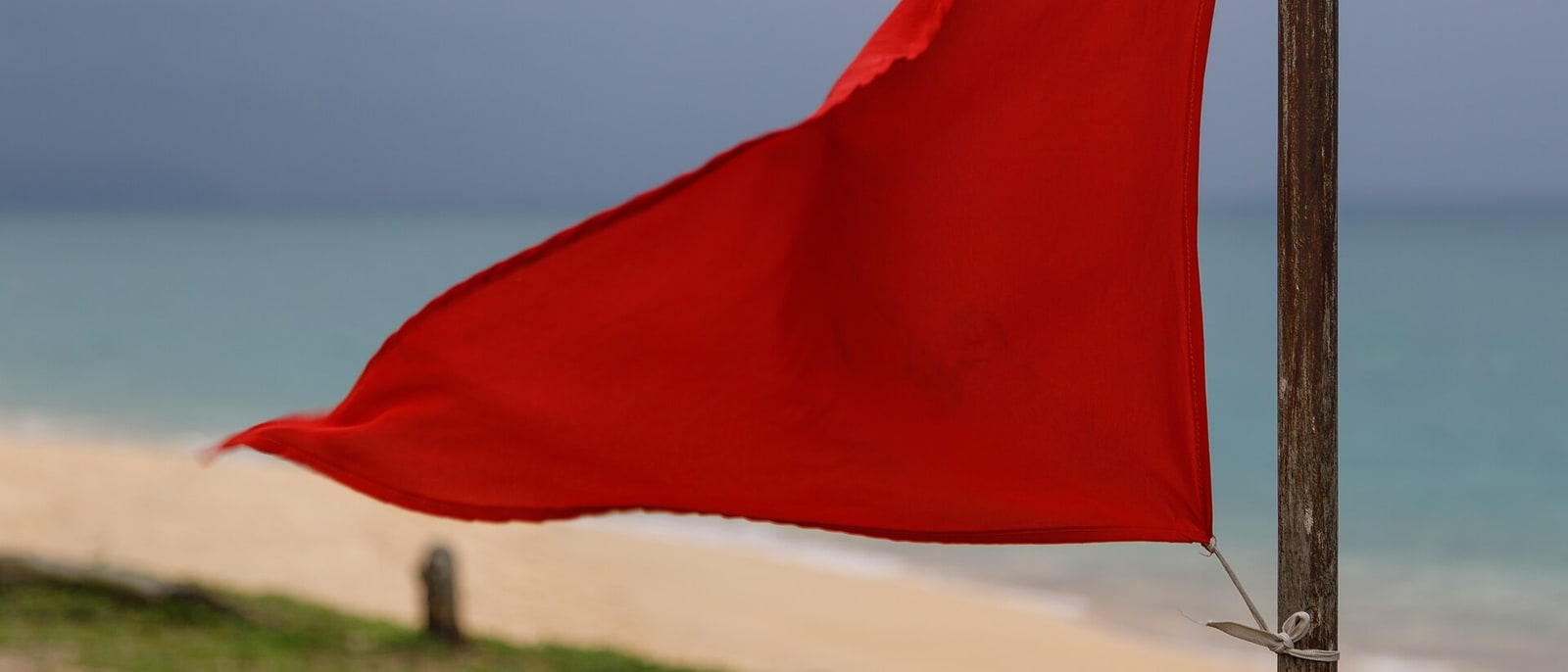
The red flag isn’t decoration
Of everything on this page, this line matters most and gets ignored most. From May to October the monsoon sets up rip currents on the west-coast beaches, which is all of them, and every season people drown: almost always foreigners, almost always after going in past a red flag, almost always at the spot that looked like the calmest part of the beach.
That’s exactly the problem: the strip where the waves don’t break is the channel where the water heads back out. With a red flag up you don’t go in, even if others are in the water, and if it takes you, don’t swim against it: you get out by swimming parallel to the shore until you clear the channel.
Beaches with lifeguards mark it every morning. The ones without, in those months, are for looking at.
- 02
The bike: helmet, licence, and a photo of the scratches
Half of Phuket rents a bike, and nothing beats it for getting around, on three non-negotiable conditions. First: helmet, always, and there are police checks for it. Second: an international permit with the motorbike category. Without it you ride uninsured, and that matters far more than the fine on the day there’s a claim.
The third one heads off the classic problem: before you set off, walk round the bike filming and photographing every scratch, with the rental guy standing there. The argument at handback over a dent that was already there resolves itself if you have the pictures and never resolves if you don’t.
And don’t hand over your passport as a deposit: leave a copy.
- 03
Taxis, songthaews and why everything costs
Phuket doesn’t work like Bangkok: road transport here is in few hands, prices are high for Thailand and the meter barely enters the equation. You agree the fare before getting in, and if nobody quotes you one, don’t get in. At the airport use the official counter, which has zone fares and saves you the conversation.
Songthaews, pickups with two benches in the back, are the genuinely cheap option, with the catch you already know: they run from Phuket Town to each beach and back, so they’re for going into town, not for beach-to-beach.
If you plan to move every day, the maths usually favours renting a bike or a car.
- 04
The jet ski and the damage
The damage claim when you hand back a jet ski is well enough known in Patong that the Thai authorities have stepped in several times over the years. The script never changes: you come back, a scratch appears on the hull, and a number appears with it.
The defence is the same as with the road bike and it’s purely documentary: before you go out, film a full lap of the machine with the person renting it to you in shot.
If they won’t let you, that’s your answer and that’s the end of the rental. And don’t leave your passport at the hut under any circumstances.
- 05
Elephants: riding or not riding
Elephant rides are advertised all over the island and it’s worth knowing what sits behind them: for an elephant to accept a saddle and a person on top, it has to be broken first, as a calf, through a process that doesn’t appear in the brochure. The animal’s spine, on top of that, isn’t built to carry weight.
The alternative that has grown in Phuket is the sanctuaries where the animals aren’t ridden and don’t perform: you watch them eat, bathe and exist. The practical test is simple: if the place offers you a ride, tricks, or bathing the elephant on your schedule, it isn’t a sanctuary whatever the name says.
It’s one of the few decisions on this trip that costs nothing to get right.
- 06
Mobile data
In Phuket you’ll lean on your phone more than in a city, because everything here gets solved with a map: where the songthaew is, how long Kata really takes, where the Smart Bus stops. Mobile coverage is good across the island, north and south beaches included, and only drops inland in the hills and some way off the coast.
An eSIM is activated before you leave home and works the moment you land, which helps at an airport where the first decision is how you’re getting to the hotel.
On boat trips, expect to lose signal for much of the day: download the island map offline before you board and don’t count on having data at Phi Phi.
Frequently asked
Is it safe to swim in Phuket?
November to April, yes, the sea is flat. May to October it depends on the day and the flag on the beach tells you: red means you don’t go in. Every season people drown on the west coast after swimming past a red flag on a beach that looked calm.
Do you need an international permit to rent a bike in Phuket?
Yes, with the motorbike category. There are police checks for it, but the fine isn’t the point: without a valid permit your insurance doesn’t cover you, and that weighs a lot more on the day there’s an accident. Helmets are compulsory and also checked.
When is the best time to go to Phuket?
November to April, the dry season: flat sea, clear water and every island trip running. May to October it rains hard but in bursts, there are fewer people and everything costs less. What really changes isn’t the rain, it’s the sea.