Where to eat in Phuket
6 stopsUpdated July 2026
The food on this island isn’t the Thai food you know. The miners who came from southern China brought their cooking, married here, and out of that mix (they call it Baba, or Peranakan) came dishes Bangkok doesn’t make: moo hong, mee Hokkien, o-tao. Unesco named Phuket a City of Gastronomy in 2015 for this, not for the beaches.
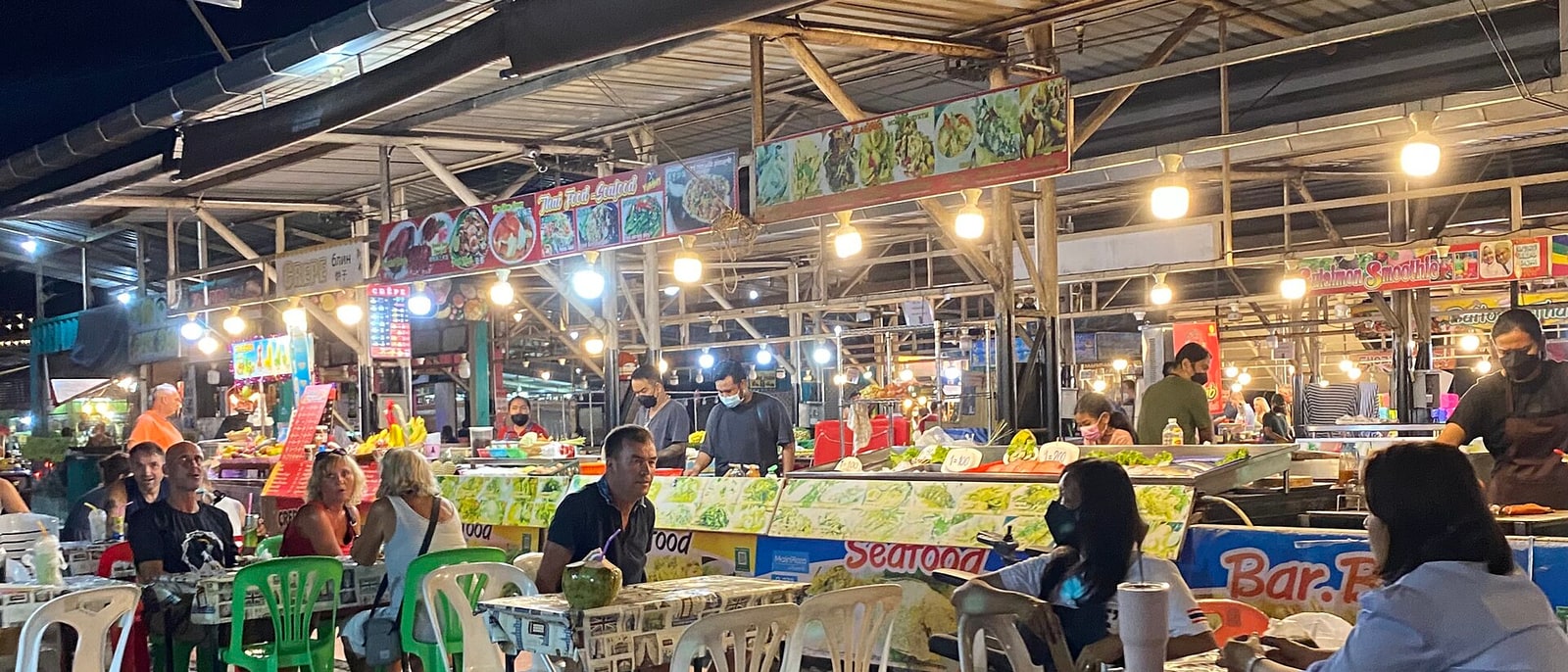
The geography is simple and counterintuitive: you eat well in the old town and in the fishing villages in the south, and expensively and indifferently on the seafront. The closer to the sand, the worse the deal. And there’s a second pantry people forget: nearly a third of the island is Muslim, and that’s where roti and massaman come from.
The route, stop by stop
6 STOPS- 01
Moo hong, the house dish
Pork belly stewed long with soy, garlic, black pepper and palm sugar until it collapses. It’s Hokkien by origin and in Phuket it’s home food: the dish that turns up at any family meal and that you won’t see advertised on a single beach board.
The pepper is what separates it from any braised pork you’ve had: the heat isn’t chilli, it’s peppercorn, a Chinese inheritance older than chilli’s arrival in Asia. It’s eaten with white rice and nothing else.
Look for it in the old town, in the places with a menu in Thai and a ceiling fan.
- 02
Mee Hokkien and o-tao
Phuket’s mee Hokkien comes as a thick yellow noodle fried with stock, seafood and pork, and it has nothing to do with the mee Hokkien of Singapore or Penang despite the name: they’re three different dishes sharing a surname, and that confusion tells the story of the Hokkien diaspora better than a museum does.
O-tao is the odd speciality: an oyster omelette that here gets grated taro folded in, giving it a texture between crisp and chewy that resembles nothing else. It’s cooked on a big plate over a savage flame and eaten with chilli sauce.
If you try one dish in the old town, make it this: outside Phuket it barely exists.
- 03
The old town at lunchtime
For eating you head to the square of Thalang, Dibuk, Krabi and Yaowarat, and it works at lunchtime because that’s when the neighbourhood eats. The places that have run for generations share two traits: they make three things and they have no photos of the food at the door. The one with photos and six languages is aimed at someone else.
At night the old town changes and the tablecloth places appear, which are also fine but aren’t the same thing. And one fact surprises everybody: dinner here is early and by ten it’s half shut.
If you drive over from Kata planning a late dinner, you’ve done forty minutes for nothing.
- 04
Rawai: the seafood where it lands
Along the Rawai front there’s a small fish market and, directly opposite, a row of kitchens that will cook what you just bought for a bit extra. You pick the fish or the shellfish by weight, say how you want it and sit down. It’s the most transparent set-up on the island and therefore the best value for what you actually eat.
It works best in the late afternoon, once the boats are back. What’s there depends on the day and on the sea, which is exactly as it should be.
And go carefully with crab and lobster, sold by weight and quick to add up: the real draw at Rawai is the day’s fish and the prawns, not a photo of something big.
- 05
Roti and massaman: the Muslim half
Phuket has a large Muslim population, mostly in the fishing villages north and south, and that’s where the island’s second kitchen comes from. Massaman is the obvious case: a mild curry with cinnamon, cardamom, clove and peanut that is Persian and Indian at root and reached southern Thailand by trade, not across a border.
Roti is what you eat standing up: dough slapped flat on the griddle, folded and fried, then sweet with condensed milk and banana, or savoury for dipping into curry.
The good stalls are night stalls and you find them by the noise of dough hitting metal. It’s the island’s afternoon snack and it costs what it costs.
- 06
Nine days when the island eats no meat
Every autumn, during the ninth Chinese lunar month, September or October depending on the year, Phuket holds the Nine Emperor Gods festival and the entire island goes on a strict vegetarian diet for nine days. Stalls taking part hang a yellow flag, and there are hundreds: it’s the best time of year to eat here if you don’t eat meat, and probably the worst if you came for moo hong.
The part that makes the news is the processions, where some participants pierce their cheeks. It’s real, it’s religious and it isn’t staged for anybody. If you go, go respectfully and keep the flash out of people’s faces.
The origin is Hokkien, like almost everything that makes this island different.
Frequently asked
What do you eat in Phuket that you don’t eat elsewhere in Thailand?
Baba, or Peranakan, cooking, which came out of the Hokkien miners who arrived in the nineteenth century: moo hong (pork belly stewed with pepper), mee Hokkien (thick fried noodle) and o-tao (oyster omelette with taro). In Bangkok they barely exist.
Where do you eat best in Phuket?
In Phuket Town’s old quarter at lunchtime and in the fishing villages in the south, like Rawai, in the late afternoon. The island rule is that the closer you are to the sand, the worse you eat and the more you pay.
What is Phuket’s vegetarian festival?
The Nine Emperor Gods festival, Hokkien in origin, held in the ninth Chinese lunar month (September or October). For nine days the whole island eats strictly vegetarian and the stalls taking part hang a yellow flag.