Eating in Tunis
5 stopsUpdated July 2026
You eat the brik in one bite, and anyone who doesn’t know that ends up with egg down their arm. It’s a paper-thin sheet of pastry folded into a triangle with a raw egg inside, fried for thirty seconds: the white sets and the yolk doesn’t. When you bite it, there’s a liquid egg under pressure in there. Either you put the whole thing in and stay in control, or you’re going to need a napkin and a change of shirt.
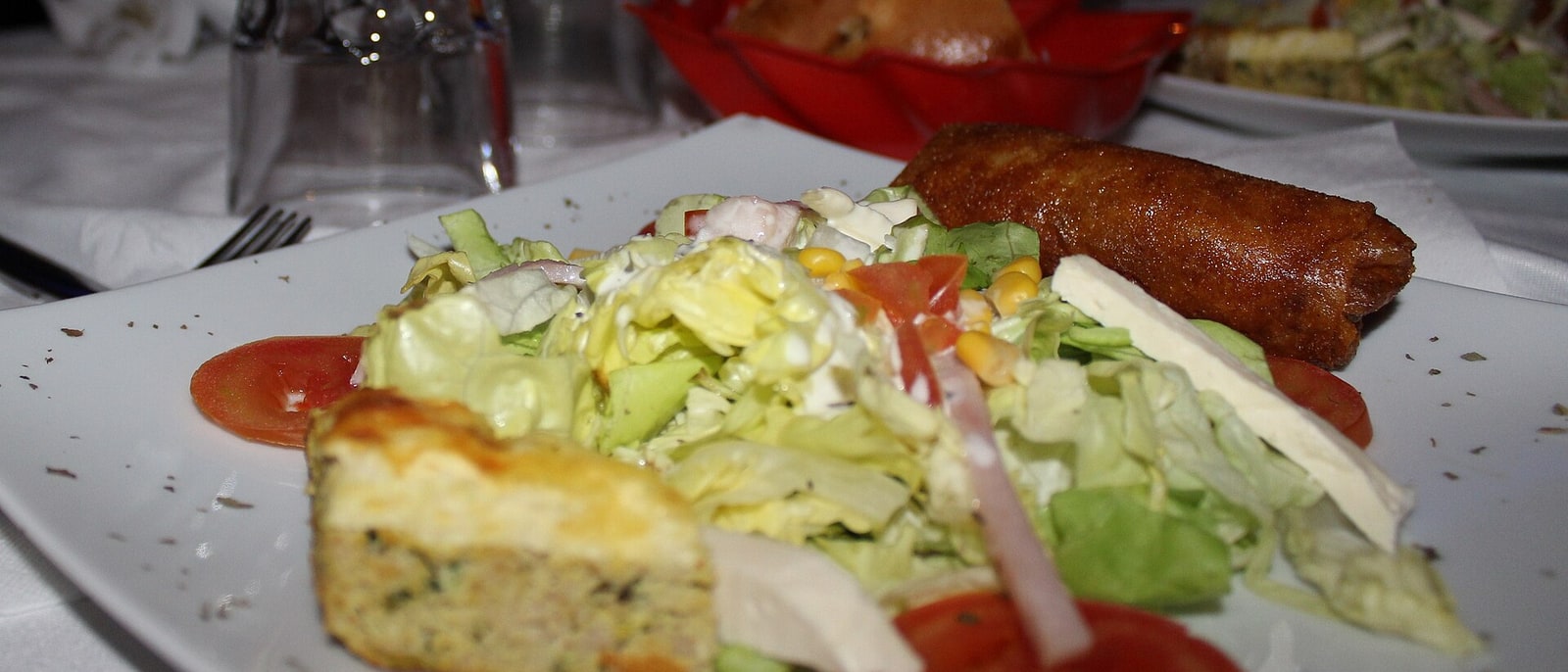
That’s Tunisian food: simple, cheap, with a technique hidden in every dish. There’s no haute cuisine to learn here, there are things done the same way for centuries and a national obsession with chilli that has its own name and Unesco recognition. You eat in the street, standing, for what a coffee costs in Europe.
The route, stop by stop
5 STOPS- 01
The brik
A sheet of malsouka (a very thin pastry, like filo but more elastic) folded into a triangle over a raw egg, sometimes with tuna, capers and potato, and fried in very hot oil for half a minute. The timing is exact and that’s why it works: the white sets, the yolk stays liquid and the whole thing goes crisp outside.
You’ll learn the technique for eating it by failing: you pick it up by a corner, lift it, tilt your head and bite the corner where the yolk is, sucking. Anyone treating it like an ordinary pasty discovers mid-bite that the egg has other plans. It’s the national starter, it’s on every menu and it costs small change.
And a note of honesty: it contains raw egg, so if that worries you, now you know.
- 02
Harissa
Red pepper sun-dried, garlic, cumin, coriander, caraway and olive oil, pounded into a dark red paste. It’s the national condiment, it sits on every restaurant table the way salt does here, and in 2022 Unesco listed it as intangible cultural heritage of humanity. That a country got that for a chilli sauce says a fair amount about what it means.
The reason for the listing isn’t the taste: it’s the process, still domestic and still women’s work, with the pepper harvest drying on the rooftops at the end of summer and every household keeping its own recipe. It’s served with bread and oil before the meal, for dipping.
Careful the first time: the tourist-restaurant version is toned down, and the one in a house or a neighbourhood stall is not toned down at all.
- 03
Lablabi
A bowl of stale bread torn by hand, boiling chickpea broth poured over it, and then whatever you put in: harissa, cumin, olive oil, capers, tuna, a poached egg, olives, lemon juice. You stir it all until the bread soaks through and eat it with a spoon. It’s soup and bread at the same time.
It was born as what it is: leftovers food for people who start work at six in the morning and need something hot, heavy and cheap. It’s served in places that make nothing else, with an enormous pot and no menu. It costs almost nothing and it fills you for half a day.
There’s no dish more Tunisian and less touristy, which is why you have to look for it: it isn’t on the menu of the pretty restaurant in the medina.
- 04
Couscous, which isn’t Moroccan
Tunisian couscous doesn’t resemble the one you know: here it goes with harissa and tomato, so it comes out red and hot, whereas the Moroccan is yellow and sweet. And it’s made with fish as much as lamb, because this is a country with thirteen hundred kilometres of coast.
And there’s a diplomatic detail worth having: in 2020 Unesco listed couscous as intangible heritage of humanity, and the application was submitted jointly by Tunisia, Algeria, Morocco and Mauritania.
Four countries that disagree about nearly everything agreed that couscous belonged to no one in particular. It was the four’s first joint bid and it still gets cited as an example. It’s eaten on Friday, which is the day, and at home.
- 05
Tea with pine nuts
Mint tea here arrives with a handful of toasted pine nuts floating on top, and it throws everyone the first time. It isn’t decoration: they rehydrate while you drink and at the bottom of the glass you eat them with the spoon, soft and tasting of tea. There are almond versions too.
The place to have it is the Café des Nattes in Sidi Bou Saïd, which has been there for centuries and has had everyone from Paul Klee to Simone de Beauvoir through it, or any medina café with mats on the floor.
And it comes with a practical warning: tea here has sugar as standard, and a lot of it. If you want it without, say so before it’s made, because the sugar goes in the pot and not the glass.
Frequently asked
What is a brik and how do you eat it?
A very thin pastry folded into a triangle over a raw egg and fried for half a minute: the white sets and the yolk doesn’t. You eat it in one bite, holding a corner and biting where the yolk is. Anyone treating it like a pasty ends up with egg down their arm.
What is harissa?
The paste of sun-dried red pepper, garlic, cumin, coriander and caraway that is Tunisia’s national condiment, and which Unesco listed as intangible heritage of humanity in 2022. The tourist-restaurant version is toned down. The neighbourhood-stall one is not toned down at all.
Is couscous Moroccan or Tunisian?
Neither exclusively, and that was the deal: in 2020 Tunisia, Algeria, Morocco and Mauritania submitted a joint bid and Unesco listed it as heritage of all four. The Tunisian one has harissa and tomato, so it’s red and hot. The Moroccan is yellow and sweet.