OZU /UNITED STATES /NEW YORK /GUIDE
New York in a day
10 h route6 stopsBest: Start north and work down: the subway runs that wayUpdated July 2026
One day in New York is a cruelty, but it can be done, and there’s a way to avoid spending it in queues: go north to south in a straight line, crossing the island as little as possible. Manhattan is 20 kilometres long and barely 3.7 wide at its widest, so the classic mistake is zigzagging.
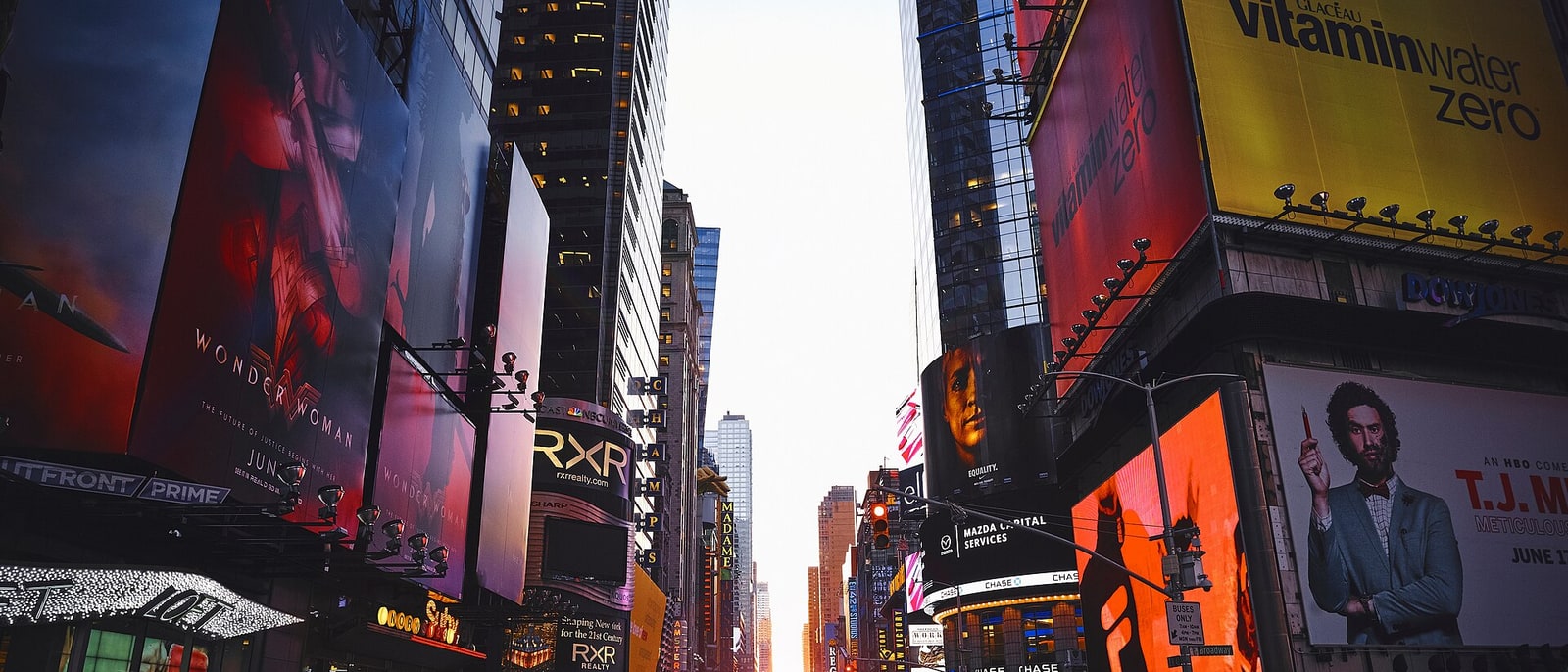
The city is designed so you can’t get lost: above Houston Street it’s all a numbered grid from 1811, streets running east-west and avenues north-south. The only one that breaks the rules is Broadway, which cuts diagonally because it was a Lenape trail older than the city, and that’s why wherever it hits an avenue a square opens up: Times Square, Union Square, Herald Square. All of them are geometric accidents.
The route, stop by stop
6 STOPS- 01
Central Park
The fact that changes the walk: Central Park isn’t a patch of forest they left unbuilt. It’s a work of engineering. When it was designed in 1857 the ground was a rocky swamp, and Olmsted and Vaux built the whole thing: they moved millions of cubic metres of earth, blasted rock, planted more than four million trees and shrubs and hid four cross-town roads in trenches so they couldn’t be seen from inside. Every hill and every lake is placed by hand.
And there’s a part rarely told: there were people on that land. Seneca Village was a mostly Black community with its houses, churches and cemetery, and its residents were expropriated and evicted in 1857 to make the park. There are signs today where it stood, around 85th Street on the west side.
Enter from the south and walk up to Bethesda Terrace: two hours covers what needs covering.
- 02
The Met or the MoMA: pick one
You have to choose here and there’s no right answer, only yours. The Met is one of the largest museums on earth and it covers everything: Egypt (with an entire temple, Dendur, reassembled inside) armour, European painting, American art. It’s overwhelming and you handle it by picking three wings and giving up on the rest.
MoMA is the opposite: small, concentrated, and full of paintings you already know without knowing they’re there. Van Gogh’s Starry Night, Les Demoiselles d’Avignon, the Campbell’s soup. Two hours and you leave knowing what you saw.
On a single day, MoMA wins on logistics: it’s central, close to everything else.
- 03
Grand Central
Nobody comes here just to catch a train: the 1913 building earns the visit even if you board nothing. The main concourse is a room the size of a cathedral, and the good part is above: a blue-green ceiling with the zodiac painted in gold.
And it’s wrong. The constellations are reversed left to right, and it was noticed as soon as it opened. The Vanderbilts’ official explanation was that it’s painted from God’s point of view, seeing the celestial sphere from outside. The likely explanation is that they copied a medieval manuscript without noticing it was already drawn from outside.
Nobody fixed it. A hundred and ten years on, New York’s sky is still backwards and nobody minds.
- 04
The Empire State or the Rockefeller
The Empire State went up in 410 days, in 1931 and in the depths of the Depression, with workers going at a floor and a half a day. When it was finished nobody would rent the offices and they called it the Empty State Building for years.
But there’s a repeated line that happens to be true: go up Top of the Rock at Rockefeller Center, because from there you see the Empire State on the skyline and from the Empire State you don’t. You also get all of Central Park from the south, which is the good view.
The third, newer option is the Edge or Summit at Hudson Yards, more spectacular and less New York.
- 05
The High Line and Chelsea
An elevated freight line that carried meat and coal above the West Side, abandoned in 1980, with trees growing between the rails for twenty years. They were going to demolish it and two neighbours started a group to save it. It opened as a park in 2009 and it has changed the face of the whole west side of Manhattan.
You walk above the streets at first-floor height, among plants chosen to resemble the ones that grew there on their own while it was derelict. It’s short, it’s flat and it’s the best walk in the city.
It ends at Hudson Yards to the north or the Whitney and the Meatpacking District to the south.
- 06
The Brooklyn Bridge, at sunset
From 1883, and with the best story in the city. John Roebling designed it and died of tetanus from a foot injury before work began. His son Washington took over, caught decompression sickness in the pressurised caissons under the river and was left bedridden, unable to visit the site.
So his wife, Emily Warren Roebling, taught herself (mathematics, catenary curves, materials, cable calculations) and for eleven years effectively ran the construction: carrying her husband’s instructions, dealing with the engineers, the politicians and the workers, and making decisions. Nobody ever gave her the title. She was the first person to cross it on opening day.
Walk it towards Brooklyn at sunset, with the sun going down behind Manhattan.
Frequently asked
Can you see New York in a day?
Not see the city, but you can do a coherent north-to-south line: Central Park, one museum (MoMA if it’s a single day, for logistics) Grand Central, a viewpoint, the High Line and the Brooklyn Bridge at sunset. The trick is not to zigzag: Manhattan is long and narrow.
Why is Grand Central’s ceiling backwards?
The constellations are reversed left to right and it was noticed as soon as it opened in 1913. The official line was that it’s painted from God’s point of view, seeing the celestial sphere from outside. The likely truth is they copied a medieval manuscript already drawn that way. It was never fixed.
Is Central Park natural?
No, it’s entirely man-made: built from 1857 on a rocky swamp, moving millions of cubic metres of earth and planting over four million trees and shrubs. The cross-town roads are deliberately hidden in trenches. Seneca Village, a Black community, stood on that land and was evicted to build it.