OZU /UNITED STATES /NEW YORK /GUIDE
New York’s neighbourhoods
6 h route5 stopsBest: Harlem on a Sunday. Queens any day you’re hungryUpdated July 2026
Five boroughs, and most visitors set foot in one. Manhattan has the skyline and the museums, but also 18% of the population: the other seven million live in Brooklyn, Queens, the Bronx and Staten Island, and the subway reaches nearly all of it on the same fare.
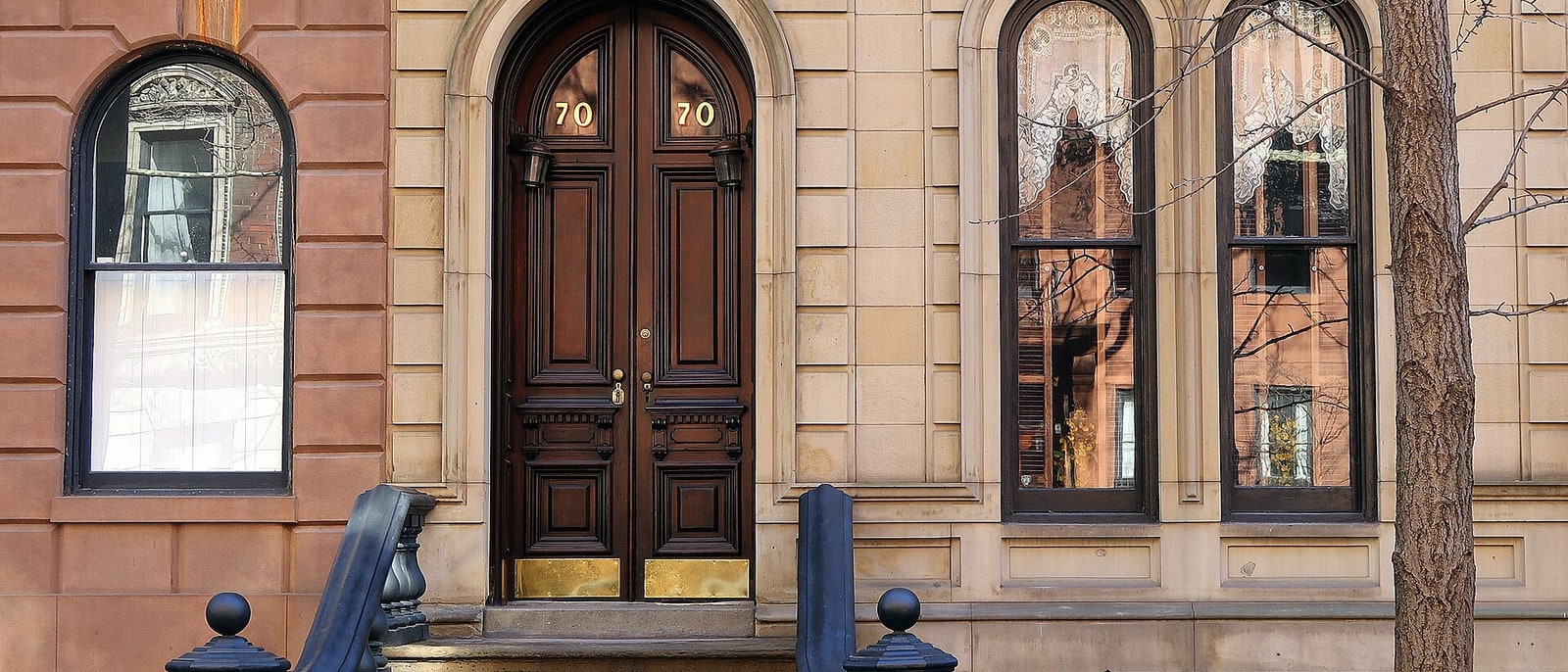
Here’s what’s in each and why it earns the subway ride. None of it is far: in this city, “far” means forty minutes.
The route, stop by stop
5 STOPS- 01
Queens
The city’s most extraordinary borough and the least visited. Queens is, by the counts cited, the most linguistically diverse place in the world: on the order of 800 languages in one borough. The 7 train that crosses it has a well-earned unofficial nickname: the International Express. Jackson Heights is the obligatory stop: within a few blocks Colombian, Indian, Tibetan, Mexican and Nepali communities live side by side, each with its shops and its food. Flushing, at the end of the line, has New York’s largest Chinatown. And Astoria, closer in, is the historic Greek quarter and today a mix, with the best summer terraces.
- 02
Brooklyn
With two and a half million people, Brooklyn alone would be America’s fourth city. And it’s enormous and hugely varied: DUMBO at the foot of the bridge, with the famous shot and the best walk facing the skyline, Williamsburg, which was the alternative one and is now expensive, Greenpoint, Polish, Bushwick, with the murals.
But Brooklyn is also Brighton Beach, Russian and on the sea, Crown Heights, Caribbean and Hasidic Jewish at once, and Coney Island with its amusement park from another era.
One day doesn’t cover it. Pick two neighbourhoods and do them properly.
- 03
Harlem
Manhattan holds it twenty minutes by subway from midtown, and most visitors never go up. Harlem was the centre of 20th-century Black American culture: in the twenties, the Harlem Renaissance gathered Langston Hughes, Duke Ellington and Zora Neale Hurston here, and half the century’s music came out of it. The Apollo Theater still stands and still programmes, the brownstones on the side streets are among the handsomest in the city, and on Sundays there are gospel choirs in the churches, which welcome visitors but are a service and not a show: you go respectfully, covered and without photographs, or you don’t go.
- 04
The Lower East Side and Chinatown
The neighbourhood the waves of immigrants came through: Germans, Eastern European Jews, Italians, and later Chinese and Dominicans. In the early 1900s it was one of the most densely populated places on earth, with entire families in windowless rooms.
And you can actually visit that: the Tenement Museum preserves a period tenement as it was, with the apartments reconstructed after the families who lived in them, seen with a guide. It’s the best small museum in the city.
Around it, Katz’s since 1888 and Manhattan’s Chinatown, still alive even if Flushing’s is bigger.
- 05
The Bronx
The borough with the worst reputation, and the reputation is from the seventies. Today the Bronx has Yankee Stadium, the city’s largest zoo and the botanical garden, but the thing to know is Arthur Avenue.
Manhattan’s Little Italy is now essentially a set for tourists, three streets of restaurants. The real Italian one, with the pasta shops, the butchers, the bakeries and people doing their shopping, is Arthur Avenue, in the Bronx. If Italian food in New York interests you, it’s here and not there.
And hip hop was born here too, at a party at 1520 Sedgwick Avenue in 1973.
Frequently asked
What’s the most interesting neighbourhood in New York?
Depends what you came for, but the most extraordinary and least visited is Queens: with some 800 languages, it’s the most linguistically diverse place on the planet. The 7 train crosses it and they call it the International Express.
Where is New York’s Little Italy?
Manhattan’s is now little more than three streets of restaurants for tourists. The living Italian one, with pasta shops, butchers and bakeries where locals shop, is Arthur Avenue, in the Bronx.
Are the Bronx or Harlem safe?
Yes, and the reputation dates from the seventies and eighties. Today they’re ordinary neighbourhoods you visit without trouble: Harlem is twenty minutes by subway from midtown, and the Bronx has the zoo, the botanical garden and Arthur Avenue.