OZU /BOSNIA AND HERZEGOVINA /SARAJEVO /GUIDE
Day trips from Sarajevo
10 h route3 stopsBest: Lukomir is only reachable June to October. The rest of the year, snowUpdated July 2026
Bosnia is small and mountainous, which makes trips from Sarajevo short in kilometres and long in time: the roads follow valleys and gorges and you don’t go fast. In exchange, the landscape on the way is half the plan.
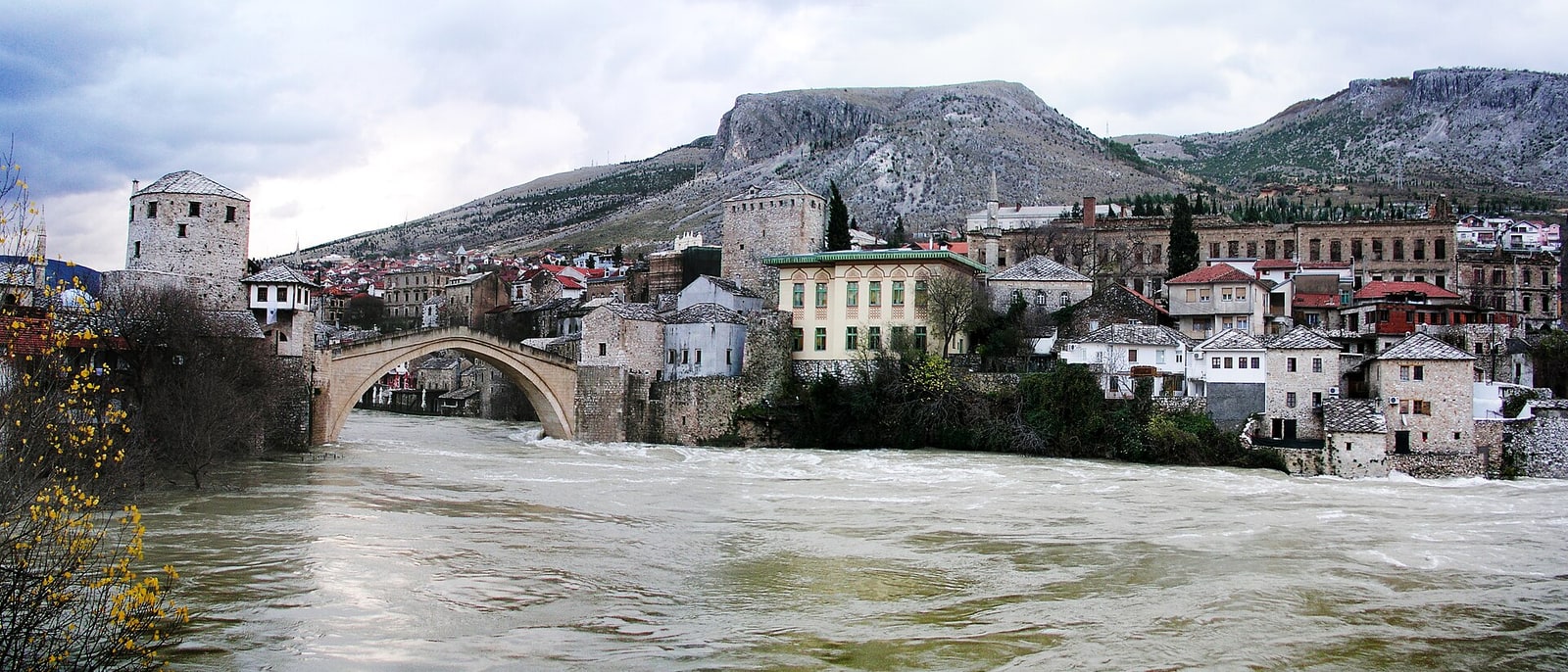
There are two clear directions: south to Mostar and Herzegovina, which is another climate and another stone. And upwards, to the Olympic mountains and the high villages still living much as they did a century ago.
The route, stop by stop
3 STOPS- 01
Mostar
The Old Bridge was built by the Ottomans in 1566 and stood for four hundred and twenty-seven years. In November 1993 it was destroyed by shellfire during the war. It was rebuilt using the original technique, with stone from the same quarry, and reopened in 2004. It is UNESCO-listed.
The journey is worth doing by train: the line drops through the gorge of the river Neretva, between tunnels and rock walls, and it’s among the finest rail trips in Europe.
In Mostar, besides the bridge, there’s the bazaar and the divers who jump into the river from the parapet, a local tradition centuries old.
- 02
Lukomir
At around fifteen hundred metres, on the Bjelašnica plateau, it’s the country’s highest inhabited village. Forty stone houses with wooden shingle roofs, almost no new building, on the rim of the Rakitnica canyon, which is eight hundred metres deep.
It remains a shepherds’ village and is only inhabited in summer: in winter snow cuts the access for months and the residents move down to the valley. You get there on a mountain track and it’s wise to go with someone who knows the way.
It’s the closest thing to seeing how life in these mountains was before everything.
- 03
Jajce and the Pliva lakes
Jajce has a geographical oddity: the river Pliva meets the Vrbas in a waterfall of over twenty metres that falls literally at the edge of the built-up area, with houses above it. It’s one of very few waterfalls in Europe inside a town. It was the capital of the medieval Bosnian kingdom and keeps its fortress, walls and catacombs cut into the rock. At the Pliva lakes, on the outskirts, there’s a cluster of tiny wooden watermills, much photographed, still standing.
Frequently asked
Is the train to Mostar worth it?
Yes, and considerably more than the bus: the line drops through the Neretva gorge and the scenery is spectacular. There are few services a day, so check times and buy ahead in season.