OZU /BOSNIA AND HERZEGOVINA /SARAJEVO /GUIDE
A weekend in Sarajevo
20 h route3 stopsBest: Spring and autumn. Winter has good snow but bad airUpdated July 2026
The second day is what turns Sarajevo into a serious trip. The city can be seen in one, but what lies around it, the tunnel under the airport runway and the mountains of the 1984 Games, is what explains the last forty years of the place.
Both are on the outskirts and both fit into the same day. Go knowing this isn’t light sightseeing: the tunnel is a sober and fairly hard museum, and on the mountain the Olympic installations remain, having been used as artillery positions.
The route, stop by stop
3 STOPS- 01
The Tunnel of Hope
During the siege the city was entirely surrounded except for the airport, which the UN controlled and across which nobody was allowed to pass. So in 1993 a tunnel was dug by hand, with picks and shovels, underneath the runway: eight hundred metres, barely over a metre and a half high, with rails for barrows.
Through it, for almost three years, came the food, the fuel, the weapons and the people. Today a short stretch is preserved in the house where the entrance was, now a museum, and you can walk it stooped.
It’s small and modest, and probably the most important place you can visit in the city.
- 02
Trebević: the cable car and the bobsleigh track
The Trebević cable car opened in 1959, was destroyed in the war and was rebuilt in 2018 with donations. It climbs from the old town to the mountain in under ten minutes and gives the best view of the valley: from up there the geography of the siege becomes immediately clear, the city boxed in and the heights all around.
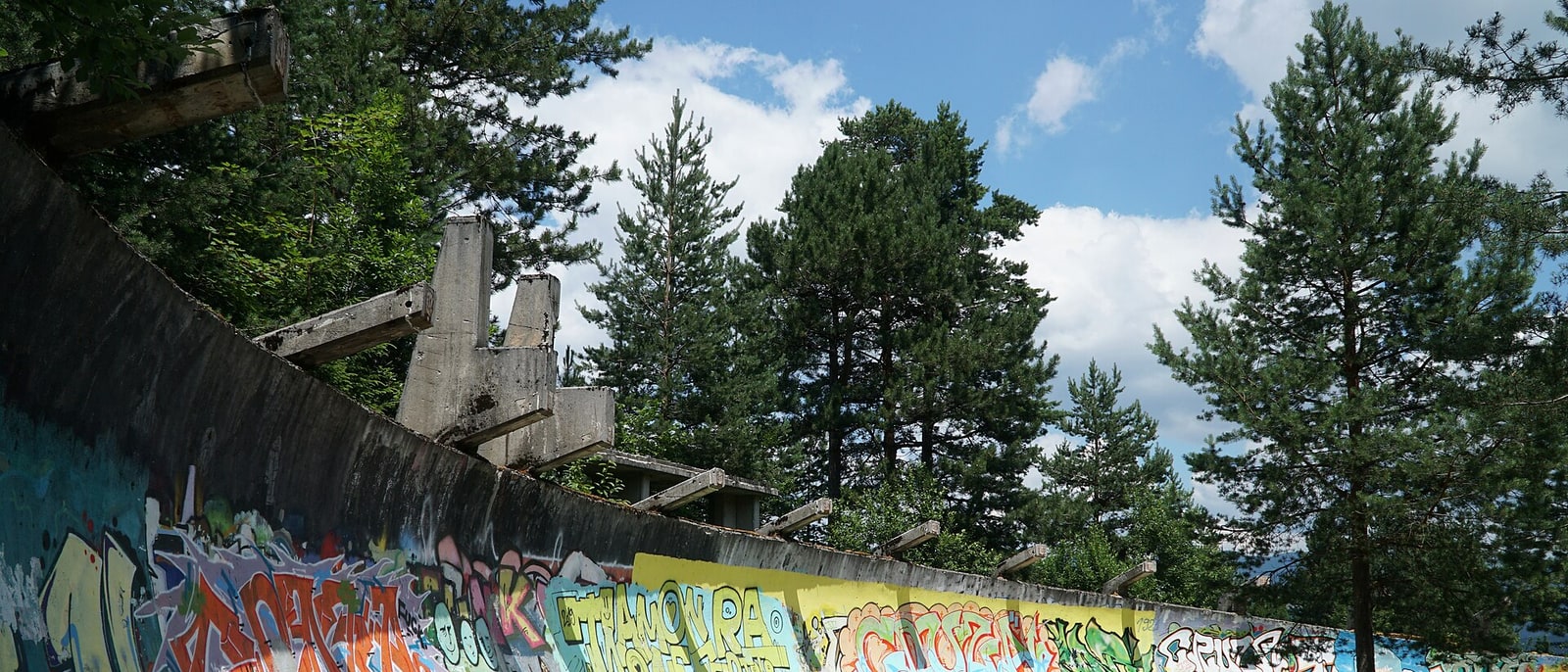
At the top is the bobsleigh and luge track from the 1984 Winter Games, a concrete chute snaking between the pines. During the war it was used as a firing position and still carries the impacts.
Today it’s abandoned and painted end to end with graffiti, and you can walk inside the channel.
- 03
Žuta Tabija at sunset
An eighteenth-century bastion above the old town, twenty minutes on foot up from Baščaršija through the Ottoman cemetery. There’s no charge and almost nothing built: a wall, an open terrace and the view.
It’s where people in Sarajevo go to watch the sunset, and during Ramadan it’s from here that the cannon is fired to mark the breaking of the fast.
It’s heard across the city, one of those customs still working exactly as it has for centuries.
Frequently asked
Can you visit the Tunnel of Hope independently?
Yes. The museum is in Butmir, beside the airport, reachable by car or by public transport with a change. Many people go on a guided tour because the context helps a great deal, but it isn’t required.