OZU /BOSNIA AND HERZEGOVINA /SARAJEVO /GUIDE
What to see in Sarajevo
7 h route3 stopsBest: Museums in the morning. Many close earlyUpdated July 2026
A straight line of about three hundred metres is enough to pass a sixteenth-century mosque, a Catholic cathedral, a Serbian Orthodox cathedral and a synagogue. That isn’t a brochure figure: it’s literally the distance, and it’s why Sarajevo is called the Jerusalem of Europe.
What to understand is that this coexistence isn’t a recent ornament, it dates from when the Ottomans took in the Sephardic Jews expelled from Spain in 1492, and that it came close to breaking thirty years ago. You can see both in one afternoon.
The route, stop by stop
3 STOPS- 01
Gazi Husrev-beg mosque
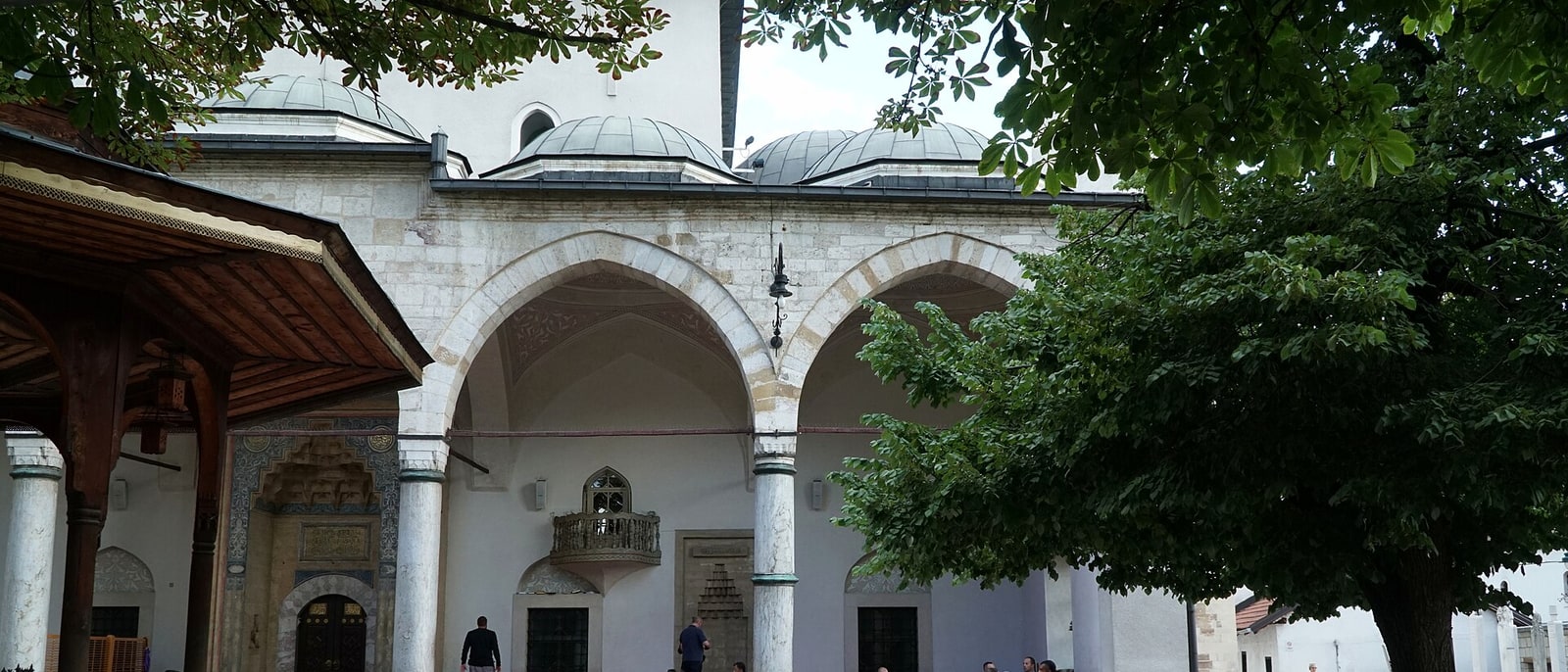
Bosnia’s principal mosque dates from 1531, and the complex around it (madrasa, library, ablution fountain, bathhouse and bazaar) was a complete charitable foundation. Much of it still serves the same purpose.
Beside it stands a clock tower worth a minute: it keeps lunar time, meaning twelve o’clock coincides with sunset and the time therefore shifts every few days.
It’s one of very few public clocks in the world still running that way, and there is a person whose job is to adjust it.
- 02
Markale
Sarajevo’s long-standing market still works as one, with fruit and vegetable stalls and people doing their shopping. From outside there’s nothing particular about it, except a wall with a list of names.
In 1994 and again in 1995 two mortar shells fell on the crowded square and killed more than a hundred people between them. The second shelling was one of the triggers for the NATO intervention that eventually led to the end of the war. Today there is a memorial with the names, and people still do their shopping in front of it.
- 03
The synagogue and the Jewish Museum
Sarajevo’s Jewish community was founded by Sephardim who arrived after the expulsion from Spain, and Ladino was spoken in the city for centuries. The Jewish Museum is in the old synagogue, from the sixteenth century, the oldest Jewish building in the Balkans. The city’s most famous object connected to this isn’t here but in the National Museum: the Sarajevo Haggadah, a fourteenth-century illuminated manuscript made in Barcelona. It survived the Inquisition, the Nazis, a Muslim curator hid it, and the siege. That it exists at all is a story in itself.
Frequently asked
Can you visit Sarajevo’s mosques?
Yes, outside prayer times. You go in barefoot with arms and legs covered. At Gazi Husrev-beg they lend headscarves to women at the door. The city is well used to visitors and the atmosphere is relaxed.