OZU /COSTA RICA /SAN JOSÉ /GUIDE
San José’s neighbourhoods
4 h route4 stopsBest: The centre in the morning, Escalante from six onwardsUpdated July 2026
Chepe is what they call San José here. Chepe is the affectionate nickname for anyone called José, and the city takes it the same way a person does. That tells you the real size of this place: it’s a capital people talk about like an acquaintance, not a metropolis. San José has a few hundred thousand people in the municipality, and the whole valley, which is where half the country actually lives, a little over two million.
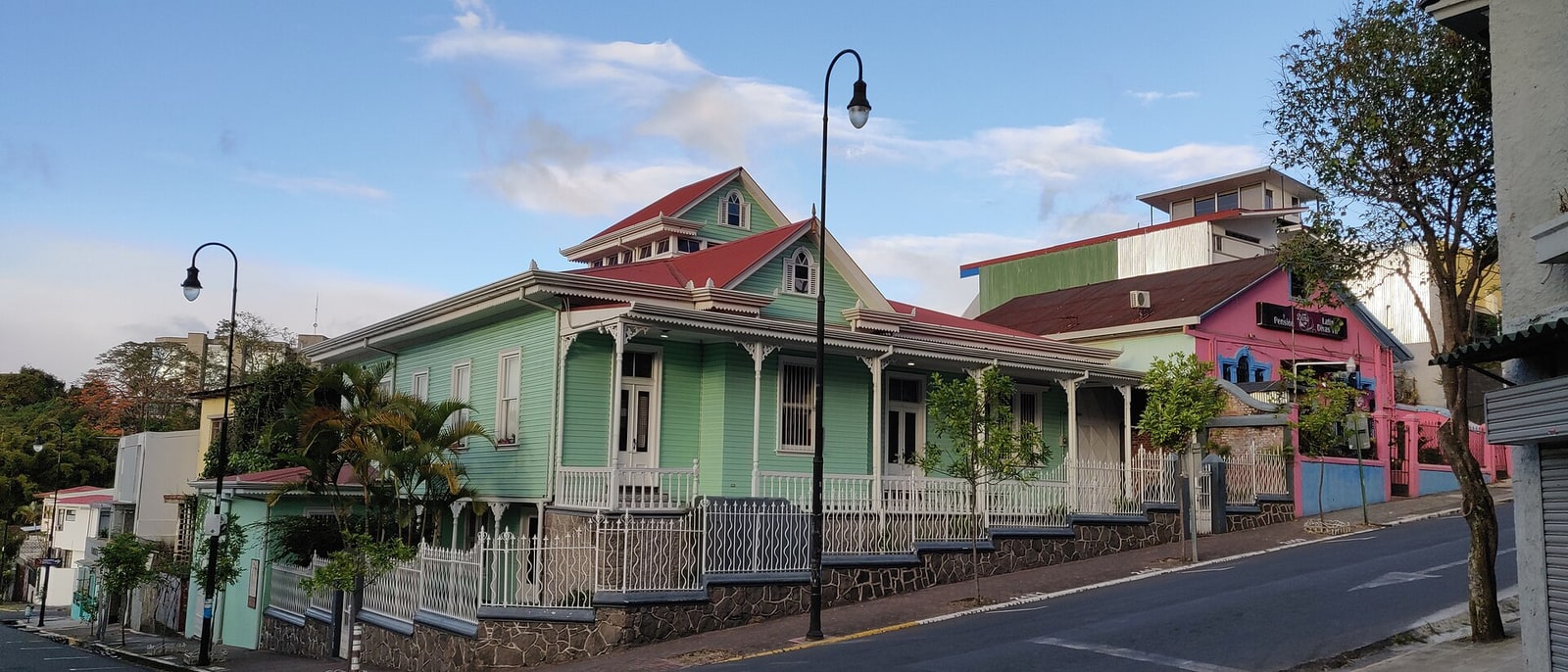
The neighbourhoods here read easily because there are few and they’re clear. There’s the centre, where the museums and the market are and which empties at night. There are the nineteenth-century coffee barons’ quarters, to the northeast, with their mansions. There’s Escalante, where you eat. And there’s the rest of the valley, where people live and where you won’t go. With that you know how to move.
The route, stop by stop
4 STOPS- 01
The centre
Ten blocks with everything worth seeing: the National Theatre, the two museums, the Central Market, the Plaza de la Cultura and a pedestrian avenue crossing it east to west which is the liveliest place in San José at midday, full of people, sellers, music and horns.
And the other part needs saying, without drama: at night the centre empties. It’s a commercial and office district, people go home to the valley and the streets are left fairly bare, with what that implies in any city in the world. It isn’t a dangerous area at midday and in fact it’s where you need to be.
But if you’re going out to eat or drink, it isn’t here: it’s Escalante. The normal thing is to do the centre by day and move in the evening. With that, and the basic caution of any Latin American capital, don’t walk around showing your phone or with a camera slung on you, you won’t have any problem.
- 02
Barrio Amón
North of the centre, ten minutes on foot, there’s a quarter of late nineteenth- and early twentieth-century mansions built by the coffee barons when this city suddenly had money. Tree-lined streets, big houses with gardens, eaves, colours. It’s the only genuine architectural walk San José has.
And you should look at what they’re made of, because that’s the best part: many aren’t stone or brick but metal sheets bolted onto a frame, imported from Belgium and brought by ship. It was done that way because earthquakes, and this zone shakes a lot, took away the heavy things and spared the light ones. There’s an entire school in the centre built with that system, which arrived flat-packed.
Many of those mansions are today small hotels, cafés and embassies, so you can go into some. It’s the city’s handsome quarter and it takes an hour.
- 03
Barrio Escalante
An ordinary residential quarter of low forties and fifties houses with small gardens, which in the last decade has filled with restaurants, craft breweries and specialty coffee shops, above all along one street. It’s where San José goes out and it’s the answer to what to do here at night.
What’s interesting is how it happened: nobody planned it. Places kept opening in private houses, making the most of the quarter being a stroll from the centre and the houses having yards, and within a few years it became the capital’s food district without changing a single façade. You still see family homes between one restaurant and the next.
This is where you grasp that this country’s cooking isn’t only rice and beans: there are Tico chefs trained abroad who have come back, and produce from a country that has everything within two hours, sea to mountain.
- 04
The valley, which is where the country lives
San José doesn’t end at San José. Around it, in the Central Valley, there’s a continuous conurbation (Alajuela, Heredia, Cartago, Escazú) where roughly half of Costa Rica’s population lives, at eleven hundred-odd metres, between mountains and coffee farms. When someone says they’re going to San José, they often mean this whole valley.
For you this has two practical consequences. The first: the airport isn’t in San José, it’s in Alajuela, some twenty kilometres away. And the second: there are jams. Half a country moving through a valley on roads that can’t cope means twenty kilometres can be forty minutes or an hour and a half, depending on the hour. Account for that when calculating your run to the airport and when planning trips: always leave early.
And Cartago, half an hour east, was the colonial capital before this one and deserves the short visit: its ruins are literally a church earthquakes knocked down twice and which was never finished.
Frequently asked
Where to stay in San José?
In Barrio Amón, among the coffee barons’ mansions turned into small hotels: it’s ten minutes on foot from the centre and it’s the pleasantest area. Barrio Escalante also works and puts the restaurants at your door. The pure centre is convenient by day but empties at night. And bear in mind the airport is in Alajuela, twenty kilometres away, and the valley has traffic jams.
Is central San José safe?
By day yes, and it’s where you need to be: it’s a district of shops, museums and the market, with plenty of people. At night it empties, because it’s an office area and people go home to the valley, so for dinner or a night out the answer is Barrio Escalante. With the basic caution of any Latin American capital, don’t walk around showing your phone or with a camera slung on you, you won’t have a problem.