OZU /COSTA RICA /SAN JOSÉ /GUIDE
Where to eat in San José
3 h route4 stopsBest: Eat at a soda at midday: the casado is the dish of the dayUpdated July 2026
This country banned growing robusta coffee by law. It didn’t discourage it: it banned it, in the late eighties, leaving arabica as the only legal variety across the entire national territory. The reason was to protect the reputation of its coffee, which sold dear in Europe, by keeping cheap beans out. It stayed that way for nearly thirty years, until the ban was lifted in 2018 for certain lowland areas where arabica doesn’t grow well. An entire country legislating which plant may be sown so as not to stain a brand.
That’s what coffee means here, and it explains half the national history: the tax on the bean paid for the National Theatre and the first railway. On the table, Tico cooking is simple, honest and single-plate, and it doesn’t pretend otherwise. And it has a layer almost nobody tries because it’s four hours away: the Caribbean one, which is nothing like this and which is the best food in the country.
The route, stop by stop
4 STOPS- 01
The soda and the casado
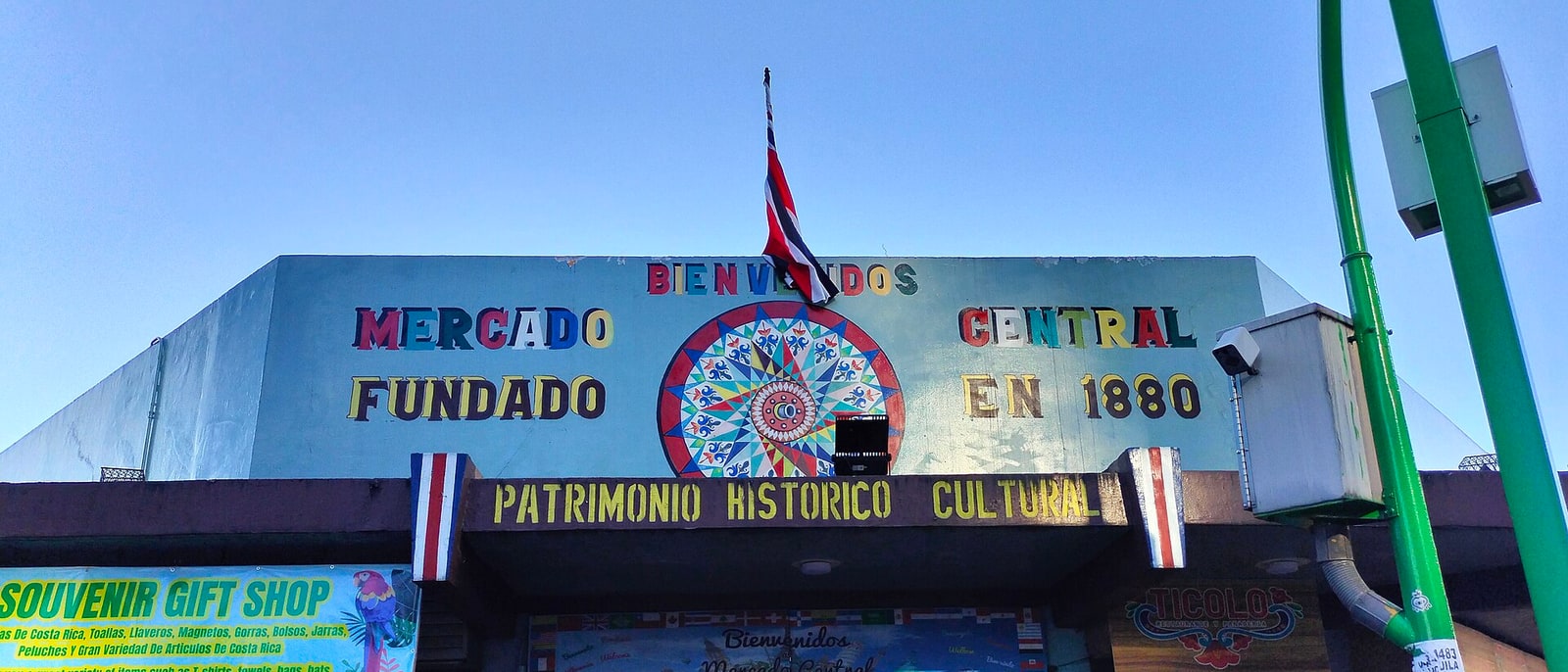
A soda, the neighbourhood eating room, shows itself by the counter, the stools, the board with three dishes and the woman cooking behind. It’s this country’s food institution and where everyone eats at midday. They’re everywhere and the Central Market has several good ones.
What you order is the casado, which means married in the sense of paired up: white rice, beans, cabbage salad, fried ripe plantain, sometimes an egg or a picadillo, and a protein (chicken, fish, meat) all served together on one plate. It’s balanced, it’s generous and it costs what a coffee costs in Europe. It isn’t haute cuisine and doesn’t try to be: it’s working food done well.
And mind the detail that changes everything: on the table there’s a bottle of salsa Lizano, a brown sweet-sour vegetable sauce that is the national flavour and which Ticos put on almost everything. Try it and take a bottle home.
- 02
Gallo pinto, and the argument
This country’s breakfast fries rice and beans together until the rice takes colour: hence gallo pinto, for the speckling. It comes with egg, sour cream, cheese, plantain and tortilla. It’s the national breakfast and it’s eaten every day.
And it comes with a regional cold war taken half seriously here: Nicaragua claims the dish as its own and the argument over the origin has run for decades, with Guinness records involved on both sides. The real difference is the recipe: Tico pinto has salsa Lizano and black beans, and the Nica one has more onion and chilli. Don’t opine.
And if you go to the Caribbean coast, you’ll find another one entirely: there the rice and beans are cooked in coconut milk, with thyme and Panamanian chilli, and it isn’t called gallo pinto but rice and beans, in English. That one is better, and saying so here in the valley is asking for trouble.
- 03
The coffee, and the chorreador
The device coffee is made with in this country’s homes is a chorreador: a wooden stand with a cloth bag hanging from it. You put the grounds in the bag, pour hot water over and the coffee falls straight into the cup. It’s a cloth filter, no paper, and it makes a clean coffee with more body than almost any other cheap method. Buy one: they cost little, they fit in a suitcase and they work.
And make the most of something that has only recently become possible. For decades, the usual thing in producing countries happened here: the good beans were exported whole and what stayed in the country was the reject, often mixed with sugar during roasting. Ticos drank bad coffee in the country that makes the good coffee.
That has changed in recent years: there are specialty roasters in Barrio Escalante and in the centre where you can drink and buy exactly what gets sent abroad. And order it at a soda too, from the chorreador, which is a different thing and is also good.
- 04
The Caribbean kitchen
Costa Rica has two coasts and two cuisines, and the Caribbean one is nothing like what’s eaten in San José. In Limón province lives an Afro-Caribbean community that arrived mostly from Jamaica in the nineteenth century to build the railway and work the bananas, and that brought its language, an English-based creole, and its food.
Out of that come rice and beans cooked in coconut milk, rondón (a stew of fish, root vegetables and coconut made with whatever’s around, hence the name, from “run down”) and Caribbean chicken with Panamanian chilli. It’s a cuisine of coconut, thyme, ginger and genuine heat, the opposite of the valley’s Tico mildness.
It’s four hours from San José, in Puerto Viejo or Cahuita, and it’s the country’s best culinary argument. If your trip only touches the Pacific and the volcanoes, you’ll miss all of it, and that’s worth knowing before deciding the route.
Frequently asked
What do you eat in Costa Rica?
The casado at midday, at a soda: rice, beans, cabbage salad, ripe plantain and a protein, all on one plate for what a coffee costs in Europe. Gallo pinto for breakfast, with salsa Lizano, which is the national flavour. Coffee poured through a chorreador. And if you reach the Caribbean, rice and beans in coconut milk and rondón, which is a whole other cuisine and the best in the country.
Why is Costa Rican coffee so good?
Among other things, because it legislated for it: in the late eighties it banned growing robusta by law across the whole country, leaving arabica as the only legal variety, to protect the reputation of its bean. The ban was lifted in 2018 for certain lowland areas. And a tip: for decades the good stuff was exported and the reject stayed here. That changed recently and you can now buy in the country the same thing that goes abroad.