OZU /DOMINICAN REPUBLIC /PUNTA CANA /GUIDE
The beaches of Punta Cana
5 stopsBest: November to April: the months with least sargassumUpdated July 2026
This whole coast faces east and all of it is the same beach: fifty kilometres of white sand and coconut palms, cut into named stretches (Bávaro, Cortecito, Arena Gorda, Uvero Alto, Juanillo) which are basically whichever hotel is behind you. What makes them possible is the coral barrier offshore, which breaks the waves before they reach the sand.
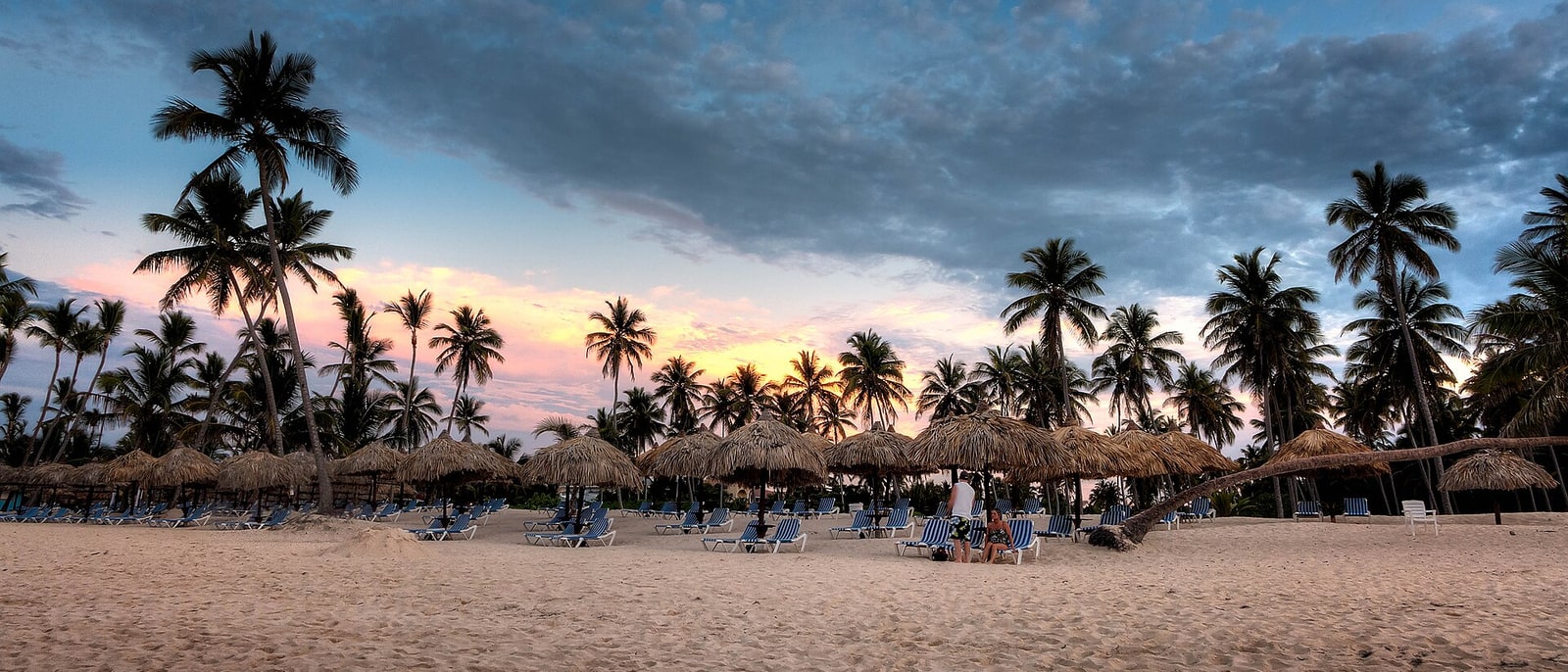
And there’s a subject no brochure raises that decides what you find when you go down to the beach: sargassum. Since 2011 a brown seaweed has arrived in this part of the Caribbean every year, piling up on the shore, smelling strong as it rots and changing the colour of the water. It isn’t pollution or hotel negligence, it’s an Atlantic phenomenon, it has a season, and it’s worth knowing before you book rather than when you open the curtain.
The route, stop by stop
5 STOPS- 01
Sargassum, and when it arrives
Sargassum, a brown seaweed that floats in the open ocean, has since 2011 reached the Caribbean in quantities it didn’t before. Scientists put it down to a shift in currents and to nutrients coming out of the great rivers: nobody now argues it’s a structural phenomenon rather than a bad year. It piles up on the shore, rots, and gives off a fairly memorable rotten-egg smell.
The season, with all caveats, runs roughly March to August, worst between May and July. November to April there’s usually little or none. Hotels clear it with machines every morning and some deploy floating barriers, so the experience varies a lot from stretch to stretch.
The point is that it’s predictable by season: travelling in summer, expect to see it, and if it matters to you, travel in winter.
- 02
Bávaro
When someone shows you a photo of Punta Cana, it’s almost always Bávaro: kilometres of fine white sand, leaning coconut palms and flat turquoise water. It’s as beautiful as it looks, and the other half needs saying: practically the whole frontage is resorts, one after another, with loungers out from seven in the morning.
In the Dominican Republic beaches are public by law and nobody can throw you off the sand, though the loungers do belong to the hotel.
In practice, the stretch you can walk without feeling like you’re in someone’s garden is around El Cortecito, which still has stalls, fishing boats and local people. It’s the only piece of Bávaro that resembles what all of this used to be.
- 03
Macao
Macao breaks this coast’s rule: it has no resort in front of it, it’s public in the full sense, and here the coral barrier breaks off, so real swell gets in. That makes it the area’s surf beach and the one locals go to on Sundays, with the cool box and the speakers.
It’s prettier than Bávaro precisely for what it lacks: there’s no row of buildings behind, there’s a low cliff and sand. There are fried-fish shacks on the sand and there are surf schools.
What there isn’t is the swimming-pool calm you saw in the photos: there’s current, there’s undertow on some days and not all of the bay has a lifeguard. It’s a beach, not a pool.
- 04
Juanillo and Cap Cana
Cap Cana takes up the south, and Juanillo is its beach: a short crescent, orderly, with very clear water and considerably fewer people than Bávaro, because there are fewer rooms behind it. It’s the most photogenic beach in the area and the one in the watch adverts.
The small print is interesting: much of this southern coast is rock rather than sand, and the sand here has had help.
It’s a place built to a brief, not an accident of nature: like the rest of Punta Cana but with a bigger budget. You can get in without staying in the zone, usually by spending something at one of the beach clubs.
- 05
Uvero Alto and the north
Heading north past Macao the coast empties out: Uvero Alto is about forty minutes further from the airport and so it has half the hotels and three times the sand per person. The sea here is less protected by coral, so there’s some swell and the water is less pool-like.
It’s the choice of someone who has done Bávaro and doesn’t want to repeat it. The trade-off is the distance from everything: there’s nowhere to go out for dinner, so the all-inclusive stops being an option and becomes the plan, and every excursion adds forty minutes each way.
If the point of the trip is seeing nobody, it pays. If it’s getting out, it doesn’t.
Frequently asked
Is there sargassum in Punta Cana?
Yes, since 2011 it arrives every year and it’s an Atlantic phenomenon, not hotel negligence. The season runs roughly March to August, worst between May and July. November to April there’s usually little or none. Hotels clear it every morning with machines.
What’s the best beach in Punta Cana?
Bávaro is the one from the photos and is almost entirely resort frontage, Macao is the only large public one and has waves, Juanillo, in Cap Cana, is the tidiest and emptiest, Uvero Alto the loneliest and furthest out. In this country the sand is public by law, even if the loungers belong to the hotel.
Can you use the hotel beaches in Punta Cana?
The sand, yes: in the Dominican Republic beaches are public by law and nobody can throw you off. The loungers, parasols and service belong to the hotel and those are theirs. In practice, the stretch where you can walk without feeling like a guest is El Cortecito, inside Bávaro.