OZU /DOMINICAN REPUBLIC /PUNTA CANA /GUIDE
Punta Cana: practical tips
5 stopsUpdated July 2026
What goes wrong here is almost never dramatic: it’s that nobody warned you. That the brown weed has a season, that the restaurant bill gets 28% added, that June to November is hurricane season, and that sun at eighteen degrees of latitude forgives nothing, cloud or no cloud.
All of that is solved by knowing it before you book, which is the only part of the trip you fully control. After that, this is an easy place: people are friendly in a way that throws you, the country works, and the worst problem you’ll have is deciding whether to leave the hotel.
The route, stop by stop
5 STOPS- 01
Sargassum has a season
Since 2011 a brown seaweed has been arriving in this part of the Caribbean, piling up on the shore, rotting in the sun and genuinely stinking. It isn’t pollution and it isn’t your hotel failing to clean: it’s an Atlantic phenomenon that scientists link to a shift in currents and to nutrients from the great rivers, and it has been growing for fifteen years.
The useful part is that it’s predictable by season: it mostly comes March to August, worst between May and July, and from November to April there’s usually little or none. Hotels clear it with machines every morning and some deploy floating barriers.
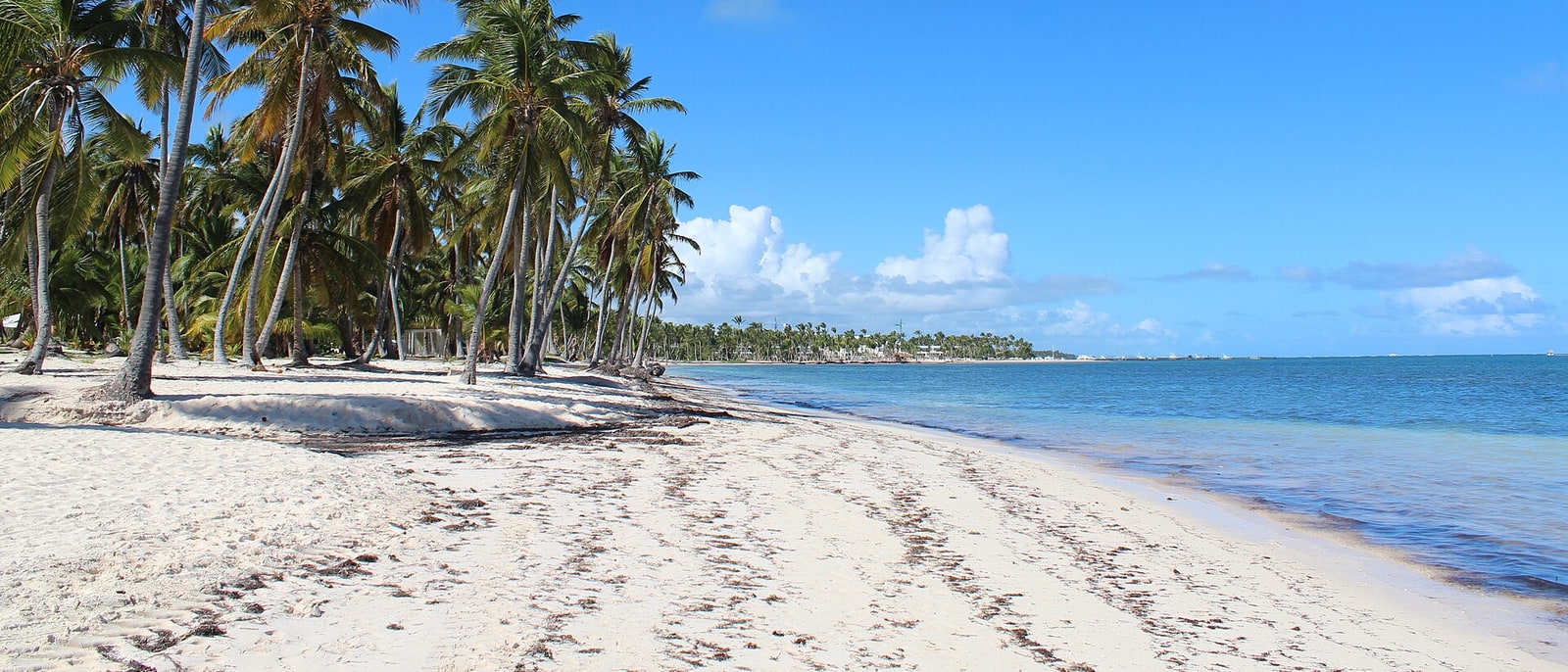
If the turquoise sea from the photo is the reason for the trip, travel in winter. If you go in July, go knowing what may be there.
- 02
The 28% on the bill
In a formal Dominican restaurant the menu price isn’t the final price: at the end you get a 10% legal tip, compulsory by law and paid to staff, plus 18% ITBIS, the tax. Total, 28% more than what you read when you ordered.
It’s regulated, it’s itemised on the bill and there’s nothing to argue about, you just have to count it. The practical consequence: since the tip is already in there, leaving more is genuinely voluntary and nobody expects it.
And none of this applies at colmados or roadside comedores, where the sign says what you pay.
- 03
Sun at eighteen degrees
Punta Cana sits at eighteen degrees north, squarely in the tropics, and that means at midday the sun comes down nearly vertical. People arriving from Europe always underestimate it, because they associate burning with heat and here there’s constant sea breeze: you’re cool and you’re burning at the same time. That’s the trap.
The second trap is cloud: ultraviolet goes through overcast without breaking stride, so a grey tropical day burns like a clear one. And the third is the water, which reflects.
High factor, a shirt if you’re snorkelling, shade between twelve and three. The first burn ruins four days of a seven-day trip.
- 04
Hurricanes and tap water
The Atlantic hurricane season runs from 1 June to 30 November, peaking between August and October. A season existing doesn’t mean anything will happen to you: most summers no hurricane makes landfall here. What it means is that travelling in those months warrants insurance covering weather cancellation, and that hotels have a protocol and use it.
And tap water isn’t for drinking, here or anywhere else in the country: hotels put out bottled water and Dominicans buy big jugs too. It isn’t alarmism, it’s normal across the island. Brushing your teeth is fine.
For drinking, bottled. Ice in formal places is made with treated water.
- 05
Mobile data
Hotel wifi works at reception and degrades as you walk away from it, which is a universal constant of large resorts: a thousand rooms spread over twenty hectares. On the beach, at the far pool or in a top-floor room, there’s usually nothing.
And the moment you leave, there’s no wifi of any kind: the café with a password doesn’t exist here. Since there’s no public transport either, your phone is what you use to call a car, check how long Bayahibe really takes, or show the driver your hotel’s name.
An eSIM activates before you leave home and works on landing, which is exactly when you have to decide how you’re getting there.
Frequently asked
When is the best time to travel to Punta Cana?
December to April: it’s the dry season, there’s little or no sargassum, and it falls outside hurricane season, which runs 1 June to 30 November. In summer it’s hotter, it rains more, and the brown weed arrives in quantity, especially May to July.
Can you drink the tap water in Punta Cana?
No, here or anywhere else in the country: you drink bottled, and Dominicans buy big jugs too. Brushing your teeth is no problem. Ice in hotels and formal restaurants is made with treated water.
Is hurricane season dangerous in Punta Cana?
It runs 1 June to 30 November, peaking August to October, and most summers none makes landfall here. If you travel in those months, take insurance covering weather cancellation: hotels have a protocol and they use it.