OZU /DOMINICAN REPUBLIC /PUNTA CANA /GUIDE
Punta Cana in a day
9 h route5 stopsBest: December to April: less sargassum, less rain, less heatUpdated July 2026
You don’t see Punta Cana in a day because, in the classic sense, there’s nothing here to see: fifty kilometres of beach with a row of resorts behind it and not one historic centre. What you can do in a day is the opposite of what you were sold, which is leave the wristband behind. And the moment you do, there’s plenty.
First, the fact that explains everything: this didn’t exist. In 1969 there was mangrove here, jungle, and not one metre of road, and a group of investors bought fifty-eight square kilometres of coast because nobody wanted it. The first hotel opened in 1971 and they built the airport themselves in 1984, because the state wouldn’t. Everything you’ll walk on today is younger than your parents.
The route, stop by stop
5 STOPS- 01
Bávaro at dawn, before the sunloungers
At half past six in the morning Bávaro beach is a different thing: no loungers set out, no music, and people casting nets on foot from the shore, which is how fishing has always been done here. The sun comes up out of the sea, straight ahead, and in the tropics that lasts exactly twenty minutes.
Use the time to look at the water and work out why it’s like that. A few hundred metres out there’s a coral barrier breaking the waves before they arrive: that’s why the sea along this coast is flat and turquoise and why the hotels went exactly here and not five kilometres north.
The postcard has a geological explanation and it’s in plain sight.
- 02
Hoyo Azul
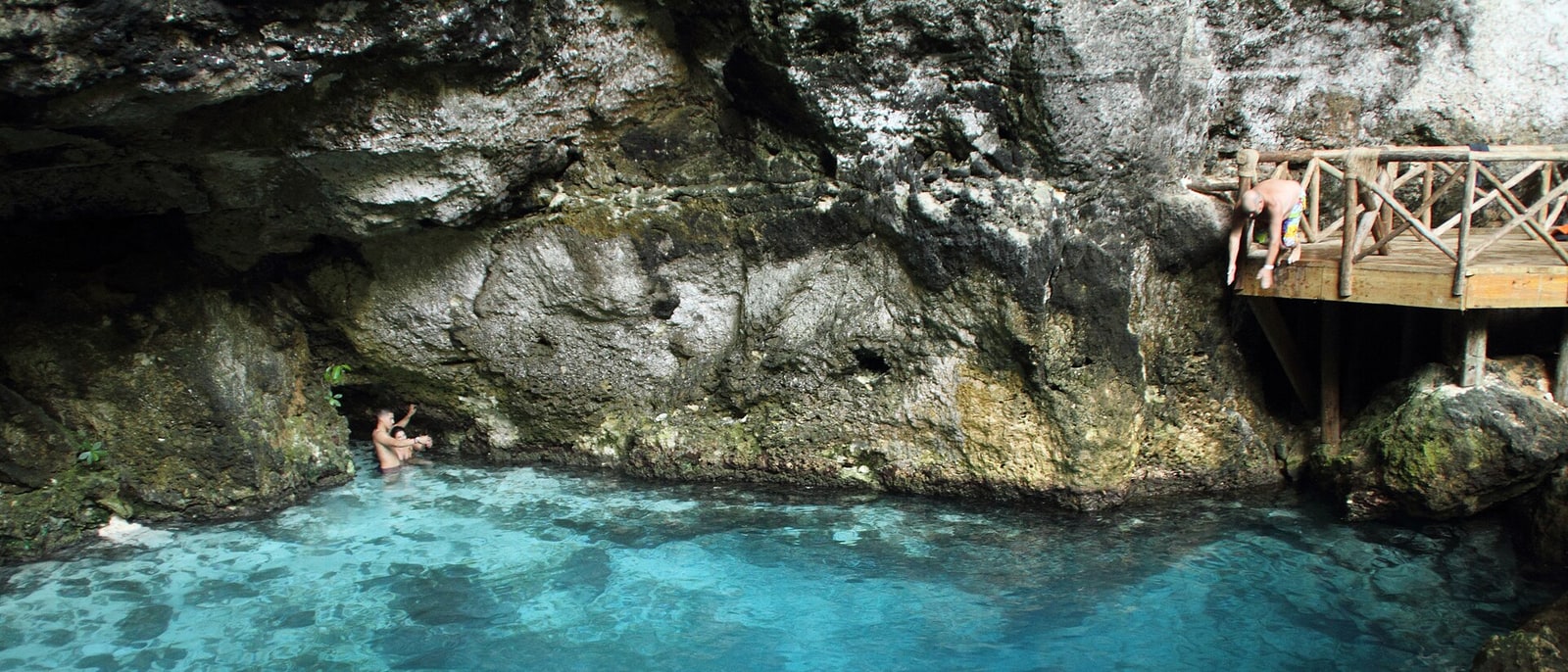
A cenote, a natural well, forms when limestone dissolves and the cave roof falls in, exposing the fresh water. This one sits at the foot of a cliff around seventy-five metres high and the water is a blue that doesn’t look real and isn’t entirely: the colour comes from suspended mineral and a white bottom, not from a filter.
You get there on a quarter-hour path through vegetation and you want swimwear, because what you do here is get in.
The water is genuinely cold, which after three days of soup-temperature pool is exactly what you need. It’s inside a private park, like almost everything around here.
- 03
The Indigenous Eyes
A fifteen-hundred-hectare reserve with twelve freshwater lagoons connected underground, which is what was here before anything else was. The Taíno, who lived on this island before 1492, called them eyes, and that’s where the name comes from.
You can swim in five of them.
It’s the closest thing to seeing Punta Cana without Punta Cana: a path through trees, transparent water and silence, ten minutes from an avenue of hotels. Almost nobody comes because it isn’t in the resort brochure. The reserve is maintained by the foundation of the same group that built all this, which has its irony and also its merit: without them, there’d be hotels here.
- 04
Macao, the beach that belongs to nobody
Macao belongs to no hotel, the only large beach on this coast that escapes, and it shows in everything: there are Dominicans, there are fried-fish stalls on the sand, there are dogs and there are waves, because here the coral barrier opens and the sea gets in properly. It’s also where everyone who learns to surf around here learns.
The difference from Bávaro isn’t the sand, which is the same: it’s that at Macao you pay for each thing you consume and you talk to whoever sells it to you. After three days of all-inclusive that’s disconcerting and then it’s a relief.
What to know: there’s current, there isn’t a lifeguard everywhere, and what makes the beach good is exactly what makes it less placid.
- 05
Dinner outside the wristband
Dominican food stays outside the resort, and that isn’t a criticism: the buffet cooks for twenty nationalities at once and that has a price. What people actually eat here is la bandera (white rice, beans and meat, every day of the year) and in the morning mangú, mashed green plantain, with the three hits: fried cheese, salami and egg.
For that you have to get out to a roadside comedor or to Higüey, the real town three quarters of an hour away. Order a Presidente “dressed as a bride”, the beer so cold the bottle comes out frosted. The name isn’t folklore, it’s what people say at the bar.
And watch the bill in formal places: on top of the menu price go a 10% legal service charge and an 18% tax.
Frequently asked
What is there to do in Punta Cana besides the beach?
Hoyo Azul, a cenote at the foot of a cliff, the Indigenous Eyes reserve, with twelve freshwater lagoons, Macao, the only large public beach on the coast, with waves, and going out to eat in town. Almost everything interesting starts when you leave the resort.
How long has Punta Cana existed?
Since 1969, when a group of investors bought fifty-eight square kilometres of mangrove and jungle with no roads. The first hotel opened in 1971 and the developers built the airport themselves in 1984 because the state wouldn’t. Before that, there was nothing here.
Why is the sea at Punta Cana always so calm?
Because of a coral barrier a few hundred metres offshore that breaks the waves before they arrive. That’s why the water is flat and turquoise, and why the hotels went on this exact stretch. Where the barrier opens, as at Macao, there are waves and current.