Eating and drinking in Berlin
3 h route4 stopsBest: All yearUpdated July 2026
The döner eaten across Europe, meat off the spit stuffed into bread with salad and sauce, doesn’t come from Turkey as such: there it was served on a plate or in lavash, and it was in 1970s Berlin, among Turkish workers who arrived under the labour agreements, that someone put it inside half a loaf so it could be eaten walking. Several people claim authorship and the argument is still open.
That’s Berlin’s cooking in a sentence: almost nothing is native and almost all of it was invented here anyway. The other half of the story is Prussian tavern food, heavy and cheap, which still exists if you look.
The route, stop by stop
4 STOPS- 01
Döner and Turkish food
Turkish immigration began with the 1961 recruitment agreement, when West Germany needed labour, and concentrated above all in Kreuzberg, which came to be called “little Istanbul”. Today it’s the largest Turkish community outside Turkey and it has changed how the whole country eats.
Beyond the döner, the Turkish market on Tuesdays and Fridays beside the Kreuzberg canal, on Maybachufer, is worth it, with vegetables, cheeses, spices and gözleme stalls.
And in any district there are Turkish bakeries where breakfast costs little and turns out better than in a café in the centre.
- 02
The Currywurst
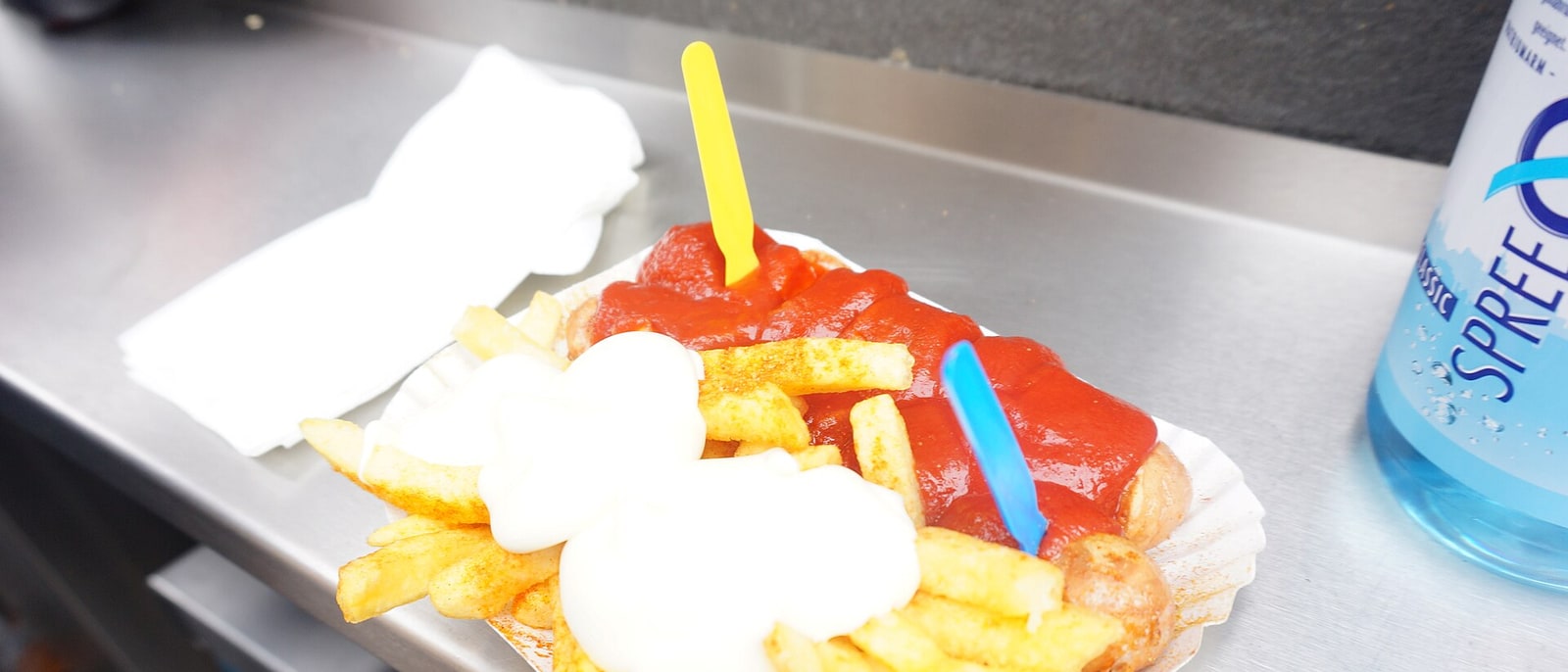
Herta Heuwer ran a stall in Charlottenburg and in 1949, in occupied, rationed Berlin, got hold of ketchup and curry powder from British soldiers. She mixed them, poured it over a sliced sausage, and out came the most Berlin dish there is.
She even patented the sauce in 1959, under its own name: Chillup.
It’s eaten standing, off a cardboard tray, with a little plastic fork and chips or a bread roll. There’s debate over whether the sausage should have skin, the east preferred it without, and over which stall does it best, an argument with no possible end.
- 03
The old-fashioned German tavern
Traditional Berlin cooking feeds the winter and the work shift: Eisbein, boiled pork knuckle, with pea purée and sauerkraut, Königsberger Klopse, meatballs in white sauce with capers, from East Prussia, and Kartoffelsuppe, potato soup. You eat it in Kneipen, the neighbourhood taverns, many with the same dark wood on the walls for fifty years.
The local beer is Berliner Weisse, a sour wheat beer traditionally served with a shot of raspberry or woodruff syrup, red or green, in a wide glass.
It came close to disappearing and small breweries have brought it back.
- 04
The Späti and the long breakfast
The Spätkauf, Späti to everyone, is the corner shop that opens very late and on Sundays too, a GDR legacy that in Berlin has become an institution. You buy a beer, open it on the spot and drink it in the street, which here is legal and ordinary.
The other local custom is the endless weekend breakfast: in Prenzlauer Berg and Neukölln the cafés serve brunch until mid-afternoon and people stay for hours.
It’s the most Berlin way to spend a Sunday, especially given that the shops are shut.
Frequently asked
What should you eat in Berlin?
A döner, which in its current form was invented here, and a currywurst standing at a stall, invented here in 1949. To sit down, tavern food: Eisbein or Königsberger Klopse. And a Berliner Weisse, the sour beer served with syrup.
What is a Späti?
A corner shop open very late and on Sundays and holidays, when the rest of German retail is closed by law. It’s an East German legacy and in Berlin an institution: you buy the drink and have it in the street, which is legal here.