Where to eat in Cancún
4 h route3 stopsBest: From seven in the evening, when the stalls go upUpdated July 2026
Yucatán has its own cuisine, quite distinct from central Mexico’s, and that’s the first thing to understand: here it’s achiote, sour orange, pork cooked underground, and habanero served on the side, never inside. Order tacos al pastor and you’ll get them, but you’ll be missing the place.
Second thing, geographic: in the Hotel Zone you eat expensively and dully. Everything good is downtown, one R-1 ride away, and you don’t need a restaurant with a name.
The route, stop by stop
3 STOPS- 01
Cochinita pibil, and why it’s a morning thing
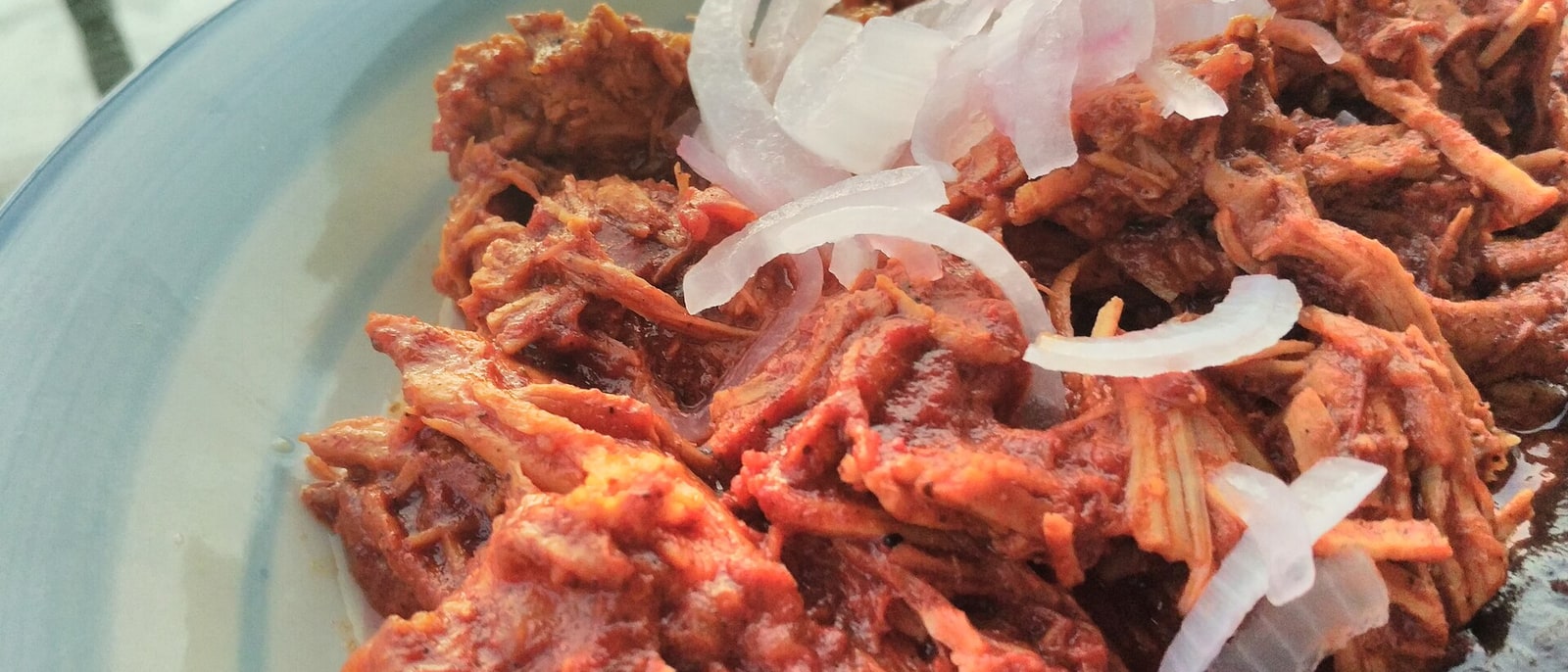
The region’s dish takes pork marinated in achiote and sour orange, wrapped in banana leaf and cooked in an underground oven called a pib. Eaten in a taco or a torta, with pickled red onion on top and habanero on the side for whoever wants it. The practical detail guides leave out: cochinita is breakfast and mid-morning food. It’s made before dawn and stalls sell until it’s gone, so by two in the afternoon the good places are out. If you go looking for it at dinner, you’re late by definition.
- 02
Mercado 28
Mercado 28 has two souls and it helps to know which you want. The outer part is craft stalls with sellers who come after you. The inner part is loncherías, long shared tables and lunch of the day for people working nearby. The loncherías are where the panuchos and salbutes are: fried tortilla, the first stuffed with bean, topped with shredded turkey, lettuce and avocado. You order at the counter, eat fast, and there’s no English menu: usually a good sign.
- 03
Avenida Yaxchilán and Parque de las Palapas
Yaxchilán gathers downtown’s taquerías and seafood places, and it works at night.
Parque de las Palapas, a couple of streets away, is the square where the food market sets up: this is where you try marquesitas, a crisp rolled wafer with a filling, classically Dutch Edam. Which sounds wrong and is excellent.
On Dutch cheese in Yucatán: not a fad, but trade history. Edam arrived through the port of Progreso with the henequen trade and stayed in the local kitchen. It’s the kind of detail that explains why this cuisine resembles nowhere else in the country.
Frequently asked
Is Yucatecan food very spicy?
The food itself, barely: it’s cooked with achiote and citrus, not chilli. What burns is the habanero, one of the world’s hottest chillies, and it’s ALWAYS served on the side, as a salsa or pickled, for you to add. The dish doesn’t arrive spicy from the kitchen.