OZU /MONTENEGRO /PODGORICA /GUIDE
What to see in Podgorica
5 h route4 stopsBest: Early morning or from six in the eveningUpdated July 2026
The list of things to see in Podgorica is short and there’s no point inflating it. It fits in a morning, and anyone arriving expecting a historic European capital will take a disappointment the city doesn’t deserve. The good question isn’t what to see, but why there’s so little to see.
The answer is in 1944 and the decades after. Allied bombing destroyed the city. Then Yugoslavia rebuilt it as Titograd, a republic’s capital, on socialist principles: blocks, avenues and concrete on a clean site. What survived did so by being off to one side. So this isn’t a list of monuments: it’s an inventory of survivors and of what was put in their place.
The route, stop by stop
4 STOPS- 01
The Sahat Kula
A stone tower some twenty metres high with a clock on top, in a small square of the Ottoman quarter. It takes five minutes to see and yet it’s one of Podgorica’s cardinal pieces, for a simple reason: it’s eighteenth century and it’s still standing, which almost nothing here can claim.
Clock towers are a classic Ottoman element across the Balkans: they marked prayer times and the rhythm of the town, and were planted at the heart of the varoš, the commercial quarter. That this one survived and the rest of the centre didn’t is pure geography: it sat across the Ribnica, away from what the planes were aiming at.
Look at them together, the tower and the mosques beside it, because it’s all that’s left of this capital’s Ottoman centuries.
- 02
The cathedral fresco
The Cathedral of Christ’s Resurrection is big, gilded and new: consecrated in 2014 after years of work. Outside it’s white stone and two bell towers. Inside, frescoes from floor to dome painted in the Byzantine manner. All of that is fine and it isn’t the reason to come.
The reason is in the Last Judgement fresco, where among the damned appear Tito, Marx and Engels wrapped in flames. It’s real, it’s identifiable and it caused serious controversy when it was uncovered, because an abstract symbol of communism is not the same as the faces of three specific people.
And the context finishes it: the city where it’s painted was called Titograd from 1946 to 1992. Forty minutes here, looking for that, is worth more than anything else you do in the centre.
- 03
Doclea
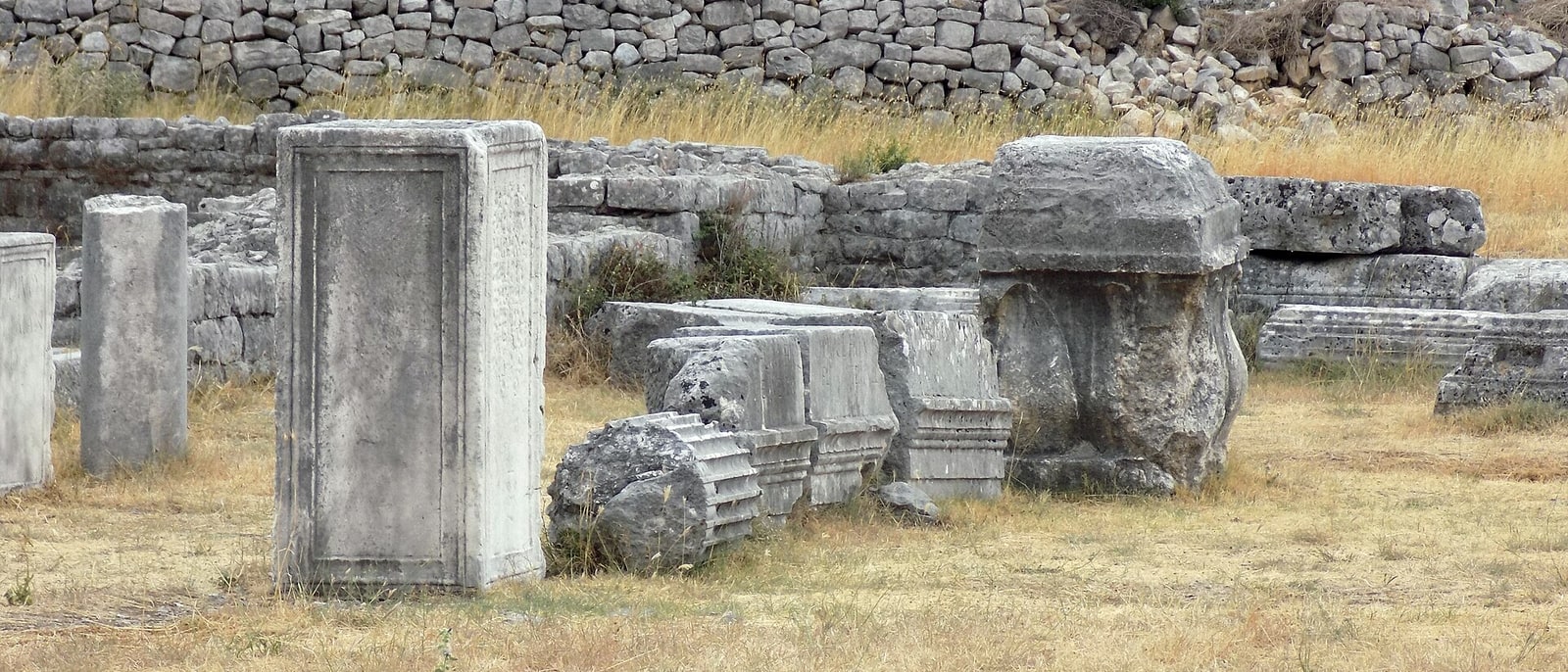
North of the city, in an open field beside the confluence of the rivers, there’s a Roman city lying on the ground: walls, streets, remains of basilicas and baths, no fences, no queues and barely any signs. It was called Doclea and it was a genuine Roman municipium, with a forum and all, in the first centuries AD.
Its importance isn’t archaeological, it’s in the name: from Doclea comes Duklja, the first medieval Montenegrin state, the one this country’s historiography marks as its origin. Which means the place where Montenegro began is three kilometres from its capital, in a field, with practically nobody there.
You wander among the stones at will. Go early or at dusk: there isn’t a scrap of shade and summer here doesn’t forgive.
- 04
The Morača bridges
The Millennium Bridge, white and cable-stayed, opened in 2005 and already works as the city’s emblem: it’s on the postcards, it’s lit at night and it’s what people show when they want to show Podgorica. A twenty-year-old symbol in a capital, and nobody finds it odd. That is precisely the portrait of the place.
Its counterpart is downstream: the old stone bridge over the Ribnica, beside the fortress remains, at the confluence where the city was born. Nobody photographs it. Seeing both in the same afternoon is the best summary of Podgorica there is, better than any museum: a city whose past was erased and which had to manufacture new symbols quickly.
And in summer, that stretch of bank is where locals swim, because the Morača comes down off the mountain and it’s freezing.
Frequently asked
What must you see in Podgorica?
The eighteenth-century Ottoman clock tower in Stara Varoš, the cathedral’s Last Judgement fresco (where Tito, Marx and Engels are painted in hell), the Roman ruins of Doclea three kilometres north, and the two Morača bridges. It’s one morning. The city doesn’t stretch further and that’s fine.
Is there anything Roman in Podgorica?
Yes: Doclea, a Roman municipium with a forum, basilicas and baths, about three kilometres north of the centre. It sits in an open field, no fences or tickets, and there’s almost never anyone there. Its name gives Duklja, the first medieval Montenegrin state. There’s no shade: go early or at dusk.