OZU /MONTENEGRO /PODGORICA /GUIDE
Podgorica: practical tips
1 h route4 stopsBest: Avoid July and August if you can: the capital goes past 40 degreesUpdated July 2026
Montenegro uses the euro and is not in the eurozone. Nor in the European Union. It isn’t a mistake or a pending formality: it adopted the German mark in 1999 unilaterally, to escape the Yugoslav dinar’s inflation, and when the mark disappeared it moved to the euro by pure succession. So this country uses a currency it doesn’t issue and has no say over, by its own choice.
That, which sounds like bar trivia, is the first practical thing that affects you: you pay in euros from minute one, with no money to change, in a country outside the EU. And from there follow several other things that work differently here and are worth knowing beforehand, not after.
The route, stop by stop
4 STOPS- 01
The euro without the eurozone
You arrive and pay in euros without changing anything, and yet you’re outside the European Union and outside the eurozone. The story is what it is: in 1999 Montenegro started using the German mark on its own, without anyone’s permission, fleeing the Yugoslav dinar’s hyperinflation, and in 2002 the mark became the euro everywhere, so here too. Nobody granted it: they took it.
The practical part: don’t look for an exchange office, you don’t need one. But do bear in mind that being outside the EU has consequences for things we take for granted (mobile roaming, for instance, doesn’t work under European rules) and that outside the capital and the coast, cash still rules. In villages, monasteries and lake boats, a card may be no use at all.
Take cash out in Podgorica before heading off on day trips.
- 02
The heat, which here is a planning fact
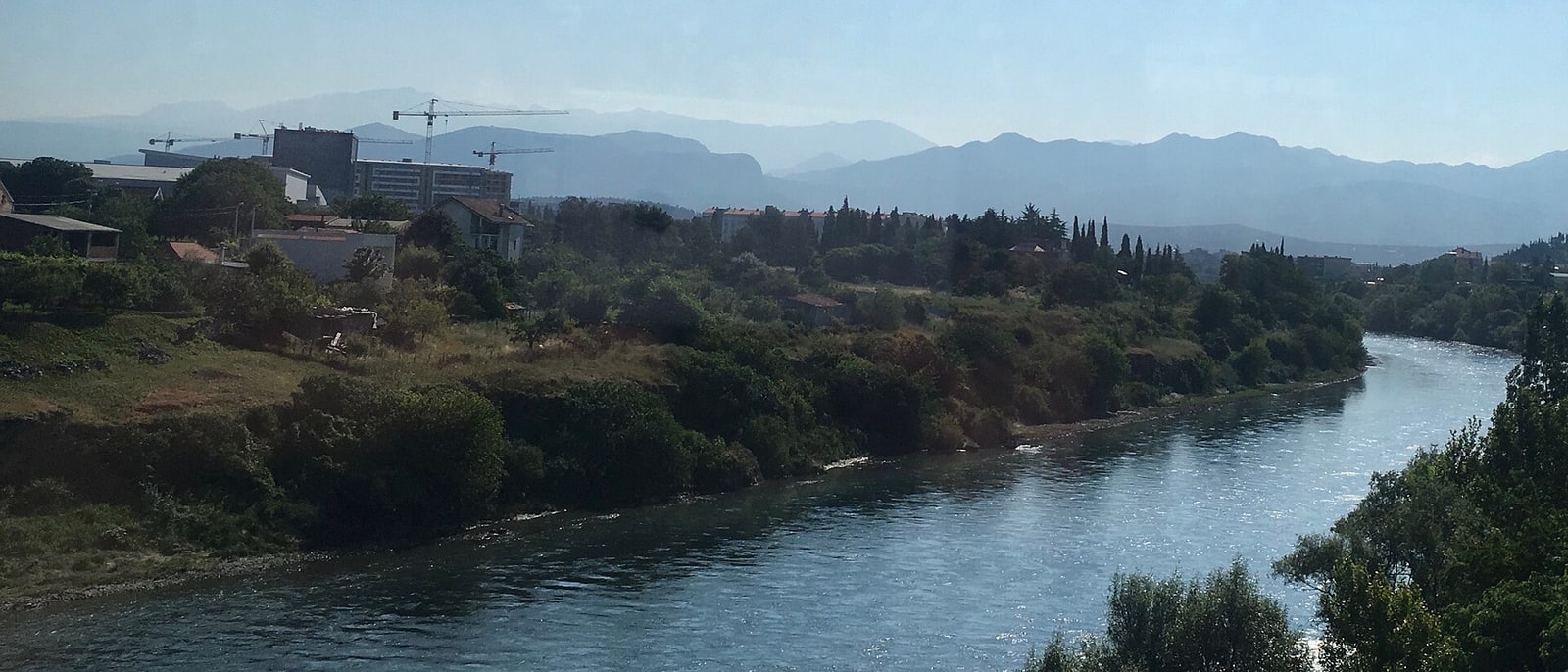
Podgorica ranks among Europe’s hottest capitals and this isn’t a weather complaint: it changes how you organise the day. The city sits in a hollow, with mountains around it trapping the air, and in July and August it routinely goes past forty degrees. At three in the afternoon there’s nobody on the street because you can’t be.
The consequence is that the local timetable isn’t a whim: life happens early and then again from six or seven in the evening, dinner is late and at ten at night people are still walking into restaurants. Adjust to that rather than fighting it.
And if you can choose dates, go in May, June, September or October: the same city, half the heat and, into the bargain, the coast and the lake without August’s avalanche.
- 03
A country from 2006
Montenegro has been independent since 2006 and it’s worth knowing how, because it explains a fair amount of what you’ll see. It was voted in a referendum, and the European Union set a condition: for the result to be recognised, 55% of yes votes were needed, not a simple majority. It came out at 55.5%. Half a point above the bar.
A country that separated by half a point is a country split almost down the middle, and that’s still live: in public debate, in the flags on balconies, in the church, in the language. You don’t need to understand Montenegrin politics to travel here, but you should know it’s a sensitive and recent subject. The rule is simple and holds across the Balkans: listen and don’t opine. And it also explains the cathedral fresco with Tito in hell, which isn’t a prank, it’s a position.
- 04
Using the city for what it is
The best practical advice about Podgorica concerns what to use it for. It’s cheap compared with the coast, has the airport twelve kilometres away, the rail and intercity bus stations right next to each other, and puts the whole country within two hours. As a base camp it has no rival in Montenegro.
As a destination, by contrast, it’s a morning, and anyone booking four nights here to “see the city” will have three spare days. The combination that works: sleep in Podgorica, go out every day, come back for dinner.
In July and August, mind you, the maths changes: the capital at forty degrees in a hollow is hard to inhabit, and the coast, full and expensive as it is, at least has the sea. Off season, Podgorica wins hands down.
Frequently asked
What currency does Montenegro use?
The euro, but the country is in neither the eurozone nor the European Union. It adopted the German mark on its own in 1999, fleeing the Yugoslav dinar’s inflation, and when the mark became the euro in 2002 it kept the euro. You pay without changing money, but outside the capital and the coast cash rules, and roaming doesn’t follow European rules.
When is the best time to go to Podgorica?
May, June, September or October. Podgorica is one of Europe’s hottest capitals, it sits in a hollow and in July and August it goes past forty degrees, and at those hours you can’t walk the streets. Off season you get the same city at half the heat and, on top of that, the lake and the coast without August’s avalanche.