OZU /MONTENEGRO /PODGORICA /GUIDE
A weekend in Podgorica
18 h route4 stopsBest: April to June or September-October: neither furnace nor shutUpdated July 2026
The country fits into a weekend, almost literally. Montenegro is under fourteen thousand square kilometres with barely six hundred thousand people: it’s smaller than many European provinces, and from Podgorica you can reach the coast, the lake, the mountains and the old royal capital without repeating a direction or sleeping away. That’s the only reason a weekend here makes sense.
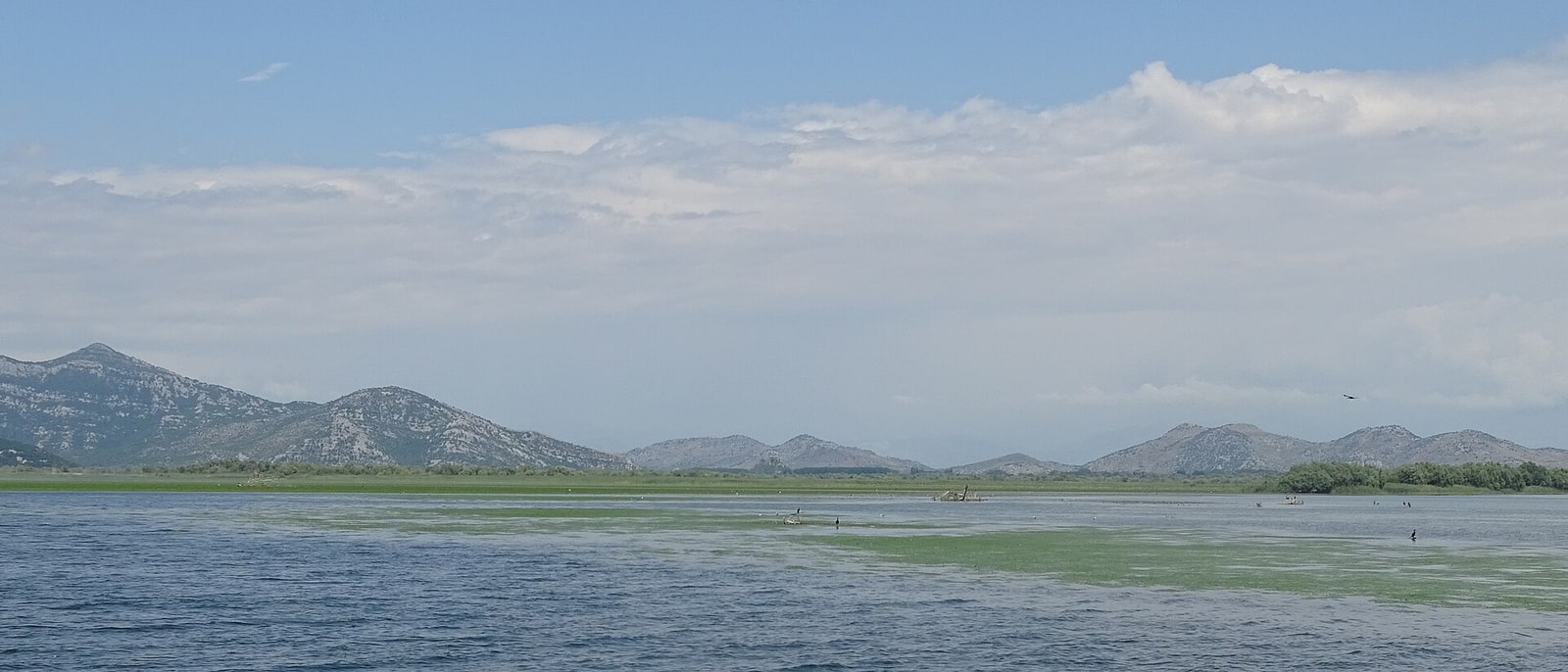
So the split sorts itself out, and it’s worth accepting without a fight: the capital is dealt with in a long half day, and the rest is hours of going out. One day for Podgorica and Lake Skadar, half an hour away and the most important bird reserve in this part of Europe. Another for Cetinje and the coast, or for Ostrog monastery if drama appeals more. What doesn’t work is staying here two full days.
The route, stop by stop
4 STOPS- 01
Saturday morning: the capital, all of it
Podgorica is seen in a morning and that isn’t an insult, it’s planning. The Ottoman quarter of Stara Varoš with its eighteenth-century clock tower, the old bridge at the confluence of the Morača and the Ribnica, the new cathedral with its hell fresco and a walk up Gorica hill. With that you’ve seen the capital.
The reason it’s so short is historical: the 1944 bombing left the city flat and what went up on top was Titograd, a socialist capital of blocks built fast. There are no centuries to walk through because they weren’t left standing.
Do it early for a practical reason: from June to September, at midday, this place goes well past forty degrees and you won’t want to be walking.
- 02
Saturday afternoon: Lake Skadar
A long half hour from the capital is the largest lake in southern Europe, and half of it isn’t in this country: the Albanian border cuts it down the middle. It’s a first-rank bird reserve and there’s the argument for coming: it’s one of the last places in Europe where the Dalmatian pelican breeds, a huge bird and an increasingly rare one.
The gateway village is Virpazar, and it has an advantage almost nobody uses: the Podgorica-Bar train stops there, so it can be done without a car. From the jetty boats head out through channels between water lilies, monasteries on islets and fishing villages.
And there’s a calendar detail that decides the trip: in summer the lake covers itself in flowering lilies and the birds are there, but the heat bites. In spring and autumn you see more and sweat less.
- 03
Sunday: Cetinje, the capital that still half is one
Forty minutes from Podgorica waits the town that was the real capital until it stopped being one, and which still holds the official title of Old Royal Capital. It’s the opposite of Podgorica in every way: small, low, with nineteenth-century houses, tree-lined streets and the air of a large village that happens to have governed a country.
What to see here are the embassies: when Montenegro was an independent kingdom, the European powers planted their legations here, and those buildings still stand with their coats of arms, turned today into schools, libraries and museums. A street of embassies in a place of fifteen thousand people.
There’s also King Nikola’s palace and the monastery. And from here the road climbs to Njegoš’s mausoleum, on top of Lovćen, which is where this country looks at itself.
- 04
Sunday afternoon: the wine, underground
On the outskirts of Podgorica hides Šipčanik, and the story of the place beats the wine, which is already good. The tunnel was dug as an underground hangar for the Yugoslav air force’s planes. It was left unusable after the 1999 bombing, and instead of sealing it they turned it into a cellar: the temperature underground is constant all year, which is exactly what wine needs.
So today you go down through a military concrete mouth into an enormous hall full of oak barrels. Around it is the Ćemovsko polje vineyard, one of the largest continuous stretches of vines in Europe, with vranac, the native red grape and the wine you’ll drink across the country whether you ask for it or not.
Closing the weekend drinking vranac inside a war hangar is the most Montenegrin thing you can do in two days.
Frequently asked
What to do on a weekend in Podgorica?
The capital is seen in a long morning, so the weekend fills up by going out: Lake Skadar is half an hour away (the Bar train stops at Virpazar), Cetinje (the old royal capital, with its nineteenth-century embassies) forty minutes, and the Šipčanik cellar, a converted underground military aircraft hangar, on the outskirts. Kotor and the coast are an hour and a half.
Is it better to sleep in Podgorica or on the coast?
It depends on the season. In July and August the coast is full and expensive and Podgorica is a forty-degree oven sitting in a hollow: the coast wins even with more driving. Off season, Podgorica is far cheaper, has the airport twelve kilometres away and puts the whole country within two hours.