From Muscat airport to the city
1 h route4 stopsBest: The bus is 24 hours and runs every half hour. Land wheneverUpdated July 2026
The fare is written on a board, by destination, and it isn’t negotiated: you say where you’re going, you pay what it says, they give you a voucher and you hand it to the driver. There’s no meter to watch, no night surcharge and no two desks where one is the right one and the other charges triple. It deserves saying because after reading the guides for other cities in this region it sounds odd: it’s the opposite of Delhi or Mumbai.
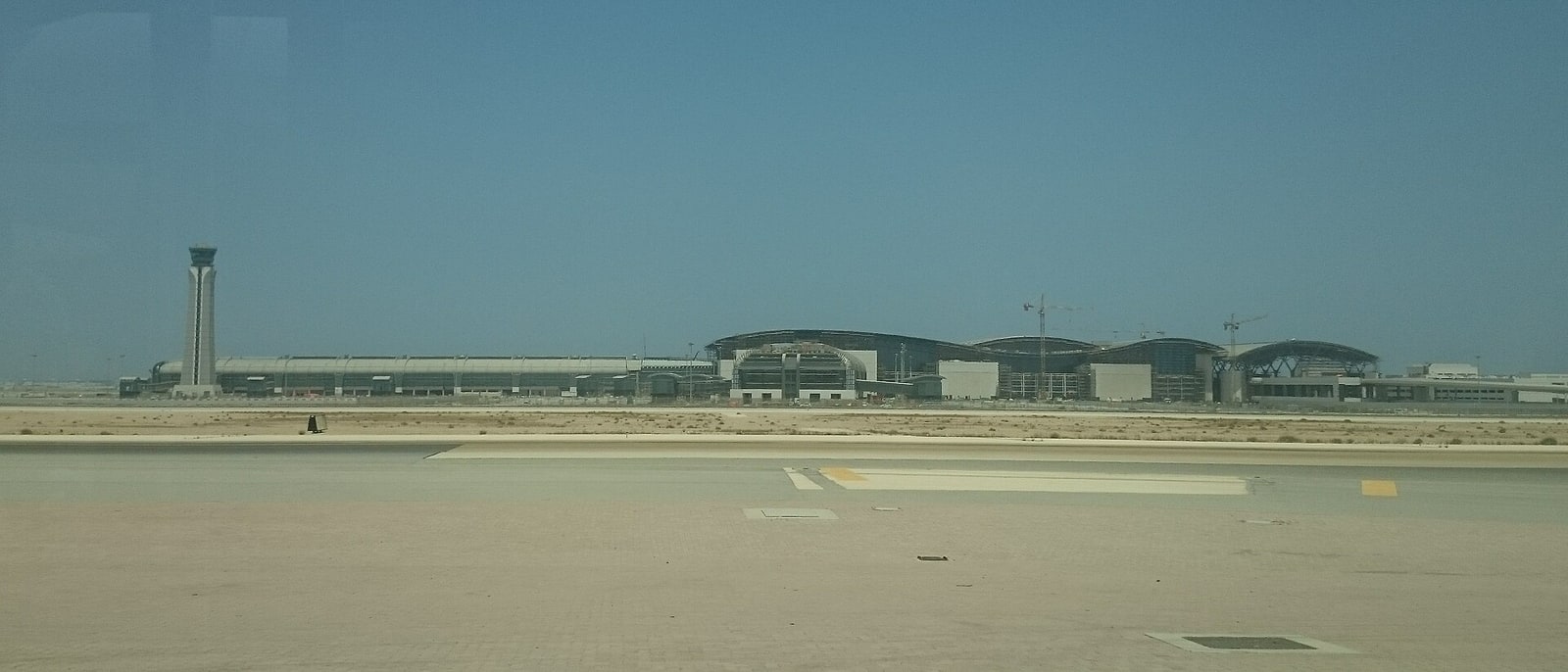
What you do need to know is the geography: this city is very long. The airport is at one end and the old town and the souk are at the other, some twenty-five kilometres away. It isn’t a five-minute transfer and it’s worth knowing before booking a hotel. And one practical thing: it’s paid in rials, so if you arrive at night, withdraw beforehand.
The route, stop by stop
4 STOPS- 01
The fixed-fare desk
The desk waits in arrivals, with a board of destinations and prices, and it works exactly as everything should: you choose a destination, you pay the written fare, they give you a voucher and you go out to take the car. You hand that voucher to the driver and there’s nothing more to discuss on the way. There’s no night surcharge, no luggage surcharge, nothing.
That this is news says more about other places than about this one. Here you won’t have to compare desks to guess which is official, or watch whether the meter is running fast, or argue on arrival. The only thing: it’s paid in Omani rials and it’s worth having them beforehand, especially if you land before dawn.
And mind one thing about the rial that throws everyone: it’s one of the strongest currencies in the world, it’s worth considerably more than a euro and it divides into a thousand, not a hundred. Prices look ridiculously low and they aren’t. Look carefully at the decimals.
- 02
The bus, which is 24 hours
The airport bus earns its place: the A1 line, which runs from the airport to Ruwi, operates twenty-four hours and comes roughly every half hour. It runs the length of the city, which means something here, because the city is fifty kilometres.
A warning so you don’t go wrong looking for it: the airport line is the A1, with an A. There’s a plain line 1 which is an ordinary city route, goes somewhere else and doesn’t call at the airport. The names look alike and that confusion has left more than one person waiting at the wrong stop.
Ruwi is the city’s bus hub: the lines to the rest of the country leave from there and it’s ten minutes from Muttrah. The bus is the cheap and perfectly dignified option, above all if you travel light. With two big suitcases, the fixed-fare taxi will pay for itself in time and in back.
- 03
The car, and why here yes
In almost every city on this list I’d tell you not to hire a car. Here I’m telling you the opposite: Oman is a country where a car changes the whole trip, because the good stuff is outside the capital and public transport between villages is limited. The roads are excellent, they’re empty and you drive on the right.
Two important things. The first: think about which car. For the coast, Nizwa and the wadis, an ordinary car will do.
But to climb Jebel Akhdar there’s a police checkpoint that won’t let you through without a genuine 4×4, with low range, and they check. And for Jebel Shams, the same. If your plan includes mountains, hire the right vehicle from the start or you won’t be going up.
The second: speed cameras here are everywhere and the fines are serious, and they have to be settled before you leave the country. Drive calmly, and besides there’s no hurry at all: this isn’t Dubai.
- 04
And if you’re coming from Dubai
Plenty of people combine the Emirates and Oman, and you can, but it’s worth knowing there’s a real border here, with its formalities, and not a toll booth. You cross by road in about four or five hours from Dubai, and you have to allow for the crossing, which can take a while.
What to check beforehand, with time: Oman’s visa requirements for your passport, which are handled online and differ from the Emirates’. And very importantly, if you’re in a hire car, that the company authorises you to cross the border and that the insurance covers Oman, because many don’t allow it and you need a specific permit and additional cover. Turning up at the border without that paper means turning around.
The comfortable alternative is to fly: there are very short flights between Dubai and Muscat at all hours and they often work out cheaper than the car paperwork.
Frequently asked
How do you get from Muscat airport to the city?
With the fixed-fare desk in arrivals, one of the most honest there is: you choose a destination on a board, pay what it says, get a voucher and hand it to the driver. No meter, no negotiating and no night surcharge. It’s paid in rials. The other option is the A1 bus, with an A: plain line 1 is another thing and doesn’t call at the airport, which runs 24 hours and comes every half hour to Ruwi. Allow for twenty-five kilometres to the old town.
Do you need a car in Oman?
For the city no, but for the country yes, and this is one of the few places where it genuinely changes the trip: the good stuff is outside the capital and transport between villages is limited. The roads are excellent and empty. Think about which car: to climb Jebel Akhdar and Jebel Shams you need a genuine 4×4, with low range, and there’s a police checkpoint that checks. If your plan includes mountains, hire it from the start.